Mexico’s annual inflation rate held near the central bank’s target band in the first half of October, but the mix of price pressures suggests policymakers are not done worrying about the path of disinflation.
Mexico Inflation Holds Near Banxico Target in October

Inflation came in at 3.62%, just below the 3.63% recorded a year earlier, according to Inegi. The bigger signal for markets was the 0.41% jump in the consumer price index from the previous fortnight, a faster pace than the same period in 2025 and a reminder that underlying price momentum remains sticky even as the headline rate stays contained.
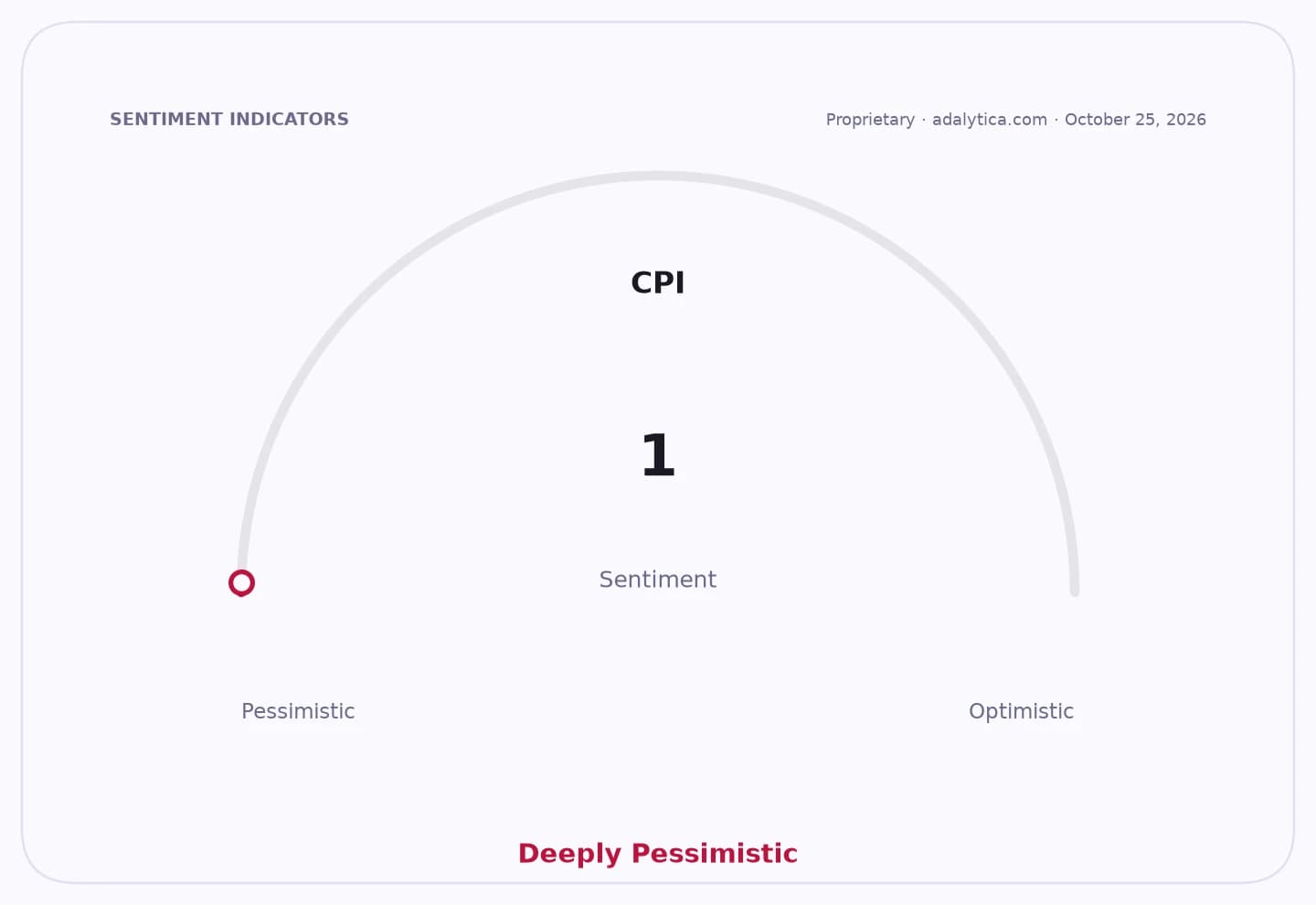
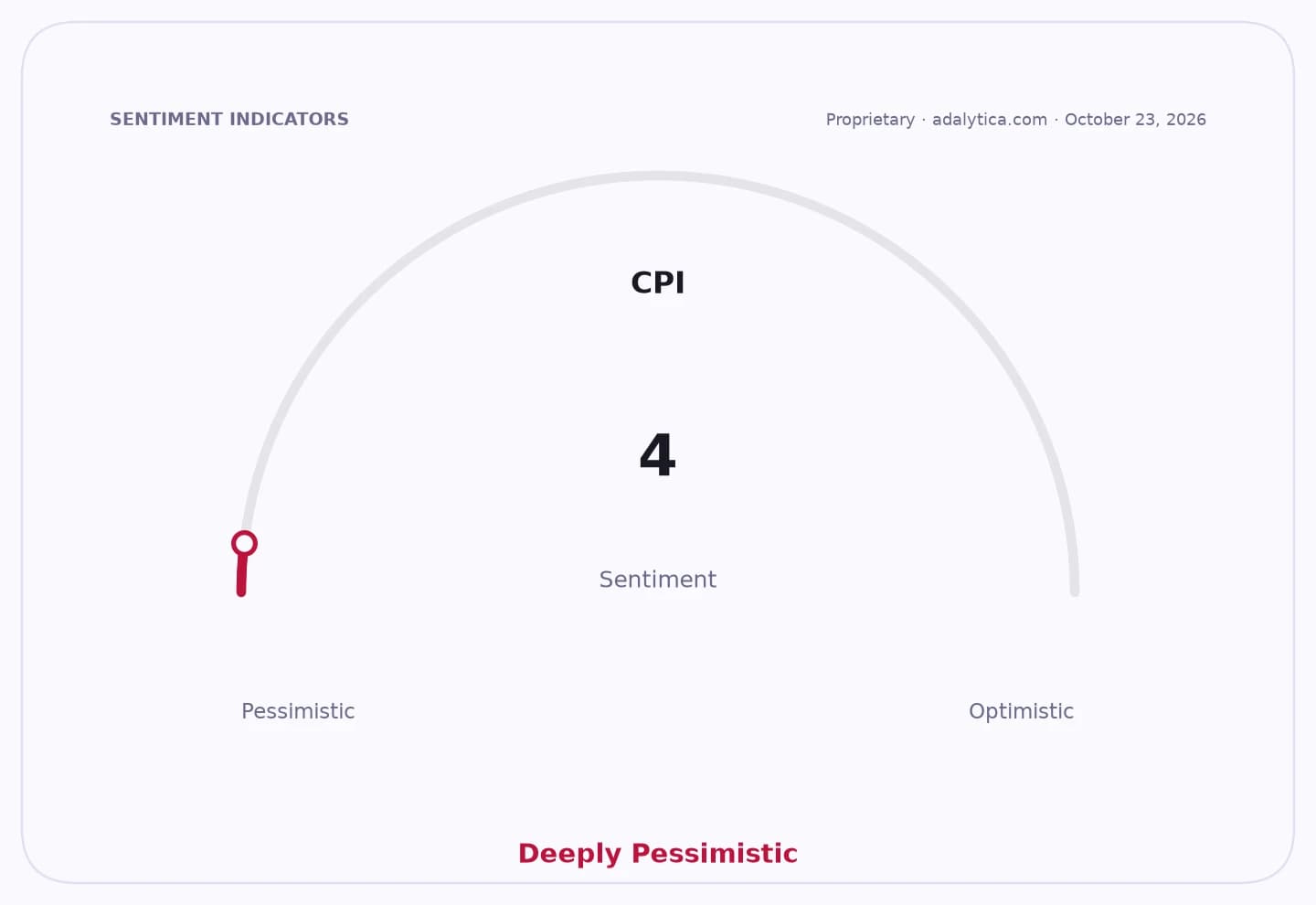
Sentiment Indicators

The most important driver was not broad-based goods inflation but a cluster of services and administered prices. Core inflation, which strips out the most volatile items, rose 3.78% from a year earlier, with services up 4.26%. That keeps a floor under overall inflation and complicates the case for rapid rate cuts, because services tend to reflect wage dynamics and stronger domestic demand more than temporary food swings.
The non-core component also reaccelerated, rising 0.98% in the fortnight and 3.08% year on year, as energy and government-approved tariffs climbed 4.02% annually. Inegi said electricity prices surged 18.51% in the period after the end of summer subsidies in 18 cities, including Monterrey, Mérida, Veracruz, Cancún and Villahermosa. Tomato prices jumped 22.07% and calabacita rose 16.27%, while airfares, professional services and package tourism also increased sharply.

For Banxico, the report argues for caution rather than urgency. The central bank has spent much of the past year trying to steer inflation lower without choking growth, and this print leaves room for a slower easing cycle rather than an aggressive one. Headline inflation is still far below the peaks seen in 2022, when annual inflation closed at 7.82%, and below 2025’s 3.69% year-end reading, but the stickiness in services and energy means progress is fragile.
That matters for investors because the inflation path feeds directly into expectations for Mexican rates, the peso and the valuation of local assets. The 10-year US Treasury yield hovering around 5% also keeps global financial conditions tight, limiting the room for emerging-market central banks to move too quickly without risking currency pressure. Mexican equities, including the iShares MSCI Mexico ETF, have already been sensitive to shifts in rate expectations, while consumer-facing companies face a more mixed backdrop of resilient spending and higher input costs.
The bull case is that headline inflation remains close to target and food prices have not turned into a persistent surge, giving Banxico room to continue easing gradually if growth weakens. The bear case is that core services inflation near 4.3% and recurring tariff shocks keep monthly prints uncomfortable, forcing the central bank to stay more restrictive than the market would like.
For households, the message is straightforward: electricity, transport and dining-out costs are still rising faster than the broader index. For investors, the next test will be whether October’s uptick proves temporary or marks the start of a more persistent rebound in Mexico’s price pressures.
| Entity | Gains | Losses |
|---|---|---|
| Banxico | ▲room for gradual easing | ▼pressure to stay cautious |
| Mexican consumers | ▲inflation remains near target | ▼higher power and services costs |
| Consumer-facing companies | ▲resilient demand in some categories | ▼margin pressure from input costs |
| Mexican bondholders | ▲lower headline inflation | ▼higher-for-longer rate risk |