Microsoft’s artificial intelligence buildout is under fresh legal scrutiny after an executive was quoted in sealed court filings calling it the “biggest labor theft in human history,” a line that could weaken the company’s argument that training AI on copyrighted material falls under fair use.
Microsoft AI Training Faces Copyright Court Scrutiny

The documents, filed in the New York Times’ copyright suit against Microsoft and OpenAI, are significant because they put direct language from inside the AI industry into a case that could shape how much content model makers can ingest without paying publishers. For investors, the issue goes beyond one lawsuit: it raises the risk of higher licensing costs, tighter rules around model training and a more expensive path to monetizing generative AI.
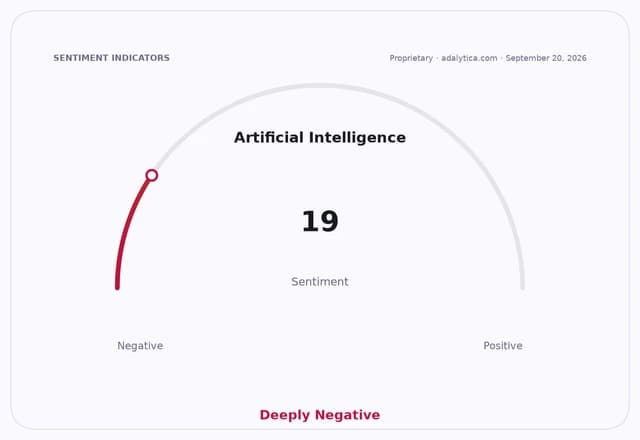
Sentiment IndicatorsⓘProprietary · adalytica.com · September 20, 2026
This is a snapshot — live sentiment, awareness and momentum for 130+ markets update continuously in the dashboard.Open AlphaPulse
The Times’ lawyers say the unredacted filings show senior AI leaders acknowledging that model training relied on “astonishing theft on a massive scale.” One cited quote from Microsoft applied sciences director Brent Hecht described AI development as the “biggest labor theft in human history,” while OpenAI co-founder Greg Brockman said publishers face an “existential threat” from generative AI because the tools are “largely substitutive and will become more so.”
That matters for the economics of the sector because the generative AI race has been built on the assumption that companies can train on vast text and media troves first and settle rights later. If courts narrow that path, Microsoft, OpenAI and peers may have to pay more for licensed data, slow model development or absorb lower margins as content owners demand compensation.
The dispute also lands at a time when the commercial payoff from AI is still uneven. A separate industry snapshot shows nearly 85% of business leaders continue to fund AI projects, but only about 25% of initiatives are considered successful, underscoring the gap between soaring capital spending and near-term returns. The same data suggest AI is creating jobs in some cities while pressuring younger workers, adding to political sensitivity around the technology’s labor effects.
Microsoft shares were little changed recently after a volatile stretch, with the stock closing at $493.78 on Sept. 18, above its 50-day moving average of $464.20 but still well below the 200-day average near $430. The broader market context remains supportive for AI infrastructure names, but legal and licensing risk is increasingly part of the valuation debate.
The case adds another layer of uncertainty for Microsoft just as it pours billions into AI infrastructure and product development. Investors will be watching the next court rulings, as well as any sign that publishers and model makers move toward broader licensing deals that could define the next phase of AI economics.
| Entity | Gains | Losses |
|---|---|---|
| New York Times | ▲stronger fair-use challenge | ▼slower AI commoditization |
| Microsoft and OpenAI | ▲broader training access | ▼higher licensing/legal costs |
| Publishers and rightsholders | ▲leverage in negotiations | ▼none if courts side with AI firms |
| AI investors | ▲clarity on model training rights | ▼margin pressure if royalties rise |