AI translation is moving from a convenience feature to a business-critical layer in cross-border commerce, and that shift could open a new market for the software giants that control the workplace stack. The opportunity is not just better language support; it is a faster, cheaper way to conduct supplier meetings, sales calls, site visits and travel-heavy operations without waiting for human interpreters or breaking the flow of conversation.
Microsoft and Alphabet Gain From AI Translation
Artificial Intelligence
That matters economically because global business still runs on face-to-face exchanges that happen far from scheduled video meetings. In trade shows, factories, hotels and airports, people need to clarify delivery dates, prices, specifications and names in real time, often in noisy environments with weak connectivity. Translation tools that can handle speech, earbud output, offline use, photo translation and post-meeting summaries are becoming practical infrastructure for international work, not just consumer gadgets.
Sentiment Indicators
The investable takeaway is that AI translation strengthens the moat around platforms already embedded in enterprise communication, cloud and productivity. Microsoft and Alphabet are best positioned to package translation into the daily workflow of Office, Teams, Meet and Android. IBM, meanwhile, can sell it into consulting and enterprise deployment where clients want secure, scalable AI systems rather than standalone apps. The market still tends to value these companies on broad AI narratives, but the real upside may come from smaller, repeated workflow savings that compound across millions of meetings.
The most important change is that translation is no longer confined to text. Two-way voice translation makes a conversation more natural by reducing the stop-start friction of typing every sentence. Earphone output improves privacy in shared spaces. Offline mode gives users a fallback when roaming data or event Wi-Fi fails. Photo translation extends the use case to signs, labels and instructions. Conversation notes then turn the exchange into a searchable record of commitments, deadlines and quantities. That is a full communication stack, and it is exactly the kind of utility businesses will pay for if it saves time and reduces mistakes.
For investors, that creates a second-order theme beneath the obvious AI model race. The winners are not only the companies building the most powerful models; they are the ones that can insert those models into high-frequency enterprise tasks. Microsoft’s productivity franchise and Google’s distribution across search, Android and collaboration tools give them a natural route to monetization. IBM’s filings already point to demand for AI transformation, consulting and secure enterprise deployment, which makes it a likely beneficiary wherever translation becomes part of regulated or operational workflows.
The stock tape reflects that tension. Microsoft remains expensive relative to the broader market, but its 50-day moving average near $518 and recent pullback toward the $490 area suggest investors are questioning near-term AI spending even as the strategic case strengthens. Alphabet has also sold off sharply from earlier highs, with shares around $273 well below its 50-day average near $318, leaving room for a rerating if AI features deepen engagement and workplace usage. IBM has held up better as a services-and-infrastructure play, though it still trades below its 200-day average, underscoring that the market has not fully priced the enterprise AI layer.
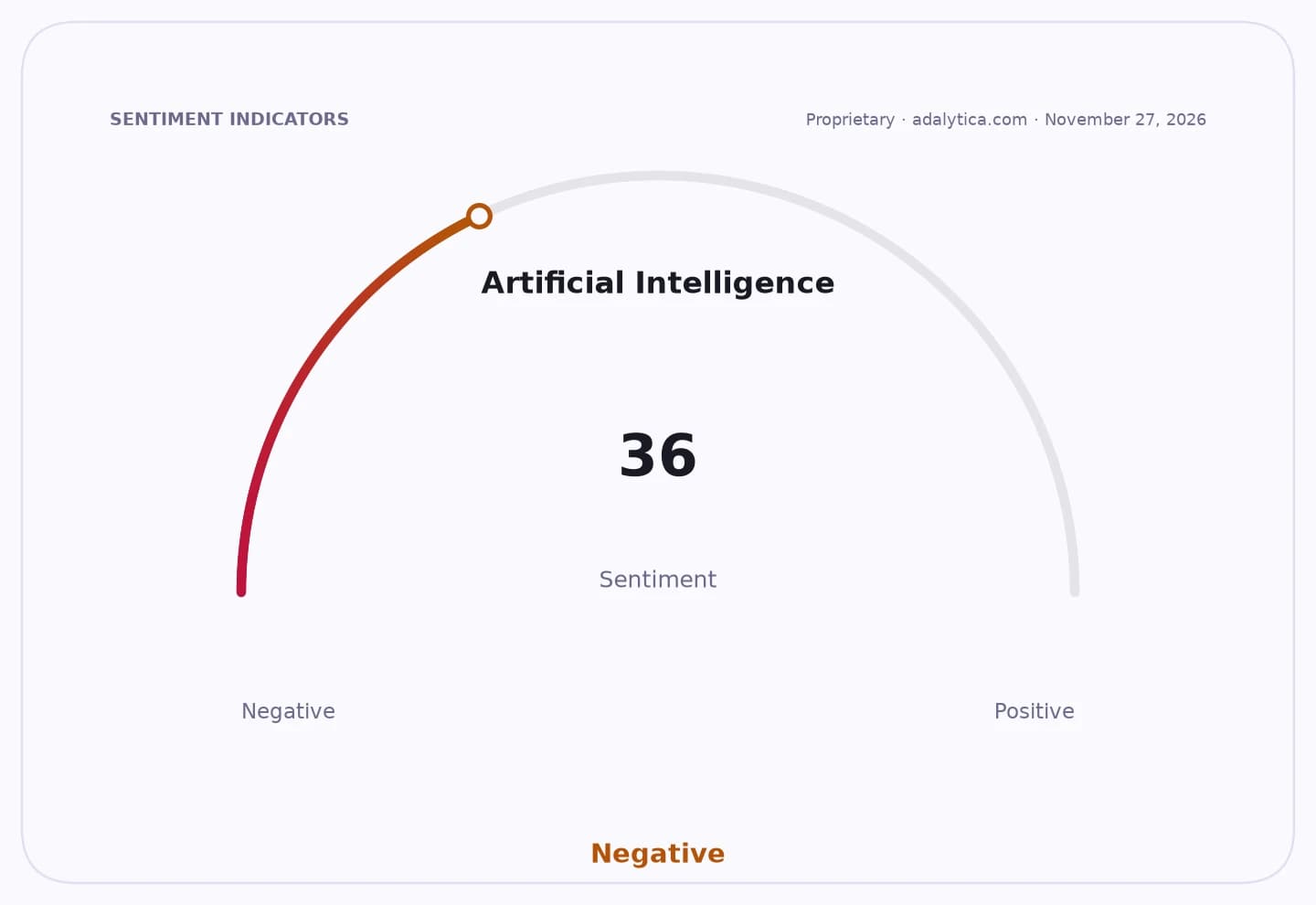
Adalytica sentiment on Microsoft has plunged to “Extreme Fear,” even as the company’s AI use cases broaden. That is often where opportunity appears: when the narrative gets too focused on capex pressure and too little on the adoption curve. The same pattern is visible across the AI trade overall, where awareness remains high but sentiment has cooled, creating a setup for investors willing to look beyond the next quarter.
The larger story is that AI translation is becoming part of the operating system for global business. As adoption spreads, I believe the market will start valuing the tools less as novelty features and more as productivity infrastructure with recurring usage and clear enterprise stickiness. For long-term investors, that means staying overweight the platforms that own the workflow, not the standalone apps that merely sit on top of it.
| Entity | Gains | Losses |
|---|---|---|
| Microsoft | ▲Teams/Office workflow lock-in | ▼Standalone translator apps |
| Alphabet | ▲Android/Meet usage, AI engagement | ▼Human interpreter demand |
| IBM | ▲Enterprise AI consulting demand | ▼Manual localization services |
| Business travelers | ▲Faster cross-border deals | ▼Friction from language barriers |