AI systems that are supposed to mimic human language still show measurable stylistic bias, a flaw that matters for companies rushing to deploy chatbots, translation tools and automated editors in customer-facing work. For Microsoft, Nvidia and other large AI buyers, the issue is not just literary purity: inconsistent tone, grammar and voice can weaken trust, raise moderation costs and slow adoption in products built around personalization.
Microsoft, Nvidia AI language bias and adoption risks
Research cited in the context found that instruction-tuned large language models can overuse certain grammatical structures and reproduce human styles poorly, underscoring why “write like me” remains a harder problem than generic text generation. That helps explain the push toward custom AI editors that parse a user’s own writing, learn preferred cadence and vocabulary, and then act less like a generic chatbot and more like a house style layer.
Sentiment Indicators
The market backdrop shows how central AI remains to the valuation case for the biggest beneficiaries. Microsoft shares were last at $489.93, down from a peak near $554.73 earlier this month, while the stock sits well above its 200-day moving average of $443.23 even after a recent pullback. Nvidia, meanwhile, has been far more volatile, sliding to $149.30 from $165.05 on Nov. 23 and far below its 200-day moving average of $202.62, a sign that investors are still repricing how quickly AI spending translates into durable margins and product differentiation.
That makes the quality of AI-generated language more than a creative-industry issue. If enterprises cannot reliably control tone, voice and accuracy, they may need more human review, more bespoke fine-tuning and more guardrails around deployment — all of which can erode the efficiency gains that justify AI spending in the first place.
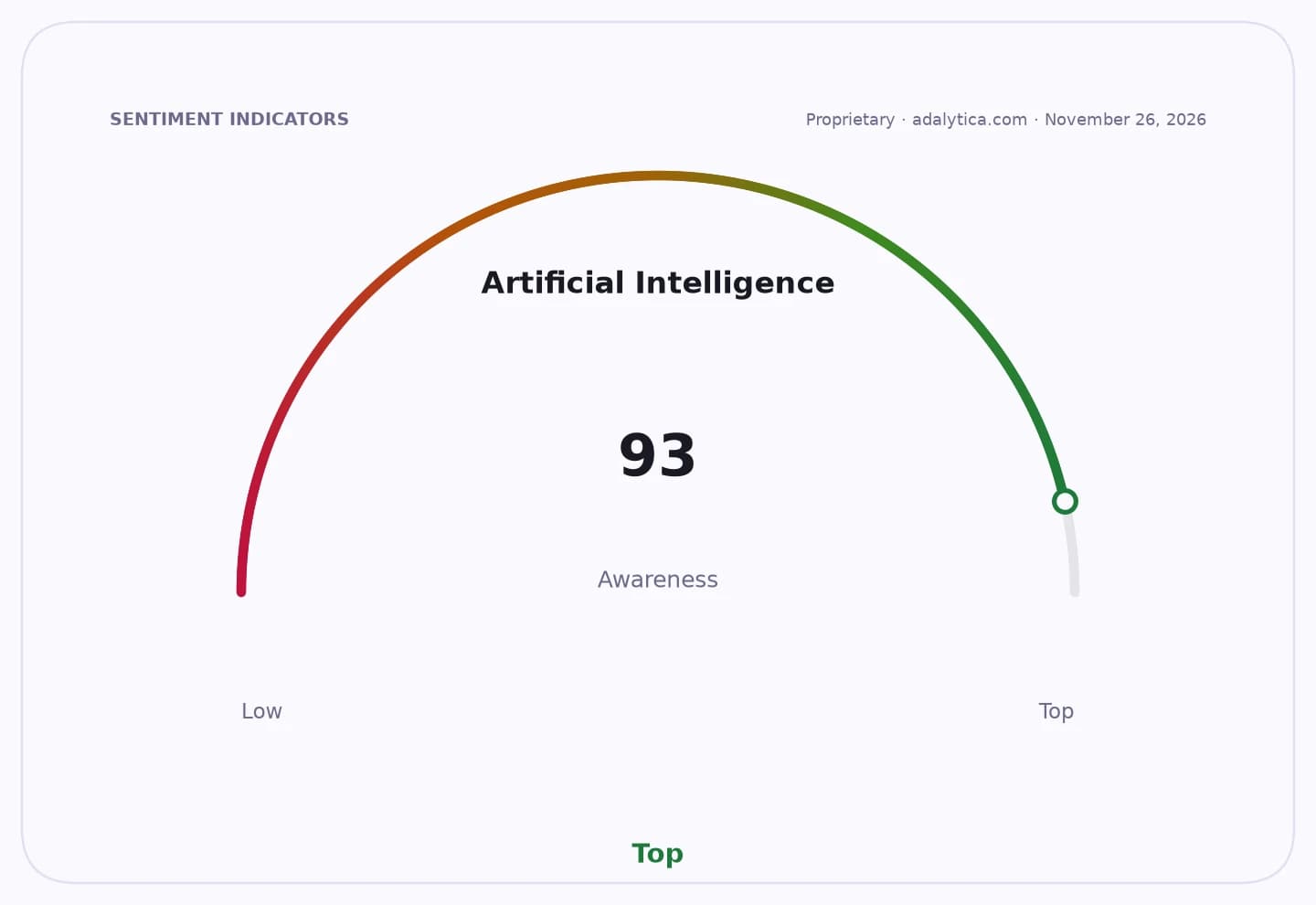
Adalytica’s Microsoft earnings sentiment gauge has sunk to 4, or “Extreme Fear,” while its awareness reading is also 4, suggesting investors are unusually cautious around the stock despite its longer-term AI exposure. By contrast, Adalytica’s separate AI sentiment snapshot is neutral at 36, with awareness at 89, reflecting intense attention but mixed conviction about how quickly the technology is improving in practice.
The next test is whether AI vendors can make personalization feel native rather than mechanical. If they can build systems that learn an individual or corporate writing style without flattening it, adoption could broaden across marketing, support, journalism and enterprise software. If not, the gap between flashy demos and dependable production use is likely to keep widening.
| Entity | Gains | Losses |
|---|---|---|
| Enterprises adopting custom AI editors | ▲More control over voice | ▼Higher setup and review costs |
| AI vendors with personalization tools | ▲Bigger enterprise demand | ▼More scrutiny over output quality |
| Human editors and writers | ▲More role in oversight | ▼Some routine drafting work |
| Microsoft and Nvidia investors | ▲Long-term AI growth optionality | ▼Near-term margin and execution risk |