AI is no longer a marketing side project — it is becoming the operating system for how ads are bought, content is made and customers are reached, and that shift is forcing brands, agencies and publishers to choose between speed and sameness.
Alphabet Microsoft Nvidia and AI Marketing Shift
Artificial Intelligence
That is the real message behind IAB Hellas’ IMC26 conference in Athens, which is built around a simple but uncomfortable premise: commit to AI in marketing, for better or worse. The industry body is pushing the debate beyond shiny tools and into the structural questions that will decide winners over the next several years — who makes decisions when systems act autonomously, who owns the responsibility, and how much human judgment survives in a world of AI agents.
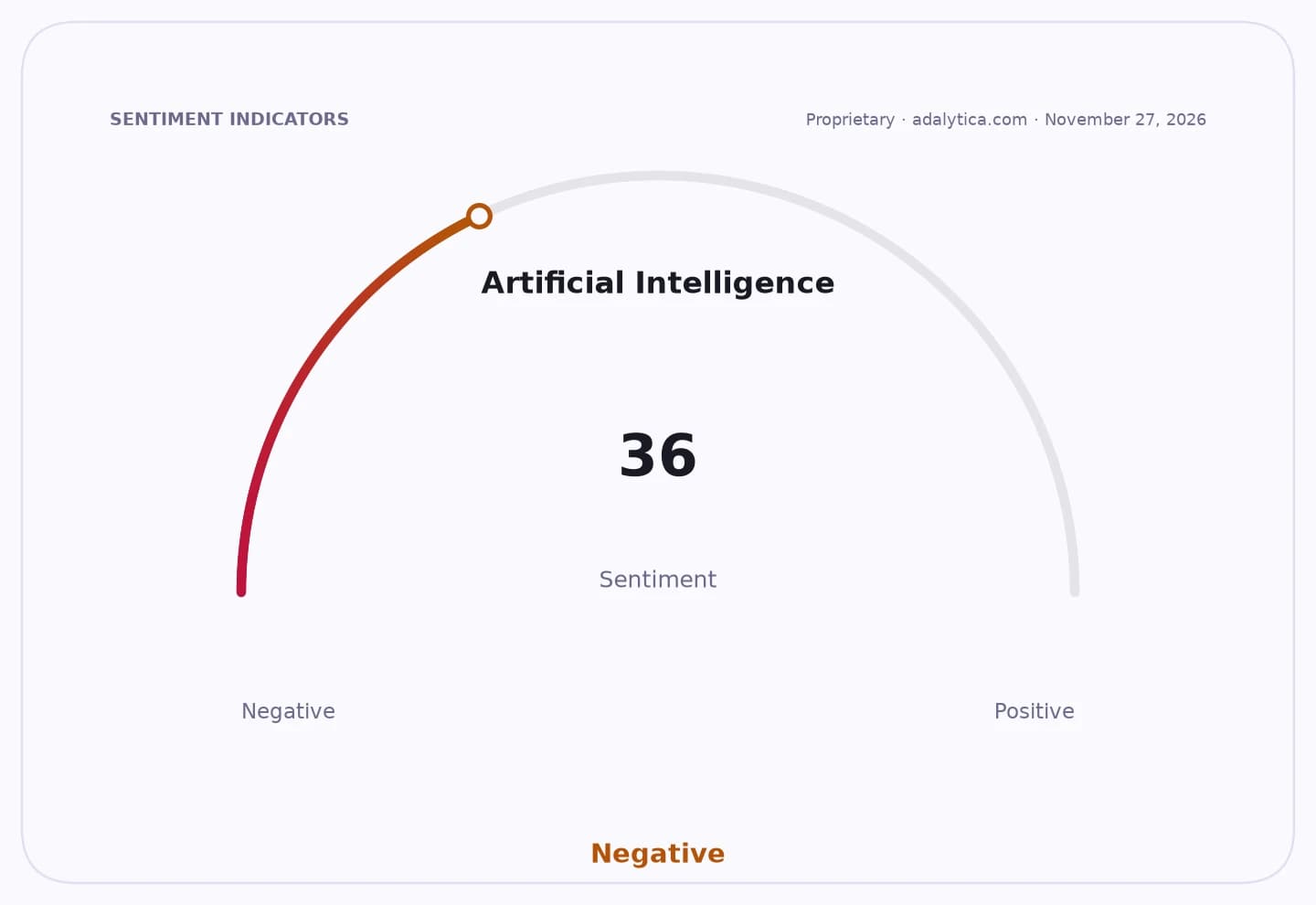
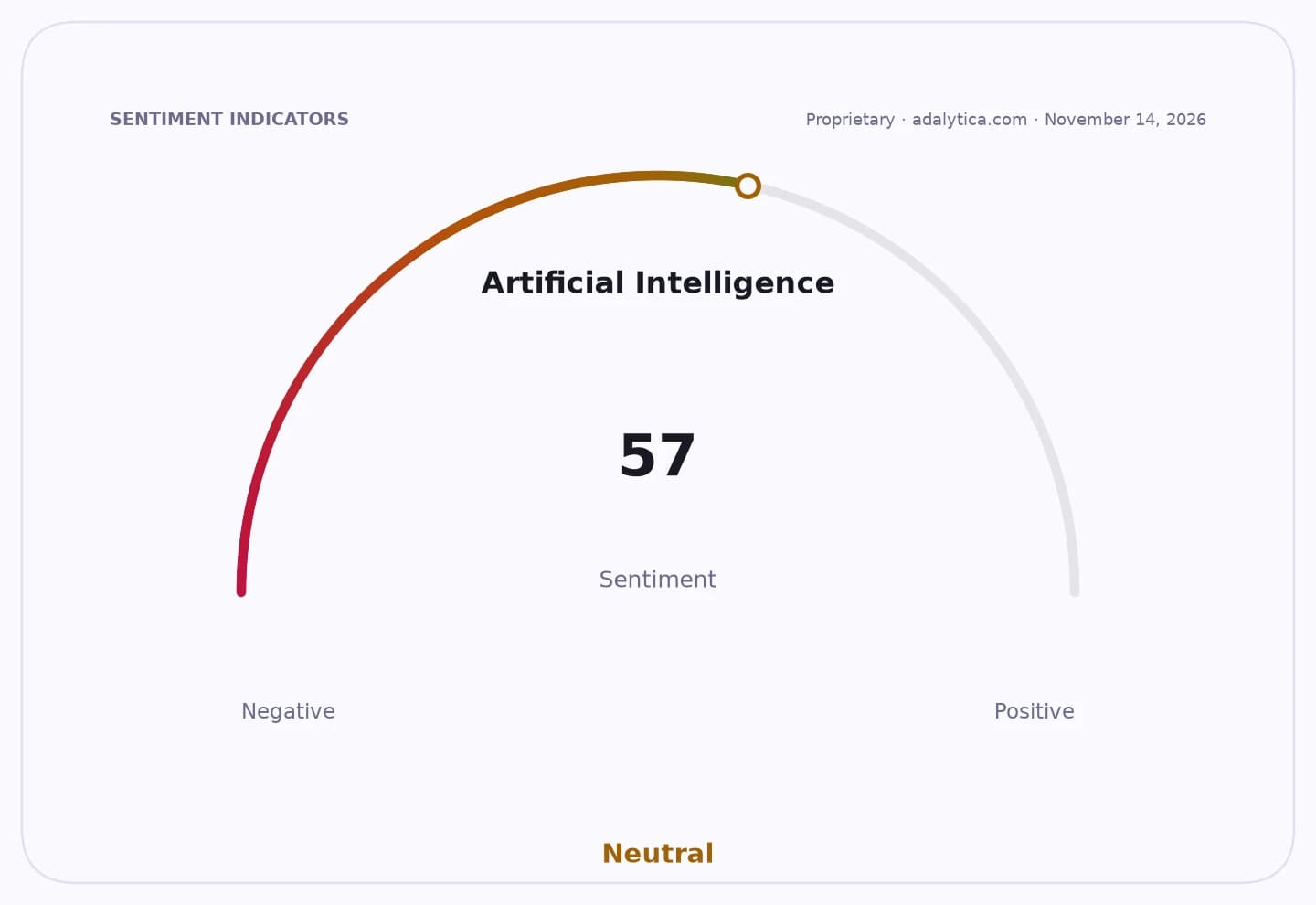
Sentiment Indicators
For investors, that matters because marketing is one of the earliest and most visible pressure points for enterprise AI adoption. When AI starts influencing search, discovery, media planning and content generation, it does not just change workflows. It changes where budgets flow, which vendors capture value, and which businesses get commoditized. That is why the market is so focused on the large-cap platforms at the center of the AI stack, from Microsoft and Nvidia to Alphabet, even as sentiment has become far more fragile in recent weeks.
The timing is telling. Microsoft, Nvidia and Alphabet have all seen sharp swings in their shares, with conventional technical indicators showing stretched or damaged trends into late November. Microsoft’s stock was sitting well below its 50-day moving average, with RSI readings near oversold territory and a bearish MACD setup. Nvidia has had an even more violent reset, while Alphabet has also weakened after a strong run earlier in the year. That volatility underscores the same tension the conference is addressing: AI enthusiasm is real, but the market is starting to punish companies that cannot translate it into durable earnings power.
Artificial Intelligence — 30-day sentimentadalytica.com
Explore this data interactively — full history, time series and cross-market comparisons.
The bigger investable story is not simply “more AI spending.” It is the redistribution of value inside digital marketing. If advertisers increasingly use AI agents to optimize targeting and buying, then media planning itself becomes more algorithmic. That can squeeze traditional agency economics while favoring platforms that control data, demand, infrastructure and distribution. Alphabet is exposed to that shift through search, discovery and ad monetization. Microsoft is exposed through its enterprise software ecosystem and Copilot-driven workflow ambitions. Nvidia remains the toll collector on the infrastructure side as compute demand rises, even if its share price has become more volatile.
The conference also highlights a second-order effect the market often underprices: AI can homogenize brands if everyone uses the same models and prompts. IAB Hellas president Galenos Yaglis put it bluntly — if everyone gives the same instructions to the same models, campaigns will start to look alike. That is a warning, but also an investment clue. The companies that preserve differentiated data, proprietary audiences, creative quality and trust will command the premium. Those that treat AI as a cost-cutting shortcut may see margins improve briefly before brand value erodes.
Publishers face the harshest adjustment. As AI reshapes search and content discovery, they must defend traffic, monetization and relevance in a world where answers may arrive before users reach a site. That makes tools for content protection, attribution and audience ownership more valuable. It also strengthens the case for firms that sit on unique data, trusted distribution or authenticated ecosystems, rather than generic content farms dependent on search referrals.
The conference’s focus on AI agents, behavioral science and the “new price of attention” is exactly where the next opportunity lies. The market is still pricing AI as a technology cycle. I believe it is more than that: it is a restructuring of marketing economics, and the biggest winners will be the platforms and infrastructure providers that sit between brands and consumers while the biggest losers will be the middlemen who cannot prove their value.
If you want exposure to that inflection point, the best long-term positioning remains the picks-and-shovels layer — compute, cloud, ad-tech infrastructure and enterprise software with genuine distribution. But investors should also watch for the second wave: companies that help brands use AI without losing identity, trust or pricing power. That is where the next durable returns are likely to emerge.
| Entity | Gains | Losses |
|---|---|---|
| Alphabet | ▲search and ad monetization leverage | ▼traditional publishers |
| Microsoft | ▲Copilot and enterprise AI demand | ▼low-differentiation software vendors |
| Nvidia | ▲compute and AI infrastructure spend | ▼buyers facing margin pressure |
| Agencies/publishers | ▲AI-enabled efficiency leaders | ▼commoditized marketing middlemen |