Sierra’s valuation has doubled to $30 billion in just six months, a sharp signal that enterprise buyers are moving from AI pilots to paying for automation in customer experience at scale.
Sierra Valuation Doubles to $30 Billion
That matters because customer service is one of the first big commercial battlegrounds for artificial intelligence: it is high-volume, labor-intensive and easy for companies to measure in savings and conversion gains. When a startup can raise $1.75 billion and lift its valuation from $15 billion to $30 billion in half a year, the market is effectively saying that AI agents are no longer a science project but a budget line item.
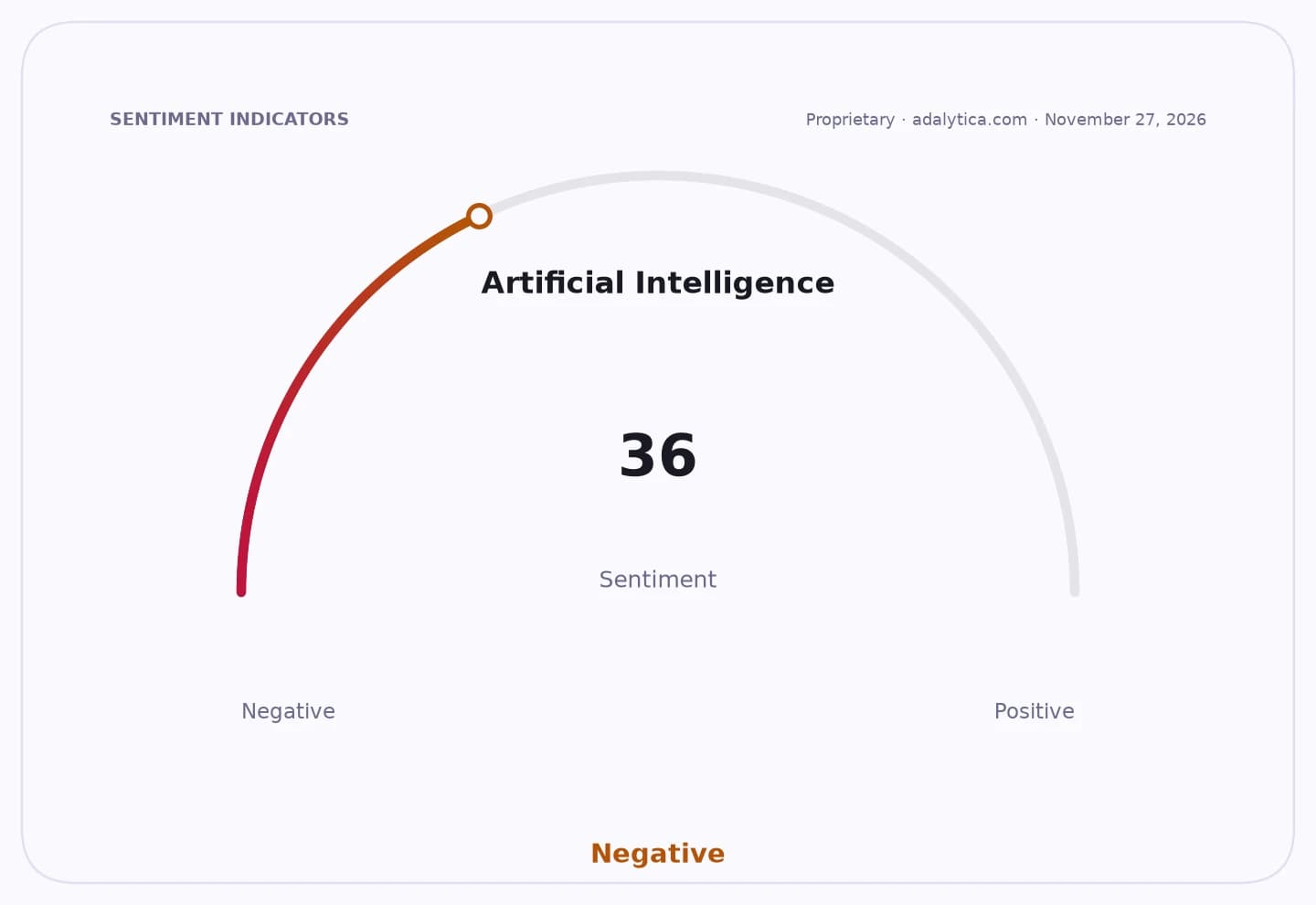
Sentiment Indicators
The round, led by Greenoaks and Lightspeed Venture Partners with backing from Benchmark, Sequoia, GV and Tiger Global, comes as Sierra says it now serves almost half of Fortune 50 companies, including BNY, HSBC, Singtel, Wells Fargo, JPMorganChase, Pearson, Next and Cox Automotive. The company also said late last month that its outcome-based pricing helped double its run-rate revenue to $400 million within five months, a pace that helps explain why capital is rushing into the sector.
For investors, the message is bigger than one private company. AI customer experience is becoming a platform market, with winners likely to be those that sit between enterprise systems, model providers and human workflows. Sierra says it is building protocol definitions for agents with companies including Meta, Stripe and Walmart, a reminder that the next phase of AI adoption is not just chatbots answering questions but agents transacting across corporate systems.
That creates a clear investment map. The obvious beneficiaries are the CX automation specialists and, by extension, the infrastructure and software ecosystems around them: cloud compute, data platforms, model providers and enterprise software vendors that can plug in agentic tools without ripping out existing systems. The pressure lands on traditional contact-center labor models and legacy customer-service software that cannot match outcome-based economics.
The valuation surge also underscores how much the market is rewarding scale in enterprise AI, even as broader technology sentiment remains volatile. Sierra says it will use the new capital to deepen its technology stack and add sales capacity, a playbook that suggests the company is preparing for a land-grab while adoption is still early.
The thesis here is straightforward: the market is underestimating how quickly AI in customer experience can become a durable, recurring revenue engine. If Sierra’s growth is any guide, this is not a niche use case. It is an inflection point. Investors should be positioning for a multi-year shift in enterprise software budgets toward agentic automation, with the strongest upside in the picks-and-shovels that make those systems work at scale.
| Entity | Gains | Losses |
|---|---|---|
| Sierra | ▲Higher valuation, faster growth | ▼Greater execution pressure |
| AI model and cloud providers | ▲More enterprise demand | ▼More pricing competition |
| Enterprise customers | ▲Lower service costs, automation | ▼Higher vendor lock-in risk |
| Legacy contact-center operators | ▲— | ▼Share shift to AI automation |