Australian companies are moving faster on artificial intelligence even as gaps in data, skills and legacy systems slow full-scale adoption, widening the divide between firms that can convert AI into productivity gains and those that cannot.
Australian firms race to adopt AI amid system gaps
Artificial Intelligence
The story matters because AI is increasingly becoming a competitive necessity rather than an experimental add-on. For Australian businesses, the constraint is no longer interest in the technology but the infrastructure needed to deploy it safely and at scale. That creates an uneven economic impact: companies with clean data, modern cloud architecture and strong governance can lower operating costs and improve decision-making, while laggards risk higher expenses and weaker margins.
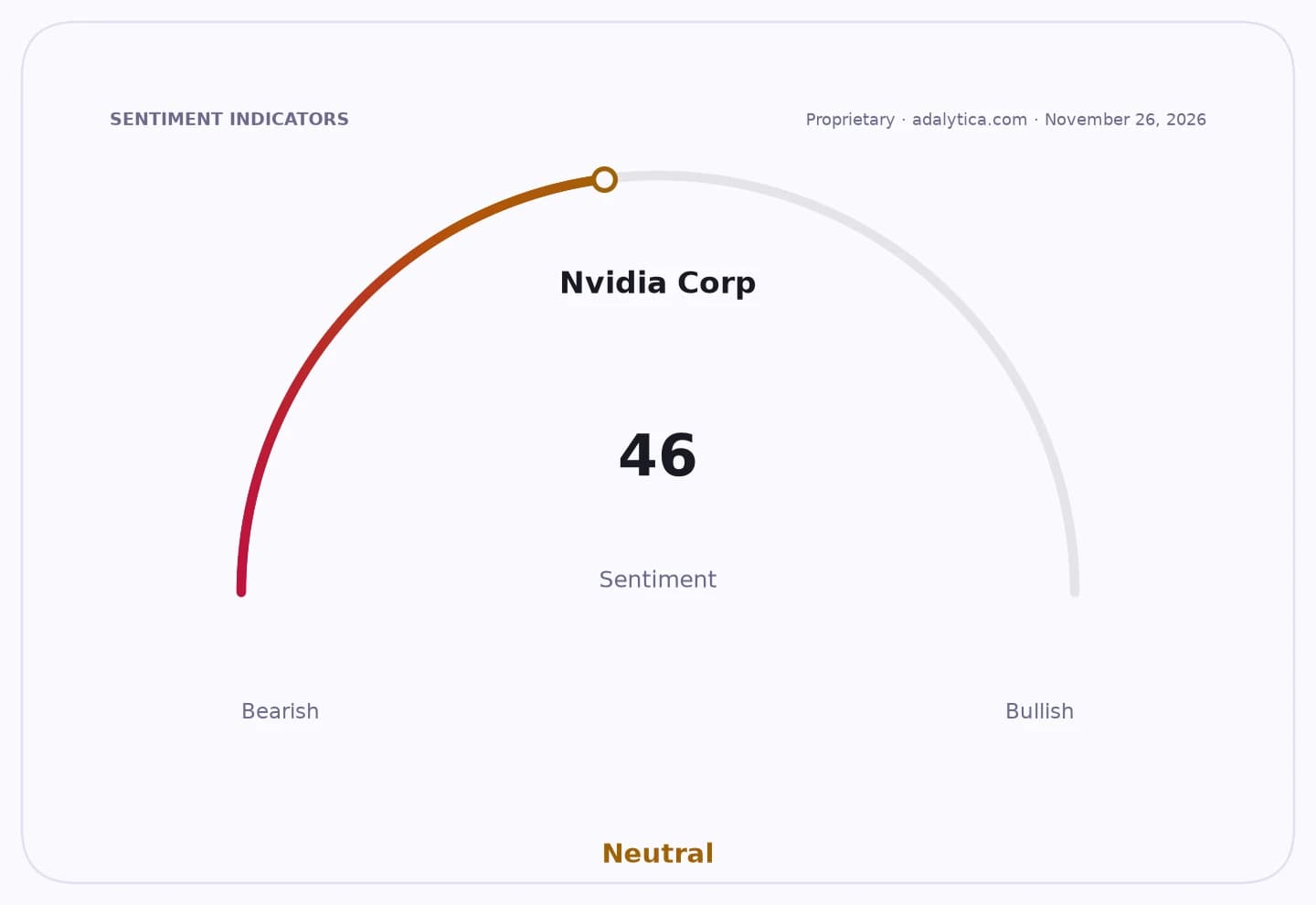
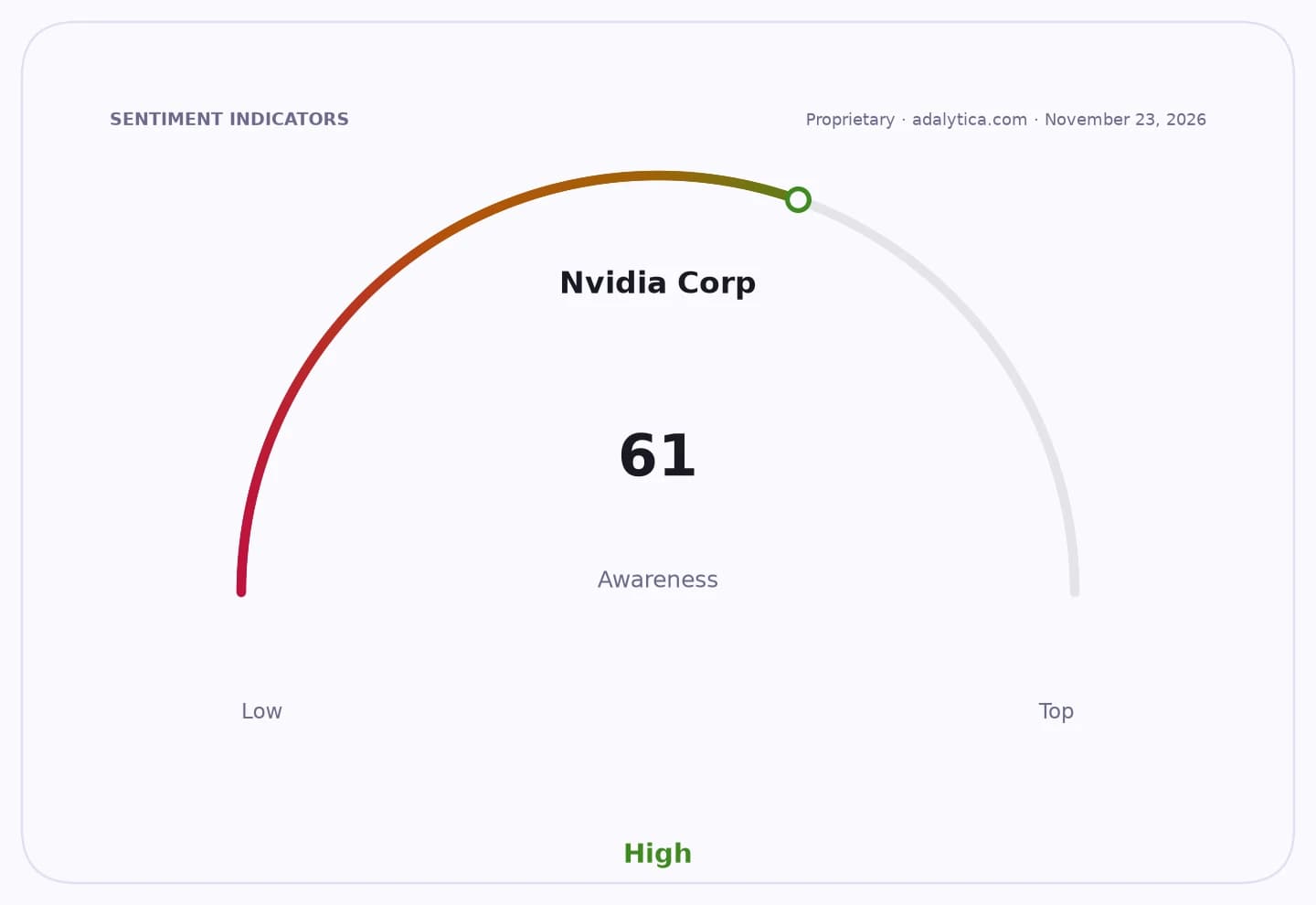
Sentiment Indicators
Artificial Intelligence
The shift is also part of a broader global race. Authorities and companies across Asia are urging controlled AI adoption, with the Japanese Ministry of Defense recently encouraging use of the technology while keeping humans in the loop. At the same time, generative AI usage is rising sharply in Europe, underscoring how quickly firms are trying to translate the technology into measurable gains. In that context, Australia’s challenge is less about enthusiasm than execution.
Investor implications are clear. AI exposure is still being rewarded, but markets are beginning to distinguish between beneficiaries of actual deployment and companies that merely talk about it. Nvidia remains the key hardware proxy for AI buildout, though its shares have been volatile and are well below recent highs after a sharp decline from above $220 in October to about $149.30 on Nov. 25. Microsoft, meanwhile, has also sold off from above $540 in early November to about $489.93, with technical indicators showing weakening momentum. That suggests investors are reassessing the pace and profitability of the AI capex cycle even as adoption broadens.
Nvidia Corp
The bigger narrative is that AI spending is spreading faster than the systems required to absorb it. That is likely to support a long tail of software, cloud and semiconductor demand, but near-term winners will be the firms able to bridge the operational gap. For Australian companies, the immediate test is not whether to adopt AI, but whether their balance sheets, data architecture and governance frameworks are ready to turn it into earnings.
| Entity | Gains | Losses |
|---|---|---|
| Australian firms with modern systems | ▲Productivity gains | ▼None |
| Legacy-heavy Australian firms | ▲Slower transition | ▼Competitive gap widens |
| AI infrastructure suppliers | ▲More demand | ▼Valuation risk if spending slows |
| Investors in AI adopters | ▲Better earnings visibility | ▼Risks from execution delays |