A fresh push to build localized AI models, including a Korean “Weather Chat GPT,” is a reminder that the generative-AI race is widening beyond the U.S. giants — and that investors may need to think less about who can launch the flashiest model and more about who can keep monetizing the AI stack for years.
Nvidia, Microsoft, C3.ai on localized AI model growth
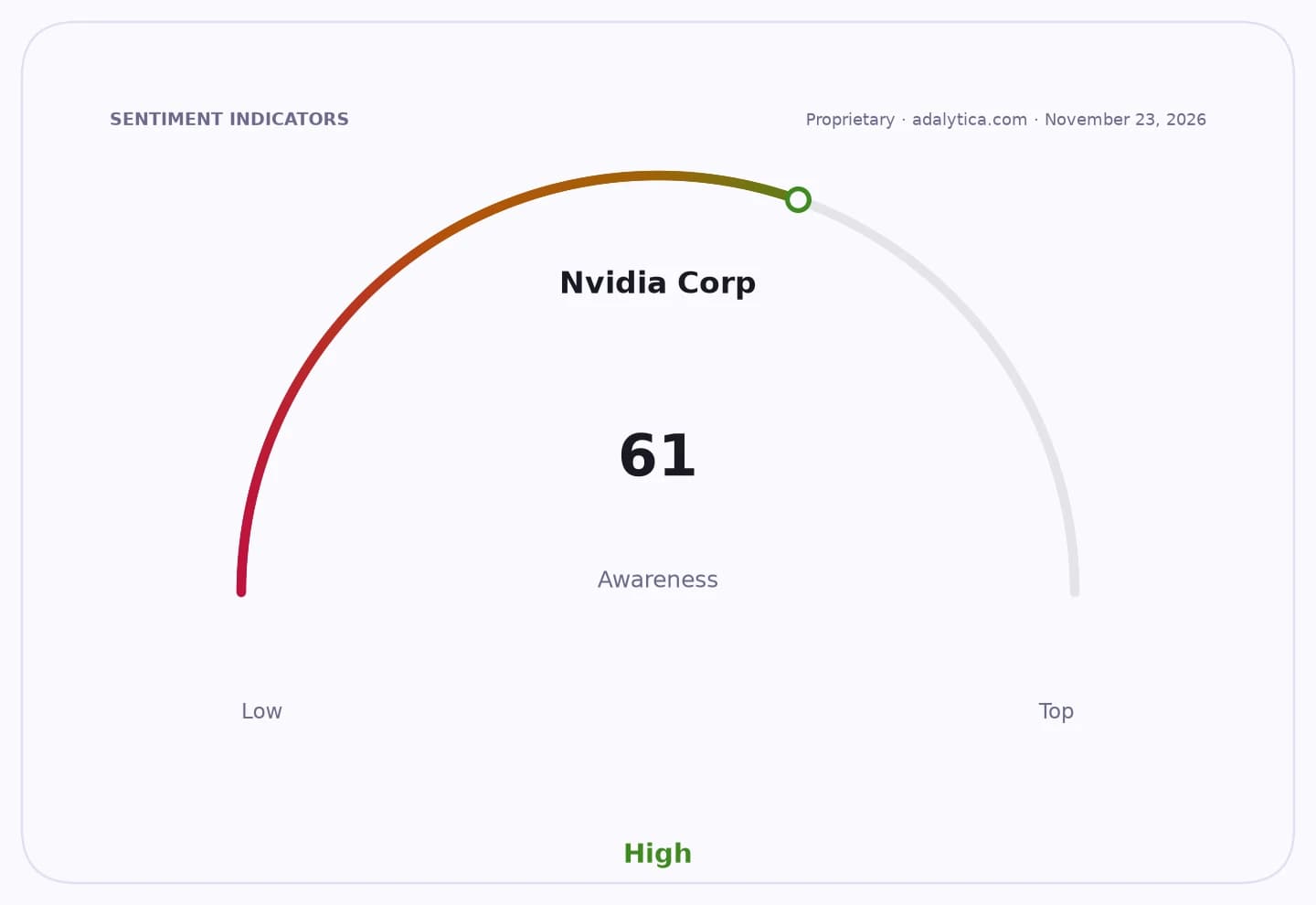
Nvidia Corp
That matters because the next phase of AI may be less about one dominant chatbot and more about a market of specialized systems tuned for local language, regulation and use cases. For companies such as Nvidia, Microsoft and C3.ai, that is both a validation and a challenge: it expands the addressable market for AI infrastructure and software, but it also raises the bar for product differentiation as more competitors enter the field with targeted models.
Sentiment Indicators
Nvidia remains the clearest beneficiary of that trend. Even after a bruising selloff that left the stock at $149.30 on Nov. 25, well below its 50-day moving average of about $203.65, the long-term case still rests on the same foundation: every new model needs compute, networking and training capacity. The stock’s technical picture has weakened sharply, with momentum indicators still depressed, but that kind of volatility is exactly what long-term investors in transformative infrastructure businesses have lived through before.
Microsoft, meanwhile, looks better positioned than most to turn model proliferation into recurring revenue. Its shares closed at $489.93 on Nov. 25, still above the 200-day moving average of roughly $443.23, even after a steep pullback from earlier highs. For investors, the key question is not whether AI growth slows, but whether Microsoft can keep embedding AI across cloud, productivity software and enterprise workflows. If localized models become the norm, the winners will be the platforms that can host, distribute and operationalize them at scale.
C3.ai is the riskier bet in that mix. The stock traded around $10.00 on Nov. 25, down sharply from this year’s highs, as the market continues to question whether smaller software names can turn AI enthusiasm into durable profits. The company still sits in a promising niche, but niche is not the same as moat. In a more fragmented AI market, customer wins matter more, and proof of sustained commercial traction will matter even more.
The broader takeaway for investors is encouraging, not alarming. Regional AI models do not diminish the AI opportunity; they broaden it. They suggest demand is deepening across industries, countries and languages, which should keep benefiting the companies selling picks and shovels — especially chips, cloud capacity and enterprise AI tools. The near-term path will likely be volatile, but for patient investors, the bigger story is still secular growth. This is a space worth watching closely, and one to own through diversification and a multi-year horizon.
| Entity | Gains | Losses |
|---|---|---|
| Nvidia | ▲More AI compute demand | ▼Near-term valuation froth |
| Microsoft | ▲Broader enterprise AI adoption | ▼Pressure to keep differentiating |
| C3.ai | ▲More AI awareness | ▼Competitive crowding, weaker pricing power |
| Localized AI entrants | ▲Regional relevance, tailored use cases | ▼Scale gap versus U.S. giants |