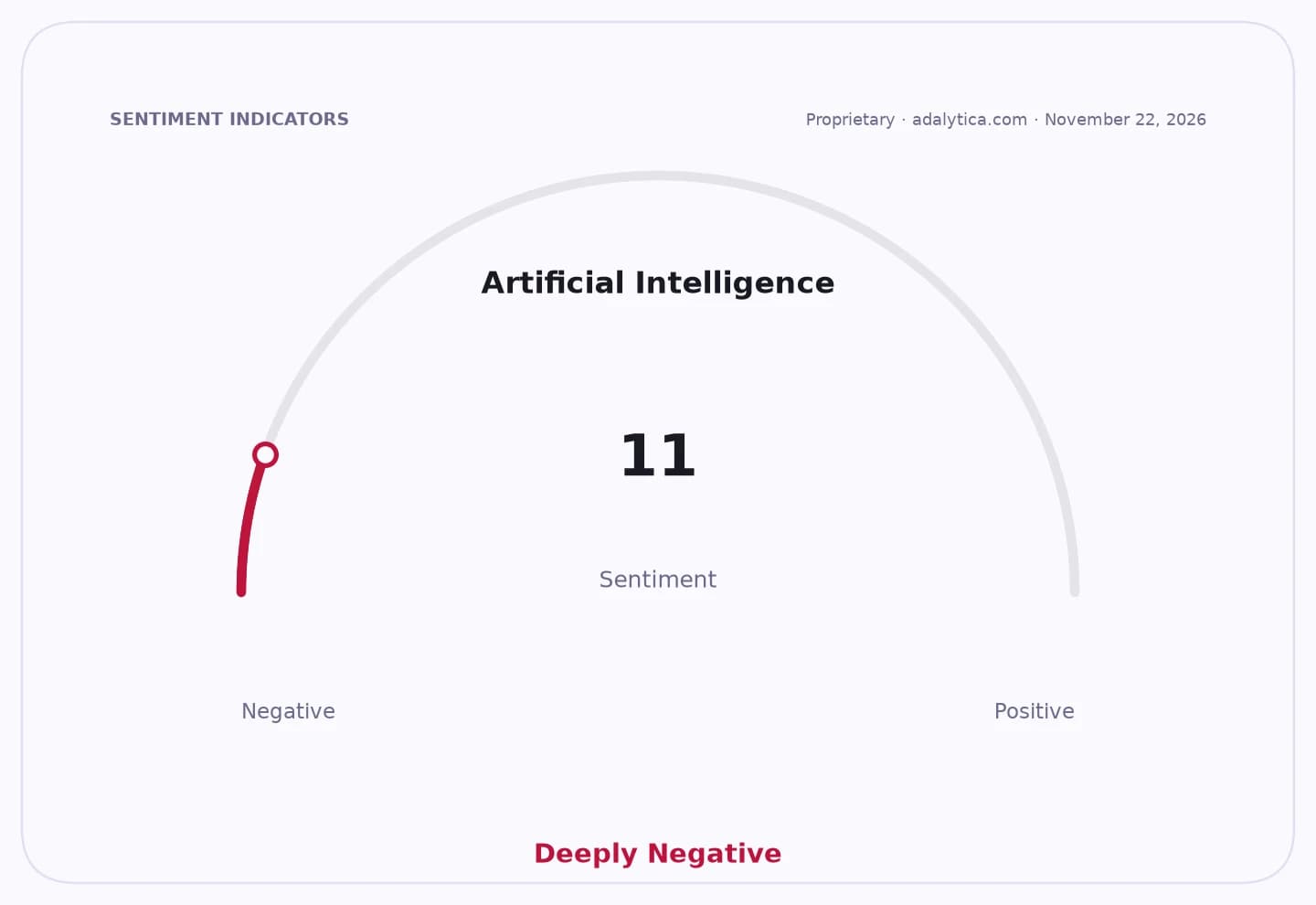
AI is no longer just a story about faster chips and larger software budgets — it is becoming a story about which workers can use the tools well enough to stay valuable.
AI adoption shifts to training and workflow spending
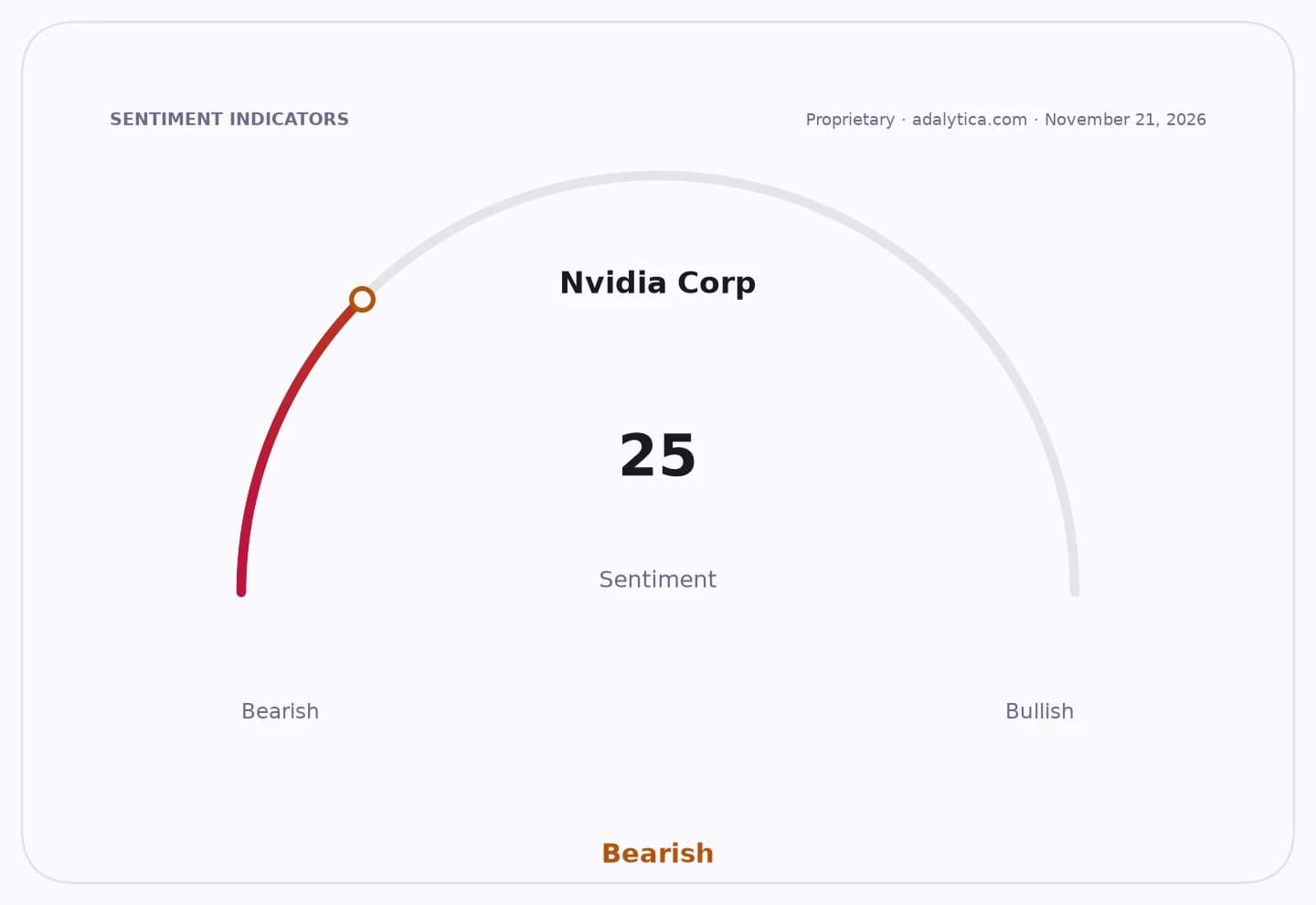
Nvidia Corp
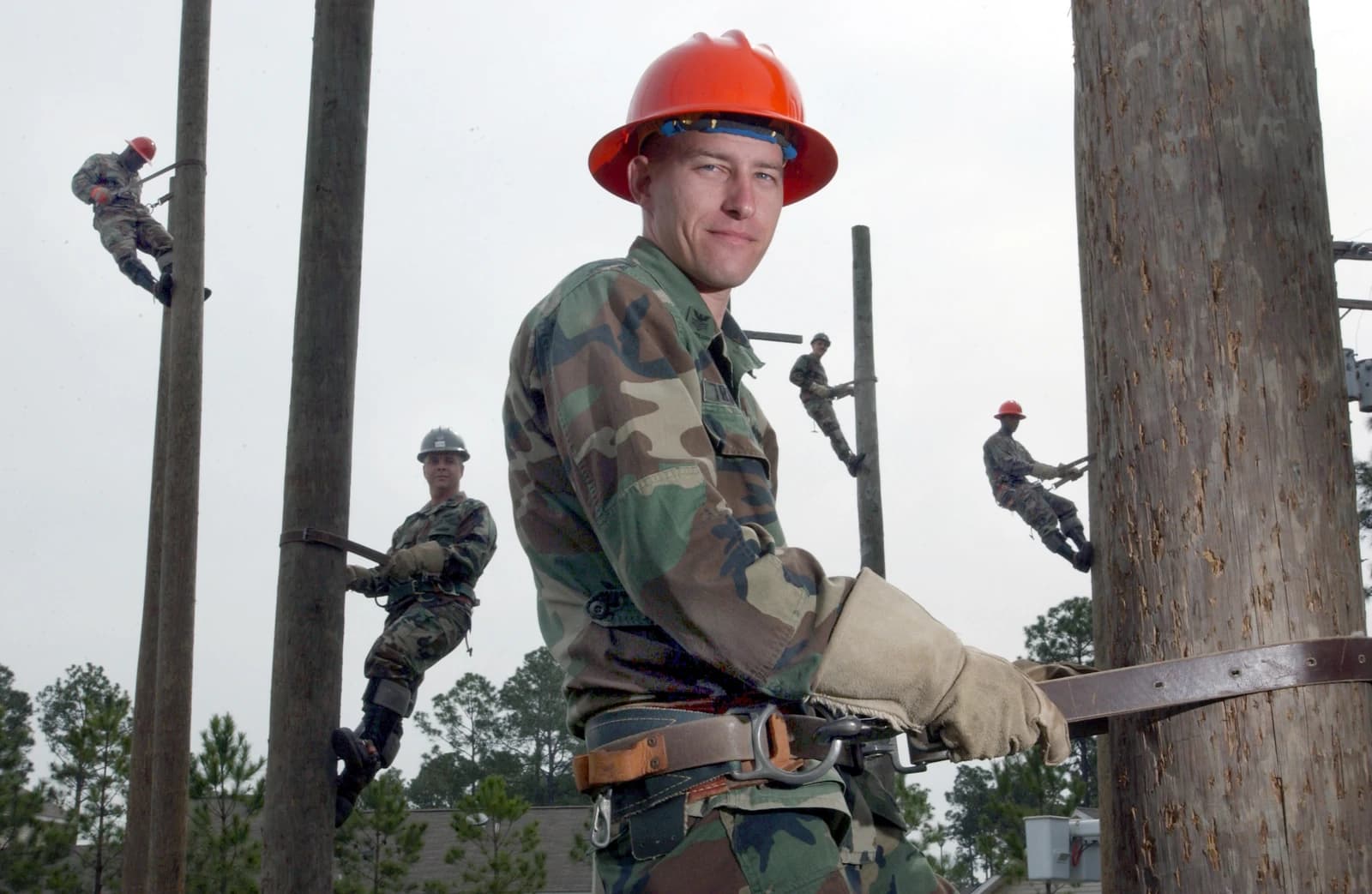
That is the core investment implication behind neurologist Vanesa Pytel’s warning that “the future will not be of artificial intelligence or humans separately, but of trained brains that know how to work with it.” For investors, the message is bigger than workplace psychology: the next phase of the AI trade will be driven not only by compute demand, but by the costly process of retraining labor, redesigning workflows and proving that AI actually boosts productivity rather than simply automating away tasks.
Sentiment Indicators
The economic stakes are hard to ignore. The International Labour Organization says one in four jobs worldwide is potentially exposed to generative AI, but its base case is not mass replacement so much as task transformation. That matters because transformation still requires spending — on software, cloud infrastructure, AI copilots, robotics, training, consulting and change management. In other words, the winners are increasingly the picks-and-shovels companies that help enterprises absorb AI, not just the firms that sell the model layer itself.
Markets, however, are still treating the AI complex as if every company benefits equally. Microsoft shares were last at $495.93, down sharply from a recent peak above $550, while NVIDIA fell to $164.94 after a brutal slide that took the stock from more than $220 in October. Both names remain well above their 200-day moving averages, but the recent damage shows how quickly sentiment can unwind when investors start asking whether AI spending is translating into durable returns. Microsoft’s Adalytica sentiment reading sat at 7, in “Extreme Fear,” while NVIDIA’s was 36, neutral — a sign that enthusiasm has cooled even as the structural buildout continues.
That disconnect creates opportunity. The market underestimates the second-order beneficiaries of AI adoption: companies that help enterprises retrain workers, manage data, automate repetitive processes and integrate AI into regulated environments. That includes software platforms, enterprise workflow tools, consulting arms, cloud providers and robotics players that can turn “AI exposure” into measurable productivity gains. It also helps explain why investors are watching names such as C3.ai, which closed at $9.90, even as Adalytica sentiment on the stock remained in “Extreme Fear.” When a sector falls out of favor, the first rebound often belongs to the companies tied to real enterprise adoption rather than pure hype.
The same theme is emerging outside public markets. Genesis AI’s $500 million raise to build a general-purpose robot that learns from workers using electronic gloves underscores where capital is flowing next: toward machines that can absorb human know-how, not just process data. Meanwhile, workforce intelligence deals such as SAP’s purchase of TechWolf point to a broader corporate scramble to identify and close AI skills gaps. That is exactly the kind of spending cycle investors should care about. If companies need to train employees to work with AI, then demand broadens beyond chips and chatbots into education, automation, labor analytics and industrial robotics.
The biggest mistake now would be to think of AI as a binary choice between human labor and machines. The more investable thesis is that AI becomes a force multiplier only when paired with skilled people — and the companies that help make that pairing work should capture the most durable cash flows. As AI adoption matures, the market is likely to reward the infrastructure and workflow enablers first, then the firms that can prove they turn human training into measurable earnings power.
| Entity | Gains | Losses |
|---|---|---|
| AI workflow software | ▲Enterprise adoption tailwind | ▼Pure model hype |
| Cloud and chip suppliers | ▲Ongoing compute demand | ▼Overextended valuations |
| Training and consulting firms | ▲Upskilling spending | ▼Static labor models |
| Workers with AI skills | ▲Higher bargaining power | ▼Workers without retraining |