Tech companies including Microsoft, Google and OpenAI are pressing Trump health officials for broad access to Americans’ medical records, while doctors warn the government is moving too quickly to let AI apps handle sensitive health data with limited oversight.
Microsoft, Google, OpenAI Push Health Record Access

The push matters because it could help decide who controls one of healthcare’s most valuable assets: patient records. If AI apps are allowed to pull data more freely from the national exchange network and get promoted through Medicare channels, the result could be a new distribution model for digital health tools — and a new pipeline of revenue for big tech, startups and venture-backed wellness companies.
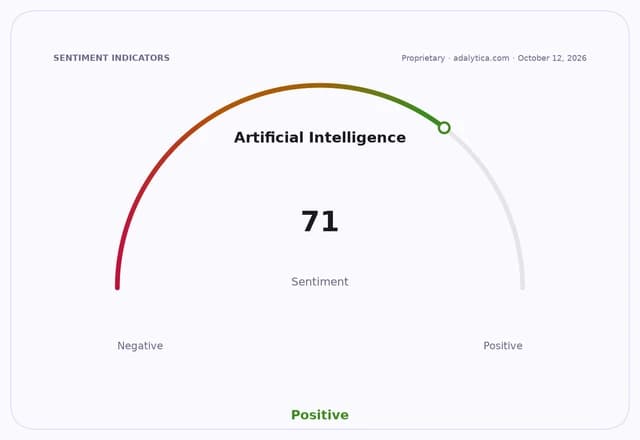
Sentiment IndicatorsⓘProprietary · adalytica.com · October 12, 2026
This is a snapshot — live sentiment, awareness and momentum for 130+ markets update continuously in the dashboard.Open AlphaPulse
KFF Health News reported that federal health officials quietly used a Slack room and private meetings to shape the “Health Technology Ecosystem,” inviting at least 35 industry groups to a February listening session that was not posted on the FDA’s public calendar. CMS has also launched a Medicare App Library that currently lists about two dozen commercial apps, and officials have said the platform could become a “sales engine” for health apps.
That is drawing scrutiny from physicians and legal experts who say the setup resembles an advisory committee operating outside normal public rules. The American Medical Association’s John Whyte said many of the tools are not ready for broad use and that there is no clear liability if they misfire, a concern that grows as apps access increasingly intimate records to generate advice on obesity, diabetes and cancer.
The policy stakes are economic as well as clinical. CMS officials have suggested some apps may be prioritized for a reimbursement program for AI chatbot advice and wearable-device tracking, which would give approved products a direct path to Medicare payment and potentially widen adoption among older Americans and disabled beneficiaries.
For investors, the story reinforces a central theme in health tech: access and reimbursement can matter more than the product itself. Microsoft and Google would gain from deeper integration into healthcare workflows, while startups such as Slothwise could benefit from Medicare endorsement, but the same model raises regulatory, privacy and reputational risk if patient data is mishandled or AI outputs prove unreliable.
The next flashpoint is whether CMS and FDA formalize the rules around app access, consent and disclosure. Any move toward broader reimbursement or public promotion of AI health apps would likely draw more lobbying from tech firms and sharper resistance from doctors, privacy advocates and lawmakers worried about data capture and industry influence.
| Entity | Gains | Losses |
|---|---|---|
| Microsoft, Google, OpenAI | ▲More health-app distribution | ▼More regulatory scrutiny |
| CMS, HHS officials | ▲Faster digital health rollout | ▼Public trust if oversight lags |
| AI health-app vendors | ▲Medicare exposure and reimbursement | ▼Liability if tools fail |
| Doctors and patients | ▲Easier record access | ▼Privacy and safety risk |