Britain is moving to make the NHS a faster proving ground for artificial intelligence in healthcare, a shift that could lower regulatory barriers for medical-technology firms and make the UK more attractive to investors.
UK NHS AI healthcare regulation overhaul

The government on Tuesday accepted all 44 recommendations from the National Commission into the Regulation of AI in Healthcare, backing a major overhaul of how AI-powered medical devices are approved and monitored. The change is designed to move the system away from a one-off pre-market assessment and toward lifecycle oversight, with regulators watching how products perform after deployment.
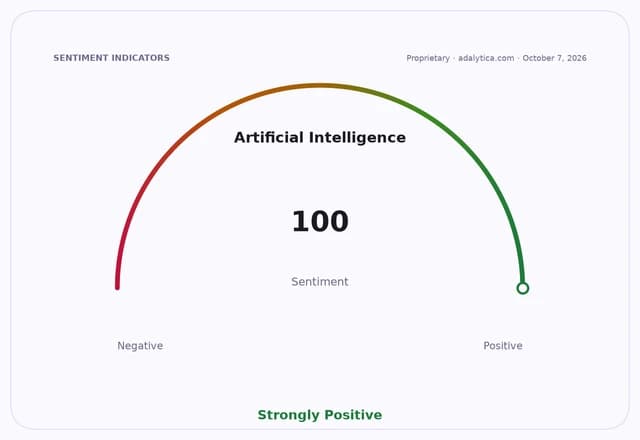
Sentiment IndicatorsⓘProprietary · adalytica.com · October 7, 2026
This is a snapshot — live sentiment, awareness and momentum for 130+ markets update continuously in the dashboard.Open AlphaPulse
For UK healthtech companies, the prize is earlier access to clinical validation in a large public health system, which industry groups say can create a genuine competitive edge. Martin Turner of the Bioindustry Association said the Medicines and Healthcare products Regulatory Agency’s approach makes Britain a “leading testbed for innovation,” while Steve Lee of the Association of British Healthtech Industries called the plans a “positive direction of travel” for companies and investors.
That matters economically because faster approval and clearer rules can reduce the cost and uncertainty of bringing AI tools to market. If the NHS adopts those products, firms could prove efficacy, win procurement contracts and scale more quickly, supporting domestic investment, partnership deals and acquisitions in a sector where commercial adoption has often lagged the pace of innovation.
The MHRA is also opening applications for the third phase of its AI airlock, a sandbox that lets companies test medical devices alongside regulators. This phase will focus on post-deployment monitoring, with the first firms due to be selected next month; draft guidance on self-improving AI devices is due by December, and the regulator plans a consultation next year on how to classify such products.
The policy reset comes after around two-thirds of respondents to the commission said the current framework restricts innovation, while 77% of healthcare professionals who replied called for significant reform or a complete overhaul. Health innovation minister James Frith said the government wants patients to benefit from AI faster, but stressed that innovation cannot come at the expense of safety.
Investors will be watching whether the regulatory loosening is matched by NHS procurement and reimbursement, since approval alone will not translate into revenue. Industry leaders also warned that the UK will need to stay aligned with overseas markets, or early wins at home could be offset by new barriers when companies try to expand abroad.
| Entity | Gains | Losses |
|---|---|---|
| UK healthtech firms | ▲Earlier NHS testing | ▼Slower pre-market access |
| Investors in AI healthcare | ▲Clearer regulatory path | ▼Higher uncertainty premium |
| NHS patients | ▲Faster access to new tools | ▼Risk of added oversight burden |
| Global rivals | ▲— | ▼UK firms’ early testbed advantage |