AI is becoming a routine part of health decision-making, but the biggest risk is that users are starting to treat it like a clinician when it is only a tool for information.
Brazil survey on AI use in health decisions
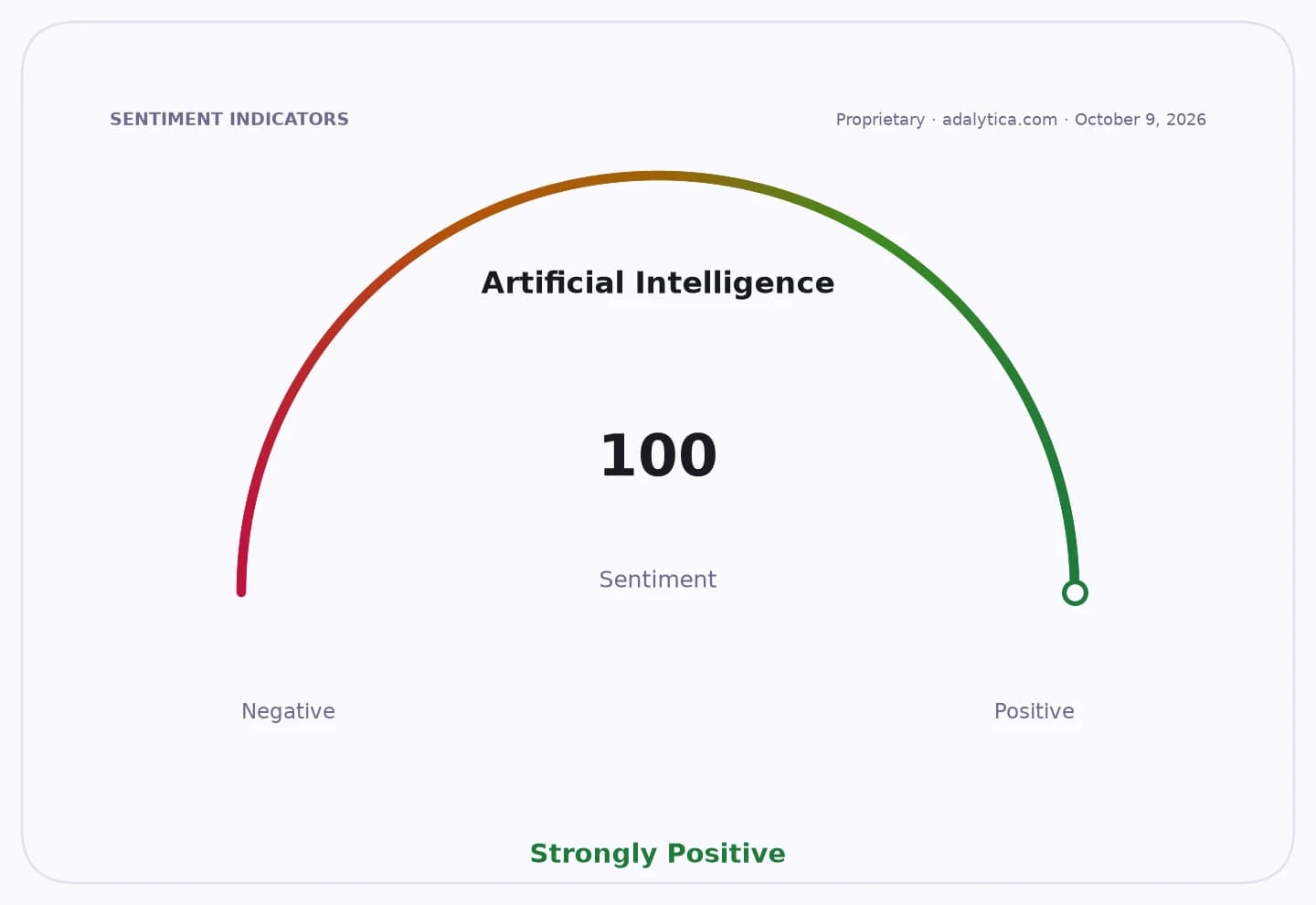
That is the central warning from a Brazilian survey cited by Afya’s Research & Innovation Center and healthtech Conexa, which found 49% of respondents use artificial intelligence in health-related situations and 66% of those users ask about symptoms, diseases or diagnoses. In mental health, where anxiety, insomnia, sadness, irritability and poor concentration can point to many different conditions — or no disorder at all — that habit raises the odds of misreading ordinary distress as a diagnosis or, worse, acting on faulty advice.
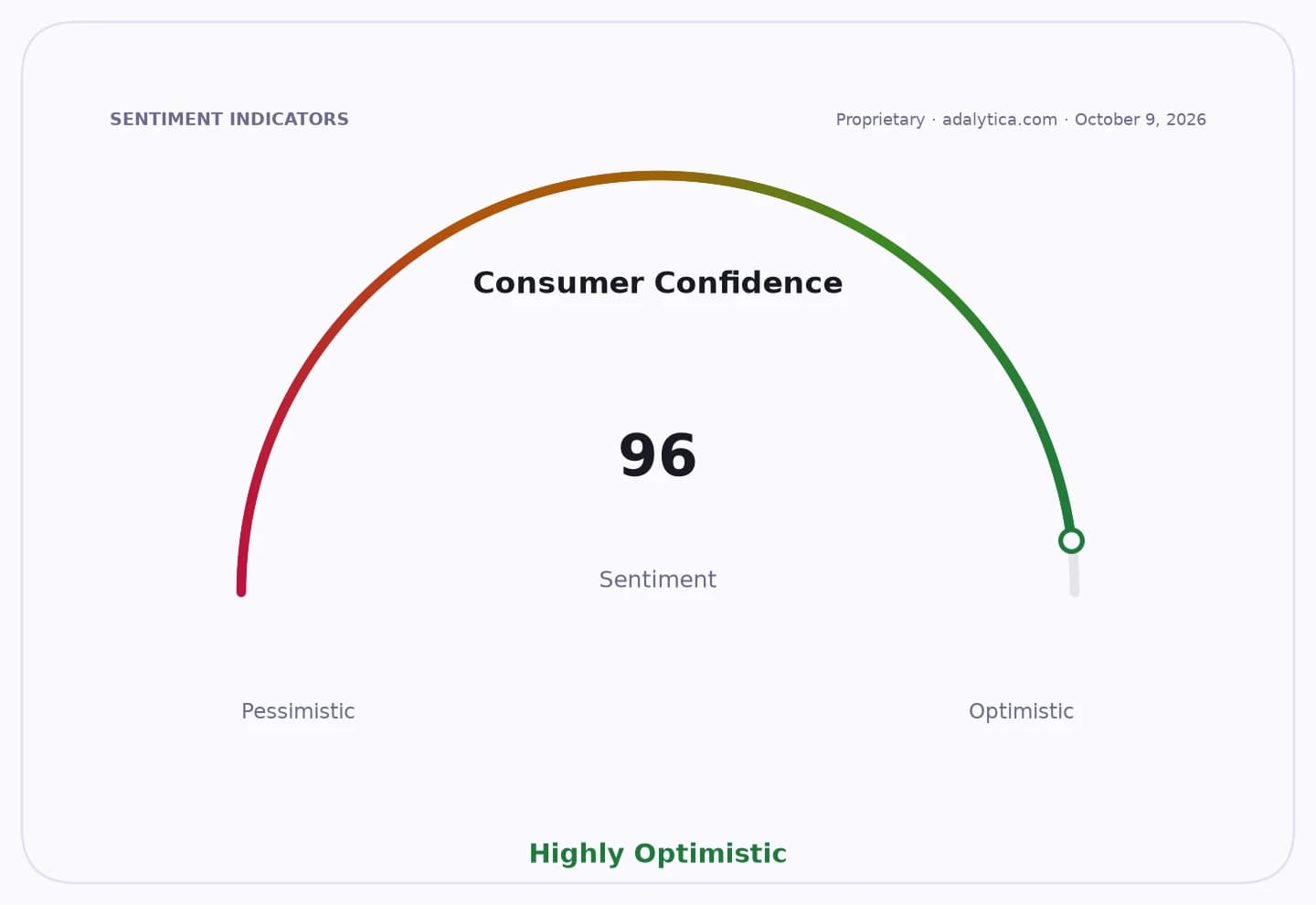
Sentiment IndicatorsⓘProprietary · adalytica.com · October 9, 2026
This is a snapshot — live sentiment, awareness and momentum for 130+ markets update continuously in the dashboard.Open AlphaPulse
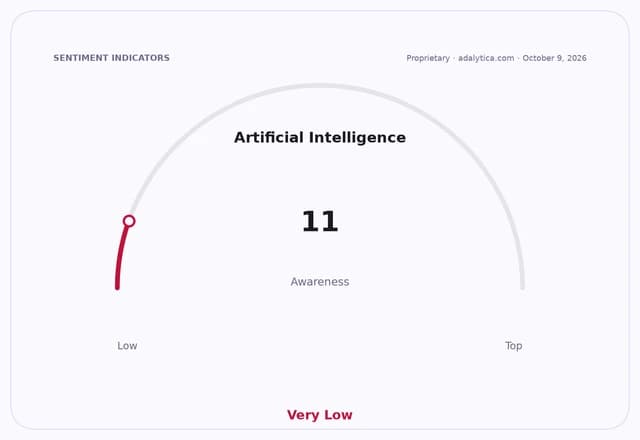
The economic significance is less about one survey than about the scale of a fast-growing consumer behavior that can influence healthcare demand, medication use and professional consultation patterns. The same research suggests AI is now embedded in the broader health journey of many patients, with 79% of Brazilians surveyed using AI in daily life. Yet 67% still prefer speaking directly with a doctor, while 56% said they would not trust a consultation handled entirely by AI. That gap matters for healthcare providers, insurers and digital health companies because it shows adoption is rising faster than trust — a dynamic that can lift engagement with health tools while leaving the final decision, and liability, with human clinicians.
The five precautions outlined by psychiatrist Carlos Renato Periotto frame the main investor and public-health issue: AI can help patients organize questions, but it cannot safely replace clinical judgment. The first warning is not to use AI to make a diagnosis. The second is to distrust answers that sound too confident, since fluency can mask errors. The third is to avoid changing medication based on AI guidance, particularly for antidepressants, anxiolytics and mood stabilizers, where dose changes or abrupt stoppage can create clinical risk. The fourth is to avoid sharing unnecessary personal data. The fifth is to use AI as support, not a substitute for care, especially when there is severe distress, suicidal risk, confusion or major functional decline.
For investors, the story is a reminder that generative AI in healthcare has a dual-use profile. On one hand, it can improve triage, patient education and navigation, helping platforms deepen engagement and reduce friction before a doctor visit. On the other, poor guardrails increase the risk of misinformation, privacy exposure and inappropriate self-treatment, all of which can trigger regulatory scrutiny and reputational damage. That tension is especially relevant for companies building consumer-facing health AI, where scale depends on trust and trust depends on limiting claims.
The broader narrative is that mental health is becoming one of the clearest stress tests for consumer AI. Unlike simpler informational queries, psychiatric symptoms are subjective, context-dependent and often high stakes. That makes them a poor fit for overconfident automation and a strong case for human-in-the-loop systems. The winners will be providers and platforms that use AI to educate and route patients safely; the losers will be products that blur the line between guidance and diagnosis.
For Microsoft and Nvidia, the stock context is secondary but relevant in a broader AI economy that still rewards infrastructure and platform owners even as end-use risks come into focus. Microsoft’s shares were last around $535.07, while Nvidia traded near $229.28, both far above their 200-day moving averages, underscoring continued investor appetite for AI exposure. But as AI moves deeper into healthcare and mental health, the market is likely to differentiate more sharply between companies selling the tools and those responsible for the outcomes.
| Entity | Gains | Losses |
|---|---|---|
| Patients using AI for guidance | ▲Faster access to information | ▼Higher risk of misdiagnosis |
| Doctors and clinicians | ▲More informed consultations | ▼More time spent correcting errors |
| Healthtech platforms | ▲Greater engagement | ▼Liability and trust risk |
| AI developers | ▲Broader healthcare use cases | ▼Regulatory scrutiny |
| Microsoft and Nvidia | ▲AI infrastructure demand | ▼Notable if misuse damages sentiment |