AI is getting good enough to hand out answers in seconds, and that is changing the value chain around the technology more than many investors may realize. The bigger economic shift is not just that students, workers and consumers can ask machines for help — it is that the next phase of AI demand will favor companies that help users frame better questions, verify answers and turn information into decisions.
Microsoft, Nvidia Fall as AI Sentiment Cools
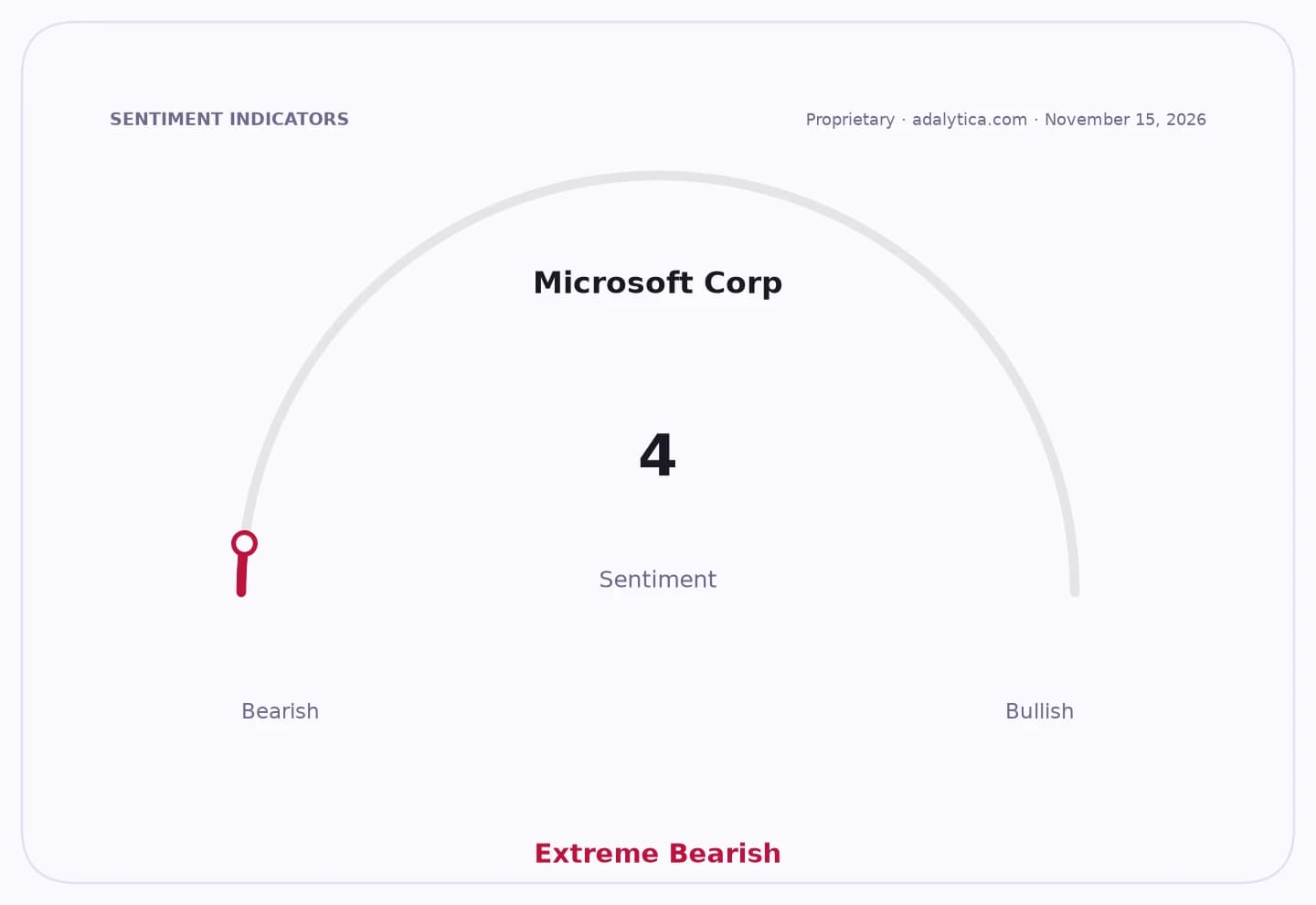
Microsoft Corp
That matters because software has always been a productivity tool, but AI is becoming a thinking tool. If the answer is cheap, then the scarce asset becomes judgment: the ability to ask, test and refine. For investors, that is a reminder that the long-term winners in AI may not be limited to the biggest chipmakers. They may also include platforms, workflow software and cloud ecosystems that sit closest to the point where questions become useful output.
Sentiment Indicators
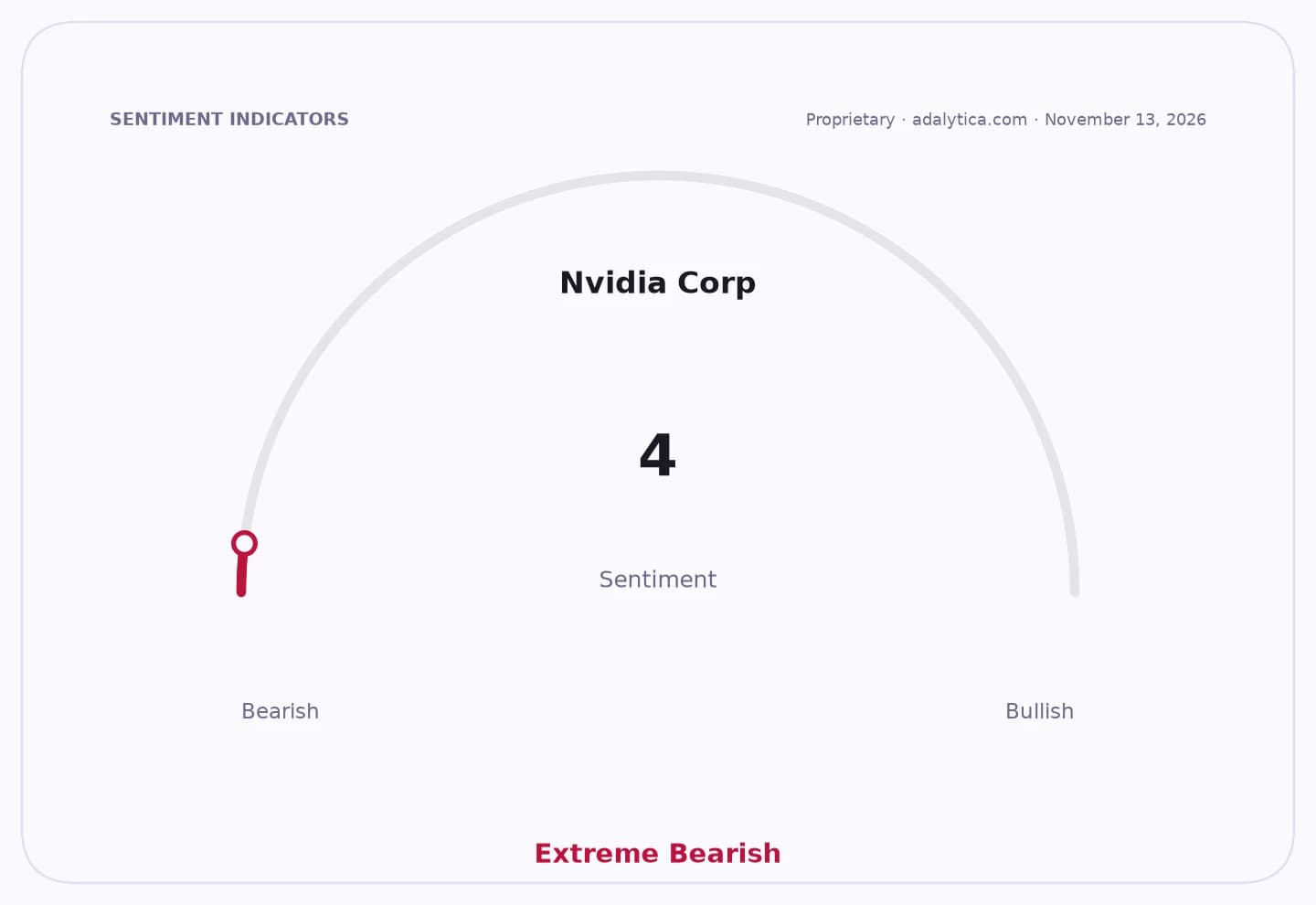
The timing is uncomfortable for the market, though not necessarily bearish in the long run. Microsoft, one of the clearest beneficiaries of the AI buildout, has seen its shares fall to 517.99 from 555.80 earlier this month, with the stock sitting just under its 50-day moving average. Standard technical indicators show momentum has cooled, and an RSI near 45 suggests the recent pullback has taken some heat out of the name without breaking the broader uptrend. Nvidia has been hit much harder, dropping to 156.14 from 221.97 on Oct. 21, with its RSI sliding to 16.0 and the shares trading well below both the 50-day and 200-day moving averages. That kind of reset often reflects a market asking tougher questions about how quickly AI spending translates into durable profits.
The article’s core message lines up with that market behavior. In education, AI makes it easier to get an answer, but it does not automatically improve understanding. That same tension applies across the economy. Companies can deploy AI broadly, but if employees do not know how to question the output, check the logic and use it inside a process, productivity gains can disappoint. In other words, the real payoff comes from organizations that teach people how to ask better questions, not just how to press a prompt.
Artificial Intelligence — 30-day sentimentadalytica.com
Explore this data interactively — full history, time series and cross-market comparisons.
That is why the latest concern around AI-enabled cheating and academic integrity matters beyond schools. When technology makes shortcuts easier, institutions respond by tightening rules, changing exams and rethinking what should be measured. In business, that can mean more spending on verification, governance and human oversight. Those may not be the flashiest AI markets, but they are likely to be sticky ones.
For Microsoft, the long-term case is still intact because its advantage is not only model access but distribution: Office, Windows, Azure and enterprise software all give it a place in the daily workflow where questioning, searching and creating happen together. Nvidia’s case is different. It remains the engine of the AI buildout, but its stock is already being judged on a higher bar — not just whether AI demand is strong, but whether the entire ecosystem keeps converting compute into cash flow. When investors start asking whether AI is producing real productivity rather than just excitement, volatility is a natural result.
Adalytica’s sentiment gauges echo that shift in mood. Sentiment around both Microsoft and the AI ticker itself has dropped to “Extreme Fear,” even as awareness remains elevated, which suggests the conversation is intense but cautious. That is often what a maturing theme looks like: excitement gives way to scrutiny, and scrutiny eventually separates durable businesses from trading fads.
For long-term investors, that is not a reason to abandon AI. It is a reason to be more selective. The most durable winners will likely be the firms that help people interrogate information, organize work and make better decisions over many years. Keep that lens on Microsoft, Nvidia and the broader AI ecosystem — and remember that in the age of instant answers, the companies that make questions more valuable may be the ones worth holding the longest.
| Entity | Gains | Losses |
|---|---|---|
| Microsoft | ▲Sticky enterprise AI use | ▼Short-term sentiment |
| Nvidia | ▲Ongoing AI infrastructure demand | ▼High-expectation valuation |
| Students and workers | ▲Faster access to answers | ▼Old memorization models |
| Schools and employers | ▲Stronger focus on judgment | ▼Easy cheating and shallow learning |