AI is cutting hours from white-collar work, but the bigger economic question is whether those productivity gains turn into higher output and profits — or simply get absorbed by companies, workers and the AI vendors competing to define how the saved time is used.
Microsoft, Nvidia, Apple Gain From AI Productivity

That question matters because productivity, not hype, is what ultimately determines whether AI becomes a broad growth engine. In Vietnam, 63% of workers say AI saves them at least seven hours a week and 43% say the gain exceeds 10 hours, a reminder that the technology can already compress routine tasks at scale. The OECD has estimated AI could lift labor productivity by as much as 53% over a decade, a figure that captures why companies and governments are racing to deploy it. But the distribution of that value is unresolved: some of the benefit will go to employers through lower labor costs and faster throughput, some to workers through higher wages or shorter hours, and some to platform owners through subscription, cloud and hardware spending.
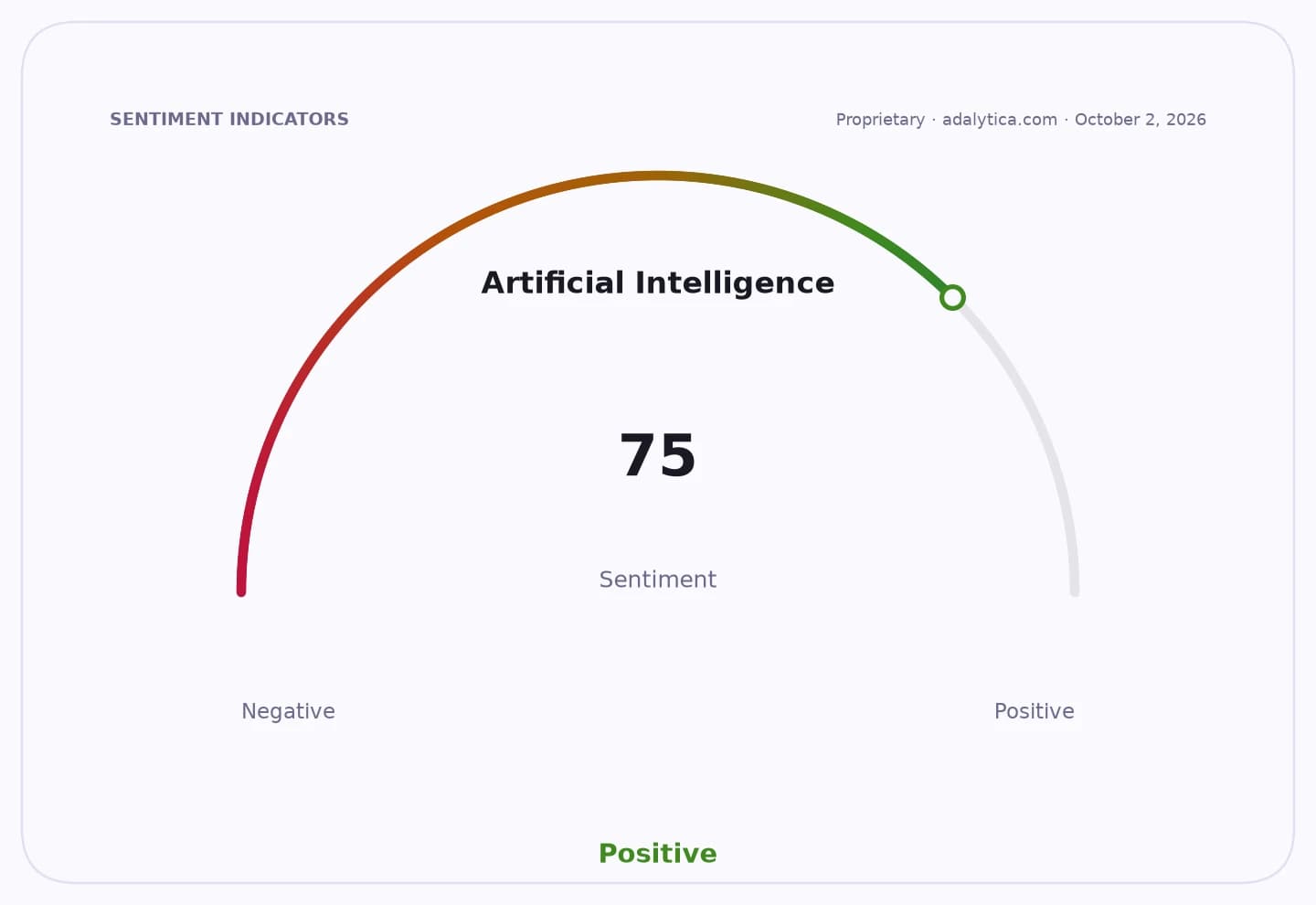
Sentiment IndicatorsⓘProprietary · adalytica.com · October 5, 2026
This is a snapshot — live sentiment, awareness and momentum for 130+ markets update continuously in the dashboard.Open AlphaPulse

For investors, that makes the AI trade less a single theme than a contest across the stack. Microsoft, Nvidia and Apple all sit in different positions in the value chain and the market is already treating them differently. Microsoft shares were up about 12% in the latest stretch to $525.39, trading above both the 50-day and 200-day moving averages, while Nvidia rose to $237.88 and Apple to $333.17. All three remain near the upper end of their recent trading ranges, but the technical picture also shows something else: strong price momentum has not eliminated the market’s need to decide where the economic surplus from AI will land.
Microsoft is the clearest test case. Its stock has recovered from a June low near $352 and the company’s 10-K warned that the market for AI products is highly dynamic, with customer expectations, regulation and competition moving quickly. That is the core investor issue: Microsoft can sell more cloud and AI services if enterprises use freed-up time to automate more work, but it can also be forced to share gains through pricing pressure, heavier capital spending and faster product turnover. Adalytica’s Microsoft earnings sentiment sat at 32, neutral, after dropping sharply over the past week, suggesting the market is still debating the payoff even as the stock price stays firm.
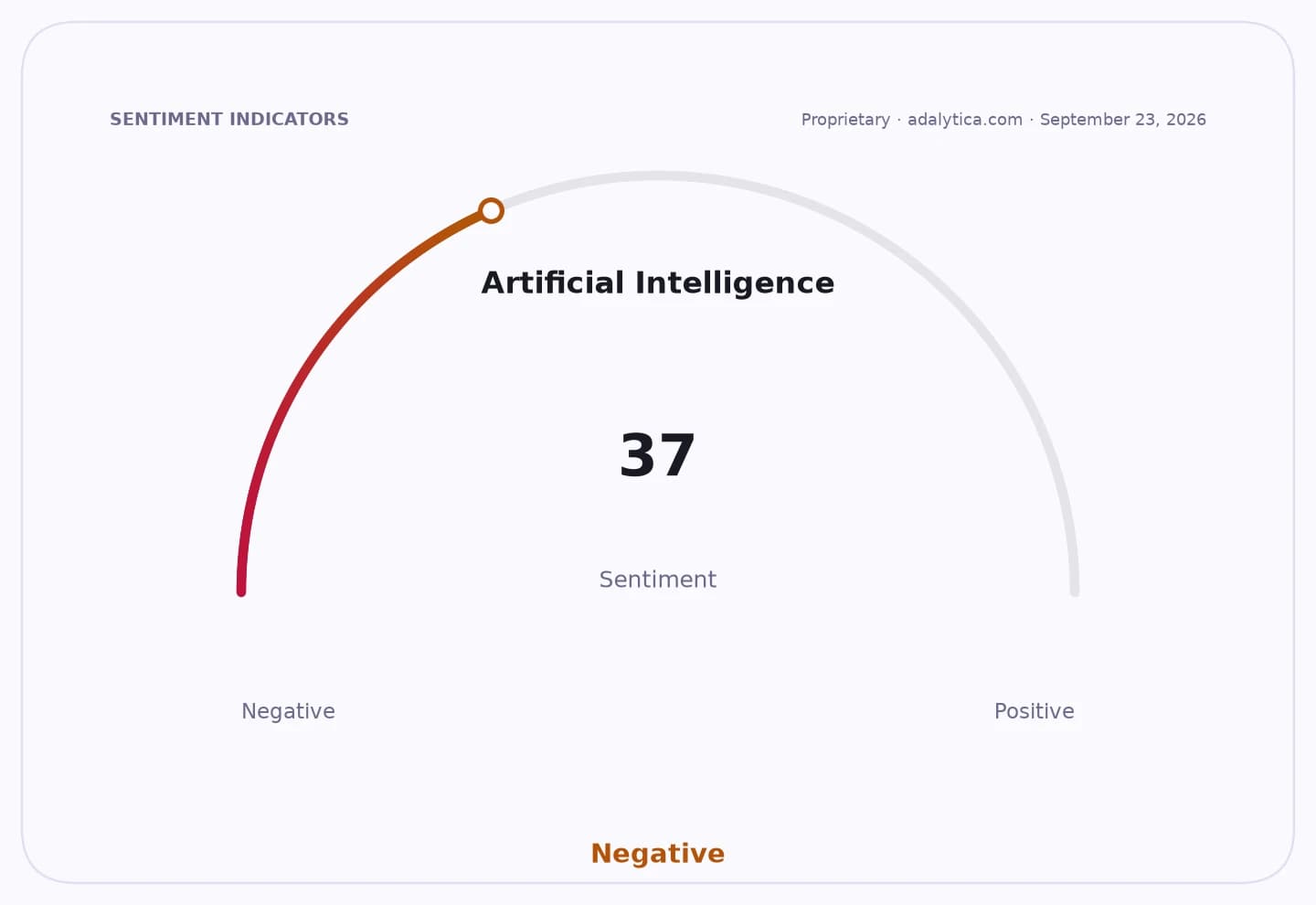
Artificial Intelligence vs MSFTadalytica.com
Explore this data interactively — full history, time series and cross-market comparisons.Open AlphaPulse

Nvidia remains the most direct beneficiary of the infrastructure build-out. Its shares have climbed to $237.88, with the 50-day average well above the 200-day and RSI readings showing stretched momentum. That reflects the basic economics of AI adoption: if businesses use AI to save time, they first need chips, servers and power. Nvidia’s risk, though, is that efficiency gains eventually shift demand from raw compute to cheaper inference and more optimized models, which could reduce the intensity of spending per unit of output. Its latest filing warned that expanding land, power and energy capacity is a multi-year process, underscoring that supply constraints can be as important as demand.
Apple is the more ambiguous case. The stock at $333.17 has also strengthened, but its upside depends on whether AI becomes a device-level productivity feature that convinces users to upgrade hardware more often, or merely a software layer that compresses margins. Apple’s filings have flagged AI-related competition, liability and privacy risks, which points to the central tension for consumer-facing players: the more AI saves users time, the more valuable the ecosystem becomes — but only if the company can control the interface where those time savings are monetized.
The macro backdrop reinforces the stakes. U.S. policy rates remain around 3.75%, unemployment is near 4.2% and industrial production is still edging higher, a mix that leaves room for productivity-led growth without obvious recession pressure. That is the best environment for AI to be judged on execution rather than narrative. If firms can turn time savings into higher output, margins should improve and capital spending can be justified. If they cannot, AI risks becoming another productivity tool that redistributes work rather than expands it.
For now, the winner is not just the company that saves the most time, but the one that captures the decision over what that time is worth. That is why the next phase of the AI trade will be shaped less by adoption headlines than by evidence of monetization, enterprise spending and whether the productivity dividend shows up in earnings.
| Entity | Gains | Losses |
|---|---|---|
| Microsoft | ▲Cloud and AI revenue | ▼Pricing power if rivals catch up |
| Nvidia | ▲Data-center demand | ▼If spending shifts to cheaper inference |
| Apple | ▲Device upgrade cycle | ▼Margin pressure from AI feature costs |
| Employers | ▲Higher productivity | ▼Labor cost savings may be shared with workers |