Minerva Foods has moved to contain a disclosure issue that matters as much for creditor confidence as for its own financing plan: the Brazilian beef producer is telling regulators that comments about cutting leverage to 1.7 times and generating R$1 billion in free cash flow in 2026 were not formal guidance.
Minerva Foods clarifies leverage and cash flow comments
The distinction is important because Minerva is one of Latin America’s most leveraged meatpackers, and any suggestion of a sharper-than-expected deleveraging path can move assumptions around refinancing, equity dilution risk and the pace at which management can prioritize growth over balance-sheet repair. For investors, the immediate question is not whether the company can improve cash generation, but whether the market should treat those remarks as a roadmap or as informal management commentary.
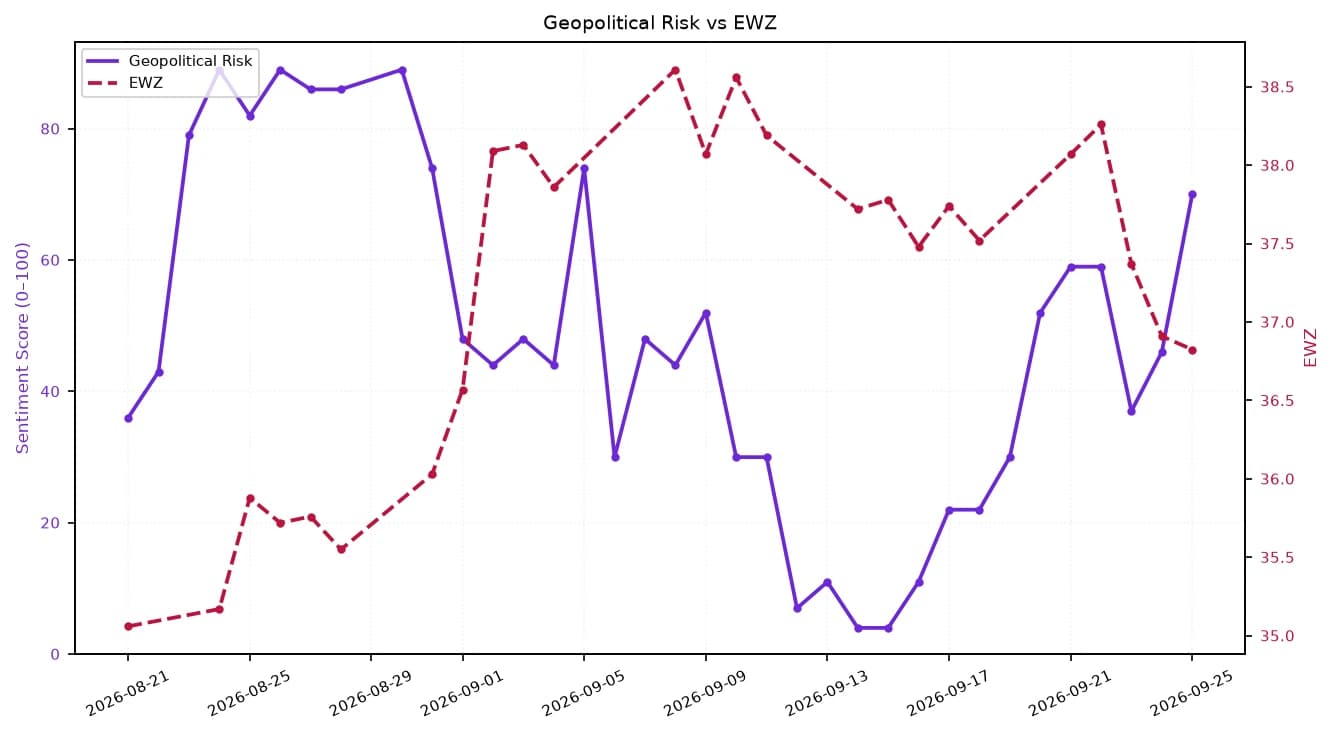
Sentiment IndicatorsⓘProprietary · adalytica.com · September 4, 2026
This is a snapshot — live sentiment, awareness and momentum for 130+ markets update continuously in the dashboard.Open AlphaPulse
In its response to the securities regulator, the company said the statements by finance chief Edison Ticle were made at an event during the Barretos rodeo festival in São Paulo, aimed at employees and strategic stakeholders rather than a public presentation for investors. Minerva said it also sent the supporting material to CVM and the market, classifying it as a presentation for analysts and market participants.
The regulator had asked the company to explain comments referring to leverage falling to 1.7 times and free cash flow of R$1 billion over 2026. Minerva said those discussions were framed around its broader deleveraging strategy and its view of what level of indebtedness would be appropriate for the business. It added that any reference to free cash flow reflected an expectation that generation would improve in the second half of 2026, helped by known market factors such as beef demand in key markets including China and the US, as well as the operational contribution from investments made in the first half.
That still leaves the core investment debate intact. Bulls will see a company that is signaling improving cash conversion as prior spending starts to pay off and export demand remains supportive. Bears will focus on the regulator’s scrutiny, the sensitivity of the business to commodity cycles and the risk that informal comments create a higher bar for future disclosures if the company fails to deliver.
The episode also highlights a broader tension for Brazilian corporates with heavy debt loads: investors want more detail on balance-sheet repair, but regulators are increasingly attentive to anything that could look like quasi-guidance outside a formal earnings process. Minerva said it does not provide forecasts, underscoring that its comments were meant to describe strategy and scenario assumptions rather than a financial commitment.
For shareholders and creditors, the next catalyst is straightforward: evidence that the company’s cash generation and leverage trajectory are improving in line with its strategic plan, not just in management’s informal remarks. Until then, the market is likely to focus less on the exact numbers cited and more on whether Minerva can translate a favorable export backdrop into sustained deleveraging.
| Entity | Gains | Losses |
|---|---|---|
| Minerva | ▲Deleveraging narrative | ▼Disclosure scrutiny |
| Bondholders | ▲Lower credit risk | ▼Guidance uncertainty |
| Equity investors | ▲Potential cash-flow upside | ▼Higher credibility risk |
| CVM | ▲Tighter disclosure oversight | ▼Perceived market confusion |