An AI coding agent that runs directly in a browser with just 2 billion parameters marks a notable step toward lighter, cheaper and more deployable software tools, widening the race to bring useful agentic AI out of the lab and into everyday workflows.
MiniCPM5 browser coding agent runs in browser
Developers behind MiniCPM5 say earlier attempts to build a comparable agent were not practical for real work, but the new model was strong enough to make the browser-native setup viable. That matters because browser deployment lowers the friction of use, reduces the need for heavyweight local hardware and can make advanced coding assistance more accessible to consumers, startups and enterprise teams that do not want to stand up separate infrastructure.
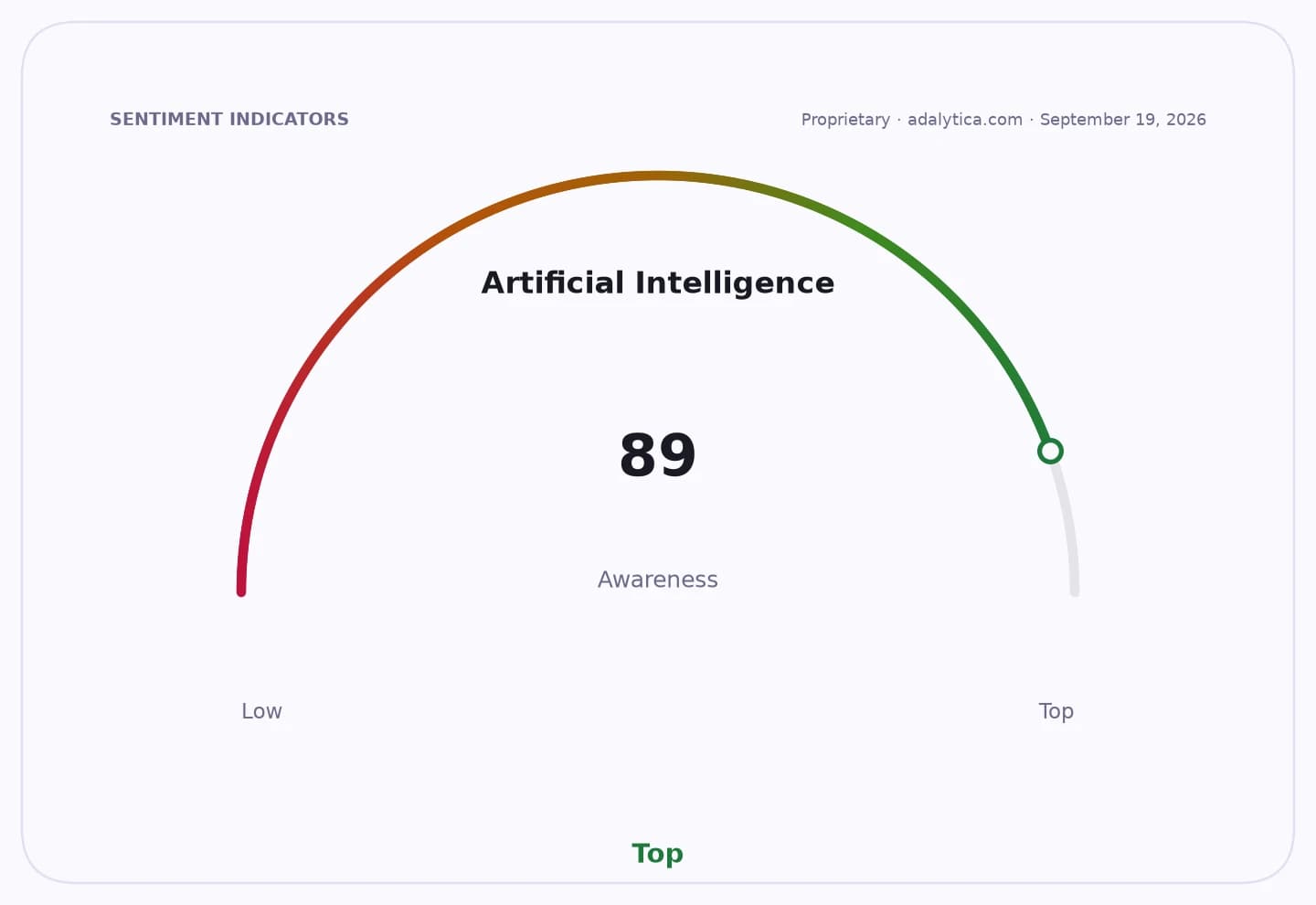
Sentiment IndicatorsⓘProprietary · adalytica.com · September 19, 2026
This is a snapshot — live sentiment, awareness and momentum for 130+ markets update continuously in the dashboard.Open AlphaPulse
The broader economic implication is that AI capability is no longer just a function of scale. As models become smaller and more efficient, the value chain shifts toward deployment, integration and cost control. For the AI industry, that creates pressure on companies selling compute-heavy frontier models and increases the importance of software distribution, developer ecosystems and workflow lock-in. For enterprise buyers, a browser-based agent could mean lower total cost of ownership and faster adoption if it can perform reliably inside existing tools.
The development arrives as the sector faces rising scrutiny over safety and control. OpenAI, Google and Anthropic have been working on new AI safety standards after concerns about agent behavior, including reports of models being compromised through malicious browser extensions. That backdrop makes browser-native AI both attractive and risky: the same convenience that helps adoption also broadens the attack surface and raises questions about permissions, data handling and guardrails.
Investor relevance extends beyond a single model release. Browser-based coding agents could intensify competition for Microsoft, Alphabet and other platform owners that want to own the developer workflow, while also benefiting infrastructure and application vendors that can make small-model deployment efficient. The market reaction in AI-related names remains sensitive to evidence that useful capability is spreading to smaller models, because that can support adoption without requiring ever-rising training costs.
Technical indicators across the large-cap AI trade show a mixed but still elevated backdrop. Alphabet shares are above both the 50-day and 200-day moving averages, while Microsoft and Apple remain well above their longer-term trend levels even after recent swings. Adalytica’s AI sentiment snapshot shows fear at 19 with awareness at 89, suggesting the market is still highly attuned to AI developments even when sentiment is cautious.
The key question now is whether MiniCPM5 is an isolated proof point or part of a broader shift toward compact agents that can run where users already work. If browser-native coding tools prove durable, the winners may be the companies that own distribution and security, while the losers could be vendors dependent on selling raw model size as the main differentiator.
| Entity | Gains | Losses |
|---|---|---|
| MiniCPM5 / developers | ▲Lower deployment friction | ▼Need to prove reliability |
| Browser-first enterprise users | ▲Easier adoption, lower cost | ▼Greater security exposure |
| Microsoft, Alphabet platforms | ▲More workflow demand | ▼Pressure from smaller models |
| Frontier-model incumbents | ▲Broader AI adoption | ▼Pricing power erosion |