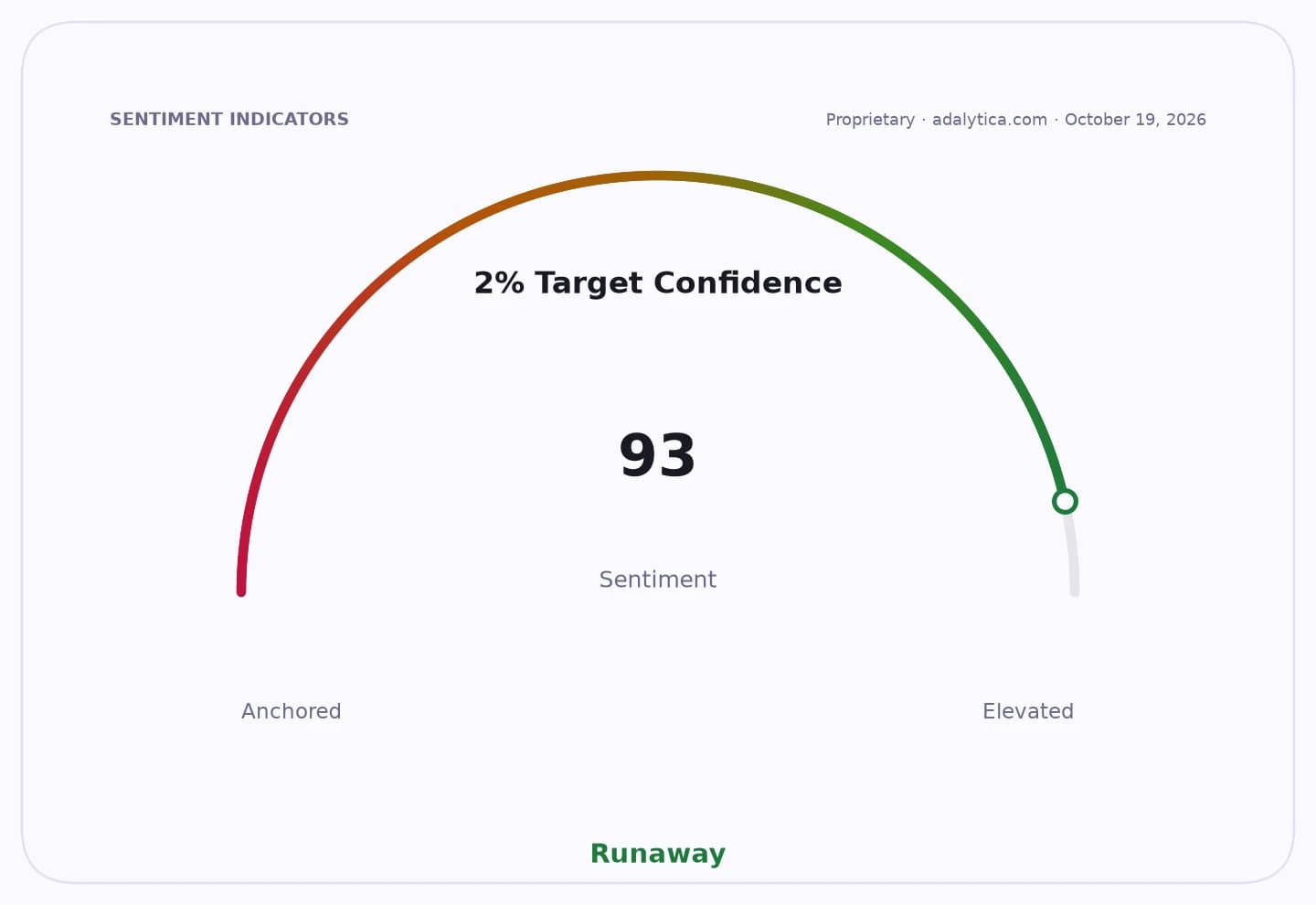
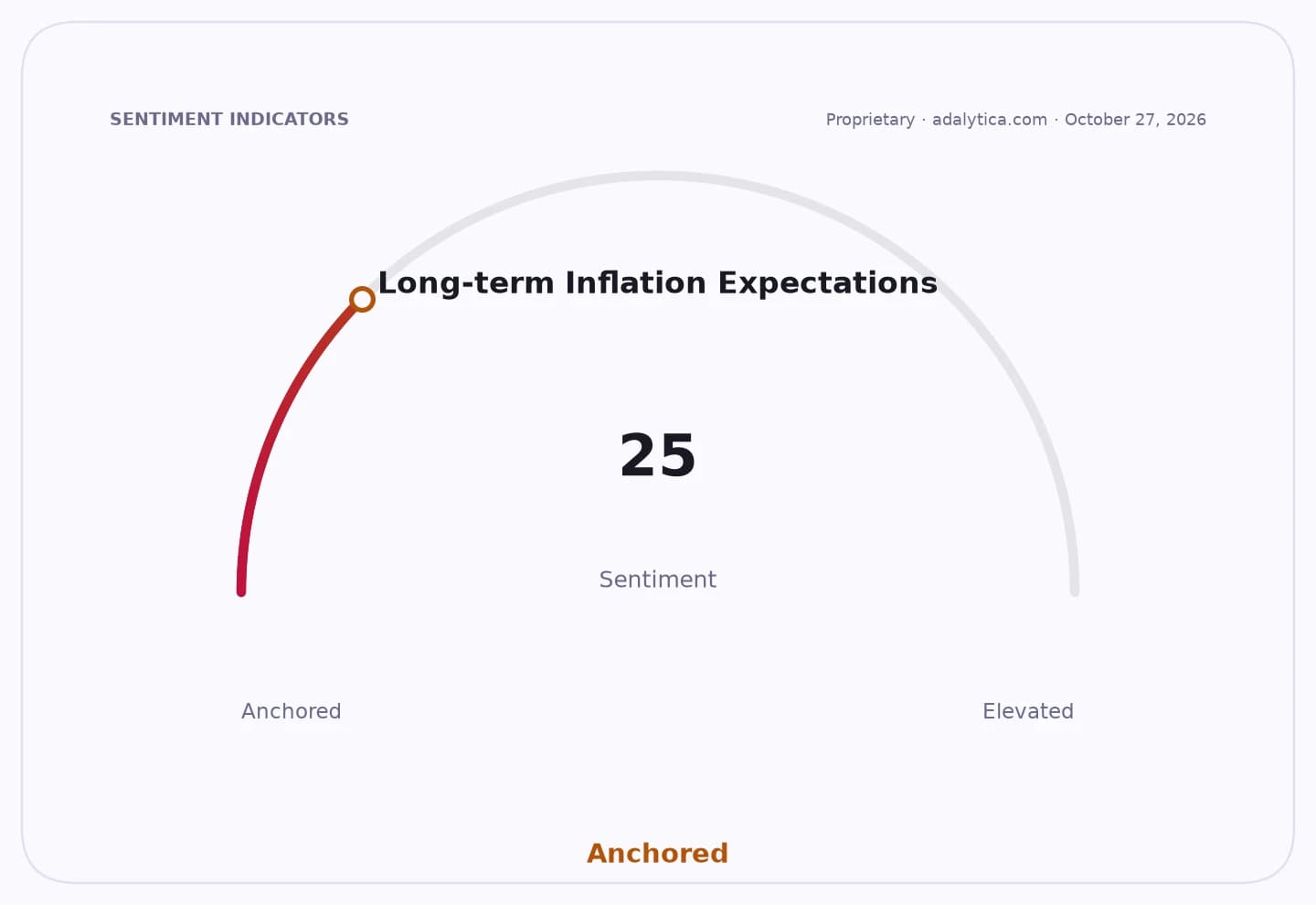
Moldova’s annual inflation accelerated to 8.6% in September, a jump that keeps price pressures elevated and complicates the central bank’s task as the economy faces slower growth, currency volatility and higher import costs.
Moldova inflation rises to 8.6% in September
The reading matters because inflation above the official target erodes household purchasing power in one of Europe’s poorest countries and can force policymakers to keep monetary conditions tighter for longer. For investors, that raises the risk of weaker consumer demand, higher funding costs and more pressure on assets tied to domestic spending.
Sentiment Indicators
The surge also underscores how exposed Moldova remains to food and energy prices, imported inflation and a fragile leu. In that kind of setting, a pickup in prices can quickly feed through to wages, retail sales and public finances, leaving little room for stimulus.
Markets have already shown sensitivity to the inflation backdrop. The Moldovan leu has been vulnerable to swings against the euro and dollar, and persistent inflation tends to weigh on local purchasing power even when growth-linked policy support from Europe remains in place.
The inflation trend arrives as Moldova pushes ahead with EU accession efforts, but price stability is a prerequisite for deeper integration and for sustaining investor confidence. If inflation stays sticky into year-end, policymakers may be forced to choose between supporting growth and defending the currency.
| Entity | Gains | Losses |
|---|---|---|
| Moldovan exporters | ▲Slightly weaker currency helps competitiveness | ▼Imported-input costs rise |
| Moldovan households | ▲None | ▼Purchasing power erodes |
| Central bank | ▲Less room to ease too quickly | ▼Tighter policy pressure |
| Local consumers and retailers | ▲None | ▼Demand and margins squeezed |