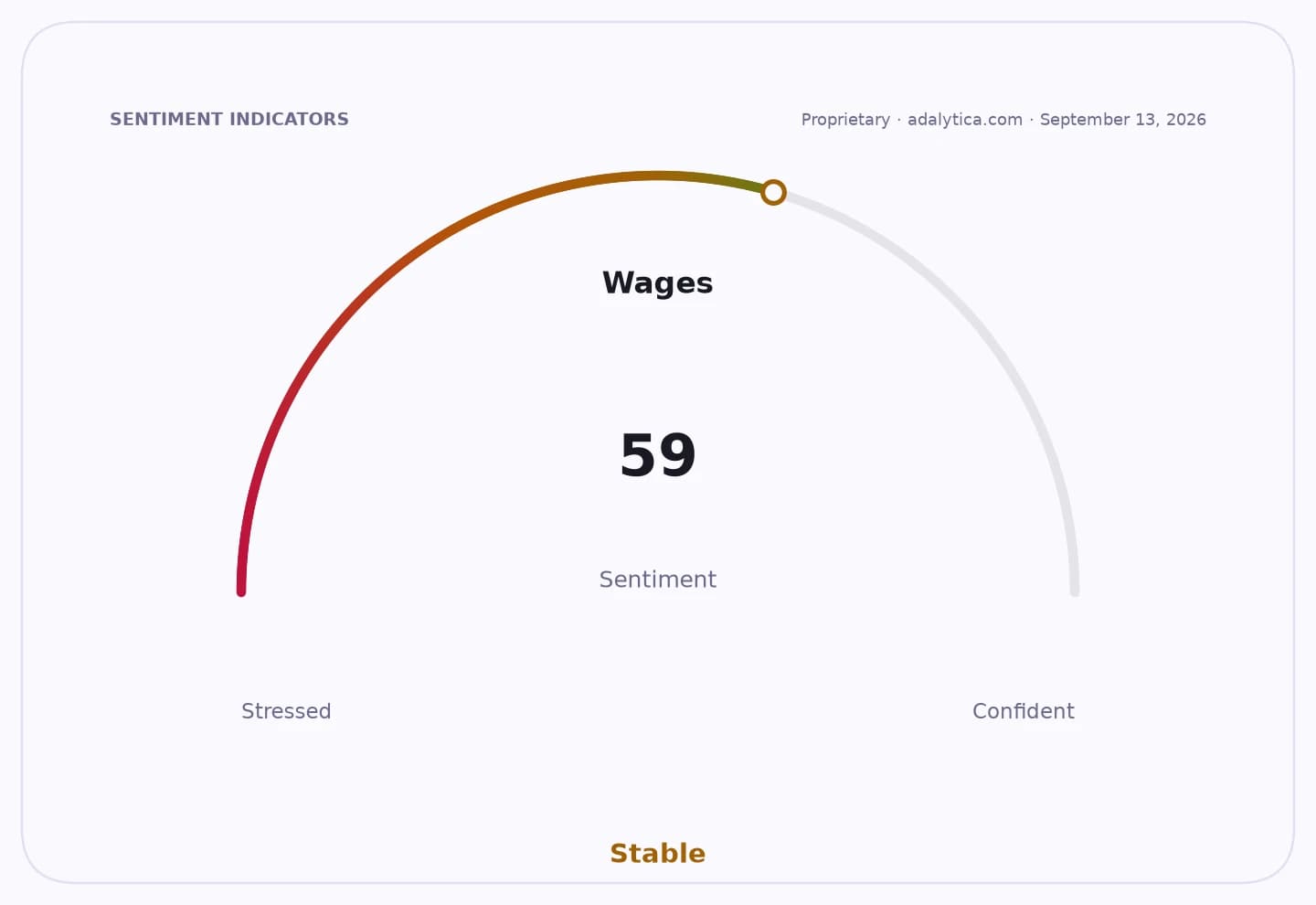
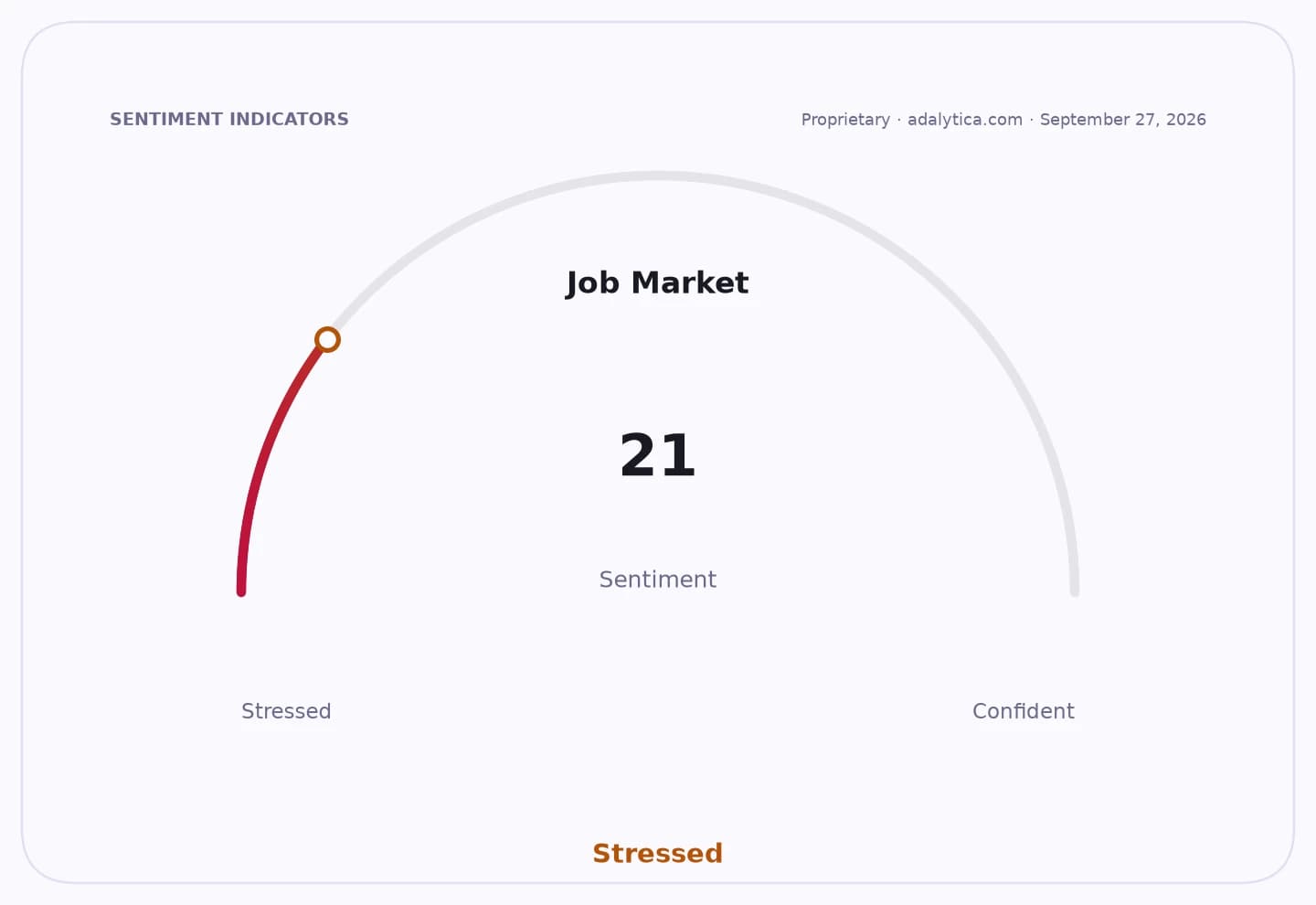
Low wages, unstable jobs and weak career prospects are keeping a large share of young people on the sidelines in Moldova and Romania, intensifying pressure on governments to lift pay, expand training and stem labor outflows.
Moldova, Romania Youth NEET Rates Rise in 2025
That is the central message of a joint union appeal issued ahead of World Decent Work Day, which highlights how early-career insecurity is translating into a broader economic drain: young workers cannot easily build financial independence, afford housing or plan for long-term employment, and many ultimately leave for better-paid work elsewhere. For economies already short of labor, the cost is not only social hardship but a slower path to productivity, weaker domestic consumption and deeper dependence on migration.
Sentiment IndicatorsⓘProprietary · adalytica.com · October 6, 2026
This is a snapshot — live sentiment, awareness and momentum for 130+ markets update continuously in the dashboard.Open AlphaPulse
The scale of the problem is stark. In Moldova, 23.2% of people aged 15 to 29 were neither employed nor in education or training in 2025, according to the National Bureau of Statistics, while the rate for the 15-to-34 age group reached 27.9%. Romania’s youth NEET rate for the same 15-to-29 cohort was 19.2% in 2025, according to figures cited in the union appeal. Those levels point to a persistent mismatch between education systems, labor demand and the quality of entry-level jobs.
The unions — Moldova’s National Confederation of Trade Unions and Romania’s Cartel ALFA — say the answer is not simply more jobs, but better ones. They are urging authorities to set a minimum wage sufficient for a decent living, crack down on undeclared work and precarious contracts, strengthen collective bargaining and give young people a greater voice in labor policy. They also want wider access to vocational training and safer workplaces, arguing that labor-market integration has to be matched by protections if countries want to keep their younger workforces.
Economically, the issue is important because youth inactivity and underemployment tend to compound over time. Workers who spend years outside formal employment often accumulate fewer skills, lower lifetime earnings and weaker attachment to the labor market. For Moldova in particular, where migration has long acted as a pressure valve, weak domestic opportunities can accelerate emigration and shrink the pool of taxpayers and consumers. Romania faces a similar, though less acute, challenge as low pay and instability encourage young people to seek opportunities in richer EU labor markets.
For investors, the story matters beyond the labor ministries. Persistent youth wage pressure can weigh on domestic demand, limit the depth of the consumer market and reinforce labor shortages in sectors already struggling to recruit. Companies that rely on younger employees may face higher turnover and training costs, while firms tied to domestic consumption could see slower volume growth if young households cannot build spending power. Over time, a structurally underpaid workforce can also keep productivity gains subdued, because firms have less incentive to invest in skills and technology when labor remains cheap and unstable.
There is a policy risk as well. Both governments are under pressure to demonstrate progress on employment, wage growth and social cohesion at a time when fiscal space is limited and public expectations are rising. Raising minimum wages or tightening labor enforcement can support incomes, but it may also create tensions for small employers and informal businesses if productivity does not keep pace. The more durable solution, the unions argue, is a mix of training, formalization and collective bargaining that lifts job quality without relying on migration as the main adjustment mechanism.
The immediate test is whether the call for World Decent Work Day translates into actual policy. If Moldova and Romania fail to narrow the gap between education and employment, the result is likely to be more emigration, weaker domestic spending and continued strain on labor markets. If they do act, the payoff would be a steadier supply of skilled workers, stronger household incomes and a better chance of keeping the next generation at home.
| Entity | Gains | Losses |
|---|---|---|
| Young workers | ▲Better pay and stability | ▼Precarious jobs and emigration pressure |
| Moldovan and Romanian governments | ▲Higher labor participation if reforms work | ▼Political cost of wage and labor-market changes |
| Employers with formal payrolls | ▲Larger skilled workforce over time | ▼Higher wage and compliance costs |
| Informal employers | ▲Short-term flexibility | ▼Crackdowns on undeclared work |