Long-term unemployment is climbing in Czechia even as the country’s headline labor market remains one of the strongest in Europe, underscoring a growing mismatch between available jobs and the people looking for work.
Czechia long-term unemployment rises to 130,000
Nearly 130,000 people have been unemployed for more than a year, up 17% from the same period in 2025, even though the registered unemployment rate has held at 5% for two straight months and the number of jobseekers stood at almost 374,000 at the end of August. The split matters economically because it suggests the labor market is no longer constrained mainly by the quantity of jobs, but by who can fill them.
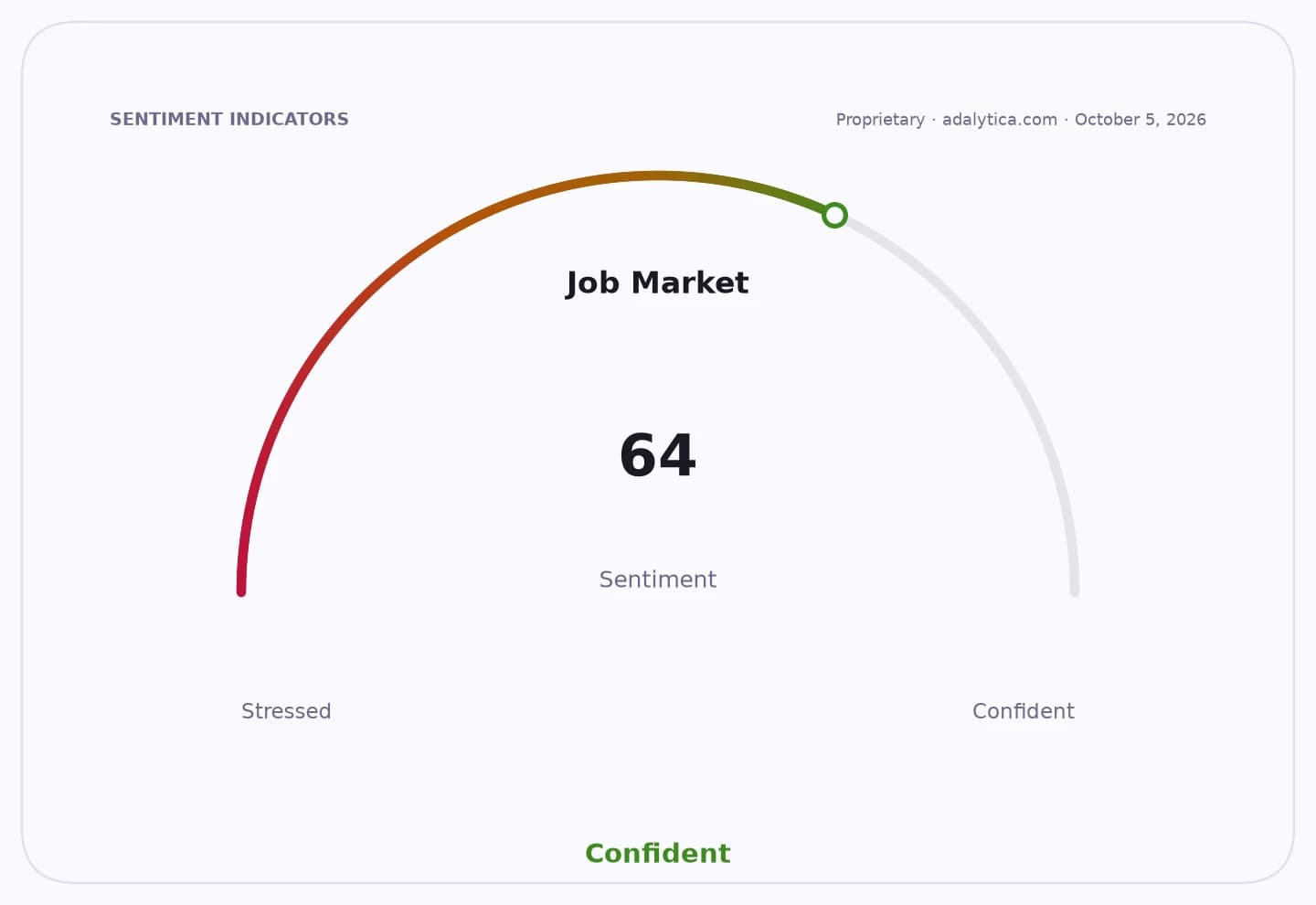
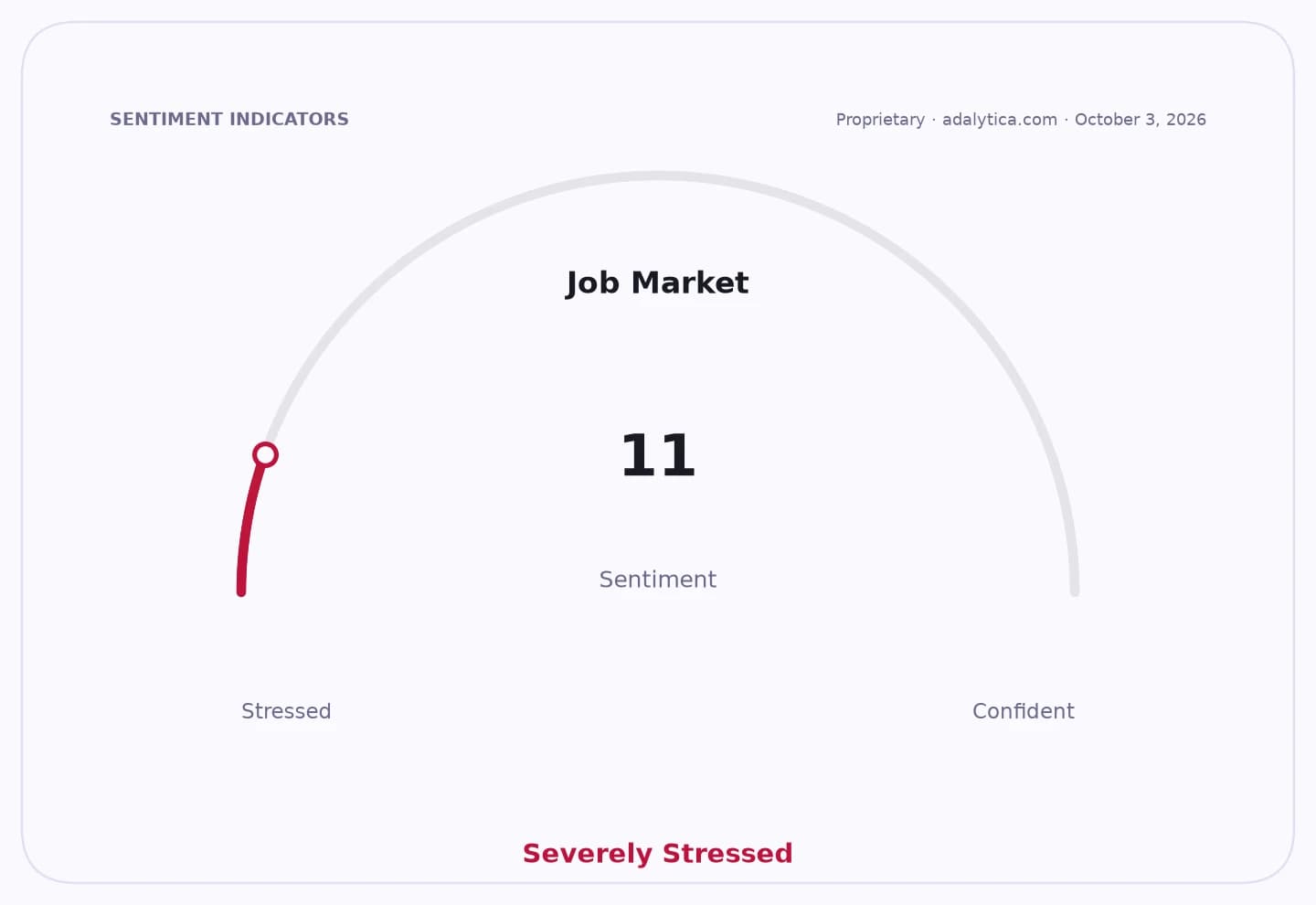
Sentiment IndicatorsⓘProprietary · adalytica.com · October 6, 2026
This is a snapshot — live sentiment, awareness and momentum for 130+ markets update continuously in the dashboard.Open AlphaPulse
That makes the problem harder to solve with broad-based growth alone. Employers are still reporting shortages in machine operation, road freight, technical work and manual trades, while administrative, interpreting and translation roles can draw dozens of applicants. In other words, vacancies exist, but many do not match the skills, location or mobility of the available workforce.
The burden is falling disproportionately on younger, less educated and older workers. Roughly 29% of the long-term unemployed have primary education or less, while people with a master’s degree or higher account for just 8.4%. Among 15- to 24-year-olds without secondary education, unemployment has approached 25% in Czechia, well above the EU average of less than 21%, according to the Czech Statistical Office. Around half of the country’s long-term unemployed are at least 50, a cohort that often faces health limits, outdated qualifications and weaker commuting options.
For investors, the data is a reminder that Czech labor tightness is more uneven than the national unemployment rate suggests. Strong employment in specialized professions such as doctors, lawyers, programmers and technical experts keeps wage pressure and hiring competition elevated in high-skill segments, but persistent long-term unemployment points to underused labor supply that could cap faster wage inflation in lower-skill sectors. That mix is relevant for domestic consumption, service-sector margins and the pace at which companies can expand output without adding capacity.
The regional divide adds another layer of drag. Prague and Central Bohemia offer far more opportunities than areas such as Karviná and Sokolov, where applicants outnumber vacancies. That leaves policymakers and employers facing a structural challenge: retraining can help, but only if training is linked to actual jobs and not just generic classroom instruction. Without that, the pool of long-term unemployed is likely to remain stuck, and the longer workers stay out of the labor force, the harder they are to bring back.
Czechia’s labor market is therefore sending two messages at once: aggregate conditions remain solid, but the cost of mismatched skills, weak mobility and regional inequality is rising. For companies, that means recruitment will stay difficult in some occupations even as unused labor persists elsewhere. For policymakers, it raises the risk that a seemingly healthy job market masks a slower erosion of employability among younger and older workers alike.
| Entity | Gains | Losses |
|---|---|---|
| Skilled employers | ▲Easier access to scarce talent | ▼Higher wage competition |
| Long-term unemployed | ▲Potential retraining support | ▼Prolonged joblessness |
| Czech exporters | ▲Stable overall labor market | ▼Persistent skill shortages |
| Policymakers | ▲Lower headline unemployment | ▼Structural labor-market mismatch |