EU-backed job services in Eastern Partnership countries are becoming more important as youth unemployment, skills mismatches and war-related disruption reshape labour markets across the region.
EU4Youth boosts job services in Moldova, Ukraine, Armenia

That is the central takeaway from the EU4Youth programme, which helped employment agencies in Moldova, Ukraine and Armenia move away from passive bureaucracy and toward more digital, data-driven and client-focused services. For investors and policymakers alike, the message is clear: the quality of labour-market institutions matters when economies are trying to absorb displaced workers, bring young people into formal employment and prepare for deeper integration with the European Union.
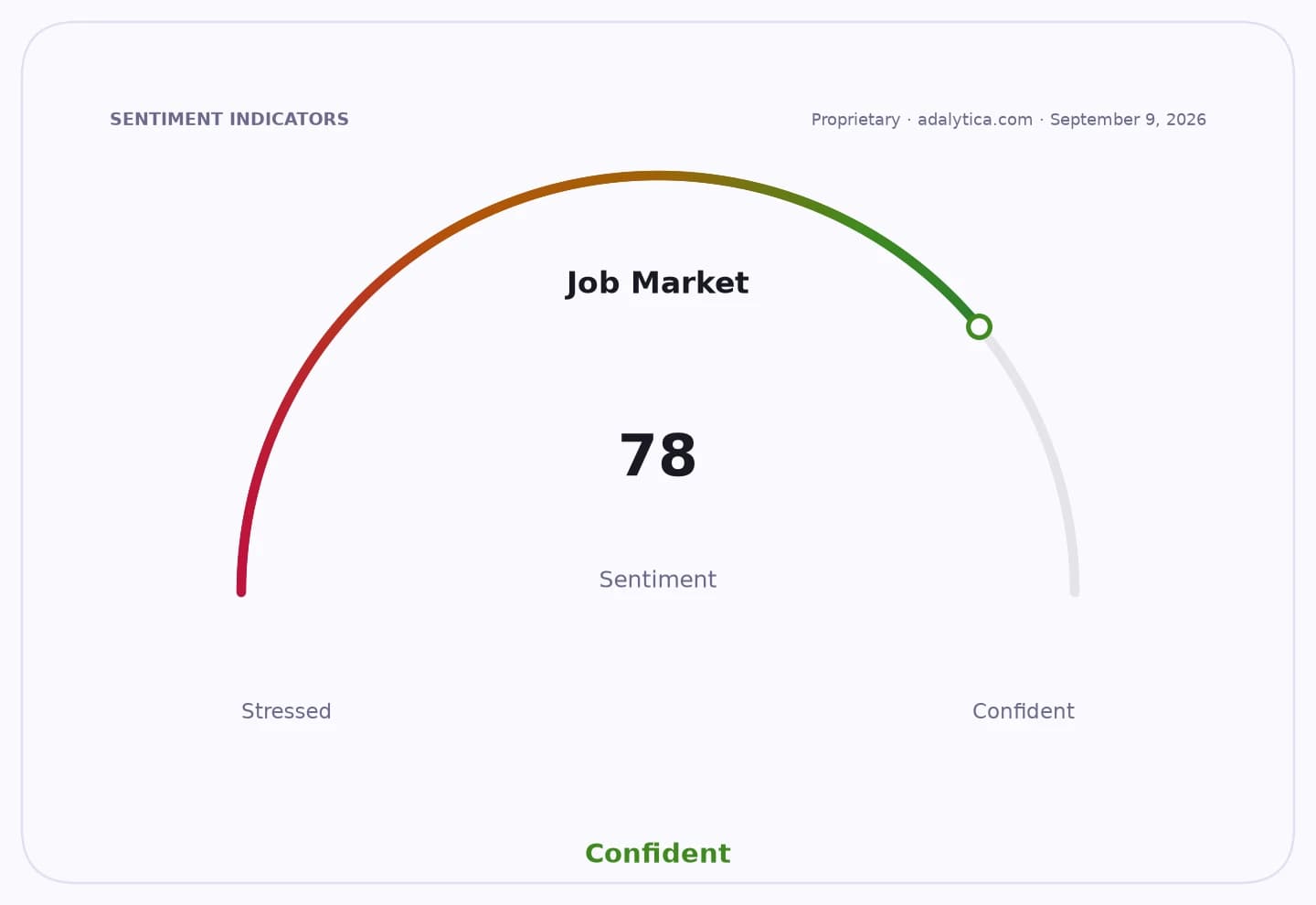
Sentiment IndicatorsⓘProprietary · adalytica.com · September 27, 2026
This is a snapshot — live sentiment, awareness and momentum for 130+ markets update continuously in the dashboard.Open AlphaPulse
The economic case is straightforward. Nearly one in four young Armenians is not in education, employment or training, while the NEET rate stands at 14.5% in Moldova and 14.3% in Ukraine, far above the EU average. Women are hit especially hard, making up almost 40% of that group. Those are not just social statistics; they point to lost productivity, weaker consumption and a smaller future tax base in economies that can ill afford any drag on growth.
The programme’s value lies less in short-term job placements than in building institutions that can respond better over the long run. More than 8,000 people were reached through training, outreach and pilot projects between 2022 and 2026, and public employment service staff took part in 14 workshops, webinars and study visits. In Ukraine, more than 600 displaced young people received psychosocial and employability support, while more than 4,700 young people used an entrepreneurship self-assessment tool embedded in the Diia.Osvita platform.
For labour markets, this kind of reform matters because it improves matching. Better profiling of jobseekers, stronger employer engagement and digital services can reduce the gap between the skills people have and the ones firms need. That is especially important in countries facing war, political instability and population displacement, where reactive systems quickly become overwhelmed. The programme also supported employer cooperation strategies and the local adaptation of EU entrepreneurship and career guidance frameworks, making the reforms more likely to stick.
There is also a broader investment story here. As Moldova and Ukraine push toward closer alignment with EU standards, stronger public employment services become part of the accession playbook. That matters because investors generally prefer economies with more predictable institutions, better workforce participation and a clearer pipeline from education into work. In practical terms, those conditions support consumer demand, reduce social strain and improve the operating environment for companies that rely on a stable labour force.
The biggest risks are obvious. External shocks can undo labour-market progress quickly, and the region remains exposed to conflict, migration, weak education systems and gender inequality. But the EU4Youth experience suggests that flexibility and peer learning can still produce durable gains, even in difficult environments. That makes employment services a quieter but important part of Europe’s long-term growth story.
For long-term investors, the lesson is less about any single programme than about the kind of economy it is trying to build: one that can mobilize young workers, adapt to digital hiring and support more inclusive growth. That is worth watching.
| Entity | Gains | Losses |
|---|---|---|
| Young workers in Moldova, Ukraine, Armenia | ▲Better job matching, training access | ▼Frictional unemployment |
| Public employment services | ▲Modern systems, digital tools | ▼Outdated passive model |
| EU integration agenda | ▲Stronger institutional alignment | ▼Reform delays |
| Employers and local economies | ▲Better labour supply, productivity | ▼Skills shortages |