Mortgage borrowers who hide student debt can still derail a home loan, and the stakes are rising as the U.S. 10-year Treasury yield holds near 5%, keeping mortgage pricing elevated and affordability tight.
Mortgage lenders face risk from hidden student debt
For mortgage advisers like Albert in Leeuwarden, the warning is simple: undisclosed student loans can trigger major consequences because lenders can uncover the debt during underwriting and rework the borrower’s debt-to-income ratio. In a market already strained by high rates and stretched balance sheets, a hidden monthly payment can be the difference between approval and a rejected application.
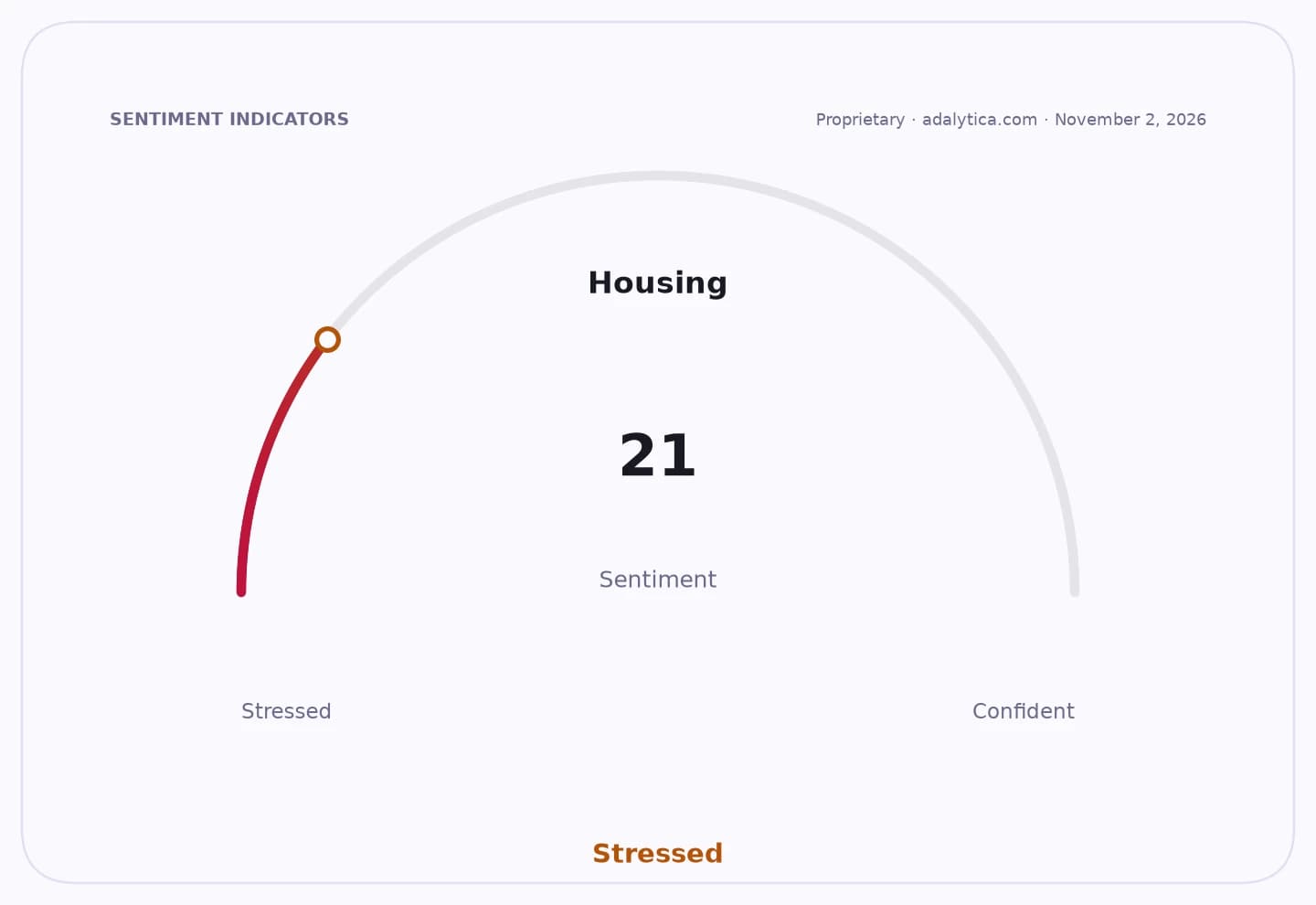
Sentiment Indicators
The backdrop is an economy where household debt remains elevated and funding conditions are still restrictive. The 10-year Treasury yield was around 4.94% on the latest reading, after briefly touching 5.05% last week, a level that tends to bleed into mortgage costs. Broad money supply, measured by M2, has also climbed to about 23.4 trillion, underscoring how much debt is circulating through the system even as borrowing costs stay high.
That matters directly for lenders and mortgage investors. Rocket Companies shares have jumped to $13.77 from $11.92 late last week, but the stock still sits below its 200-day moving average of $14.63, showing the market is not yet pricing a clean recovery in originations. United Wholesale Mortgage is trading at $1.57, up from $1.15 on Oct. 15, yet remains well below its 200-day average of $2.66, while Annaly Capital Management has rebounded to $18.49, but is still below its 200-day average of $20.63.
The housing market itself remains expensive. The S&P CoreLogic Case-Shiller home price index stood at 336.741 in August, near record territory, which leaves buyers with little room for error when lenders reassess affordability. In that setting, a concealed student loan can be especially damaging because it can push a borrower over underwriting limits just as higher rates and sticky home prices already squeeze monthly budgets.
Investors will be watching whether refinancing and purchase demand can hold up as Treasury yields stay close to 5% and mortgage lenders continue to work through a tougher credit environment. Any increase in loan disclosures, denials or repricing would hit mortgage originators first, while mortgage REITs and bond investors would be sensitive to any further rise in rates or slowdown in housing activity.
| Entity | Gains | Losses |
|---|---|---|
| Mortgage lenders | ▲cleaner underwriting | ▼fewer approved loans |
| Borrowers with full disclosure | ▲faster approvals | ▼none |
| Borrowers hiding student debt | ▲none | ▼loan rejection, higher costs |
| Mortgage investors | ▲better credit visibility | ▼weaker origination volumes |