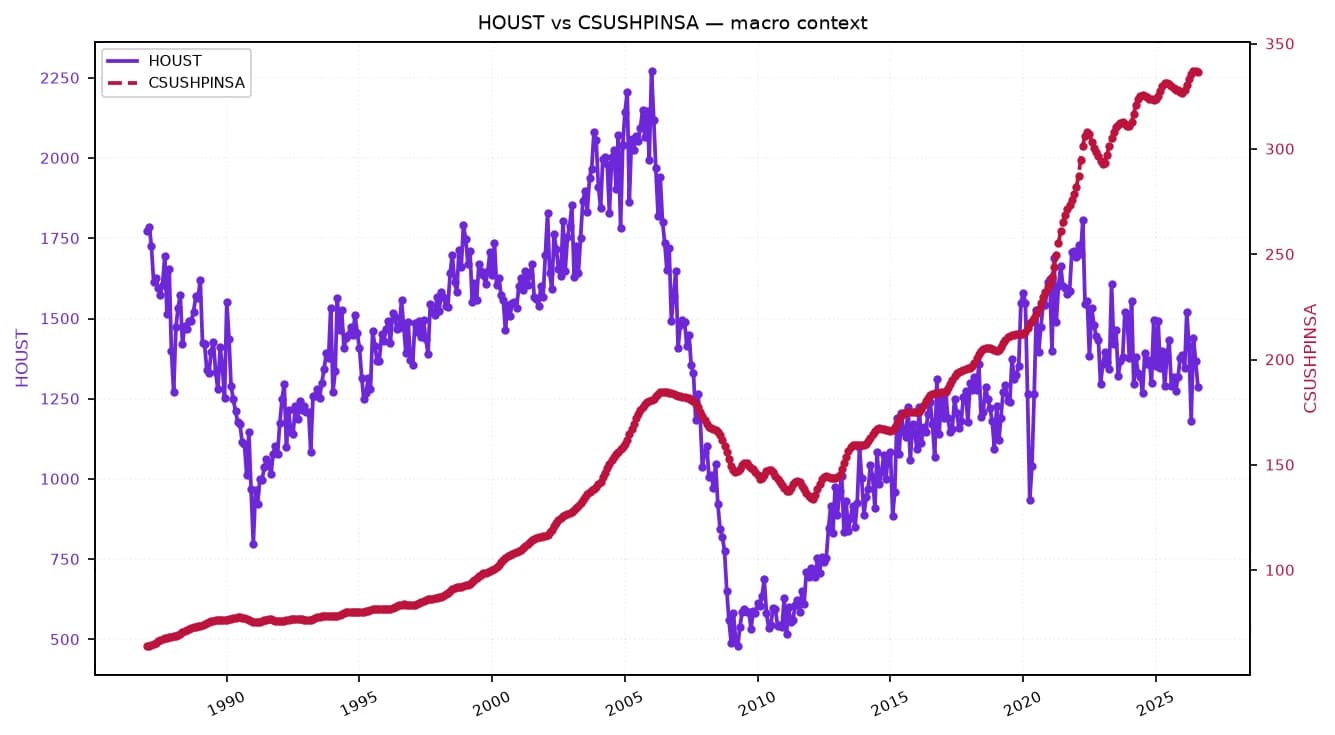
Homeowners are piling into mortgage-switching deals as borrowing costs ease just enough to reopen a window for monthly savings, and that is starting to matter for lenders, bond markets and the broader housing cycle.
Mortgage rates dip as refinancing interest rises
The average 30-year fixed mortgage rate fell to 7.11% this week from 7.24% at the end of October, while the 10-year Treasury yield eased to 5.10% and the 2-year note to 4.86%. That is still painfully high by post-crisis standards, but it is enough to revive refinancing interest among borrowers who locked in rates near the peak and are now hunting for a lower payment.
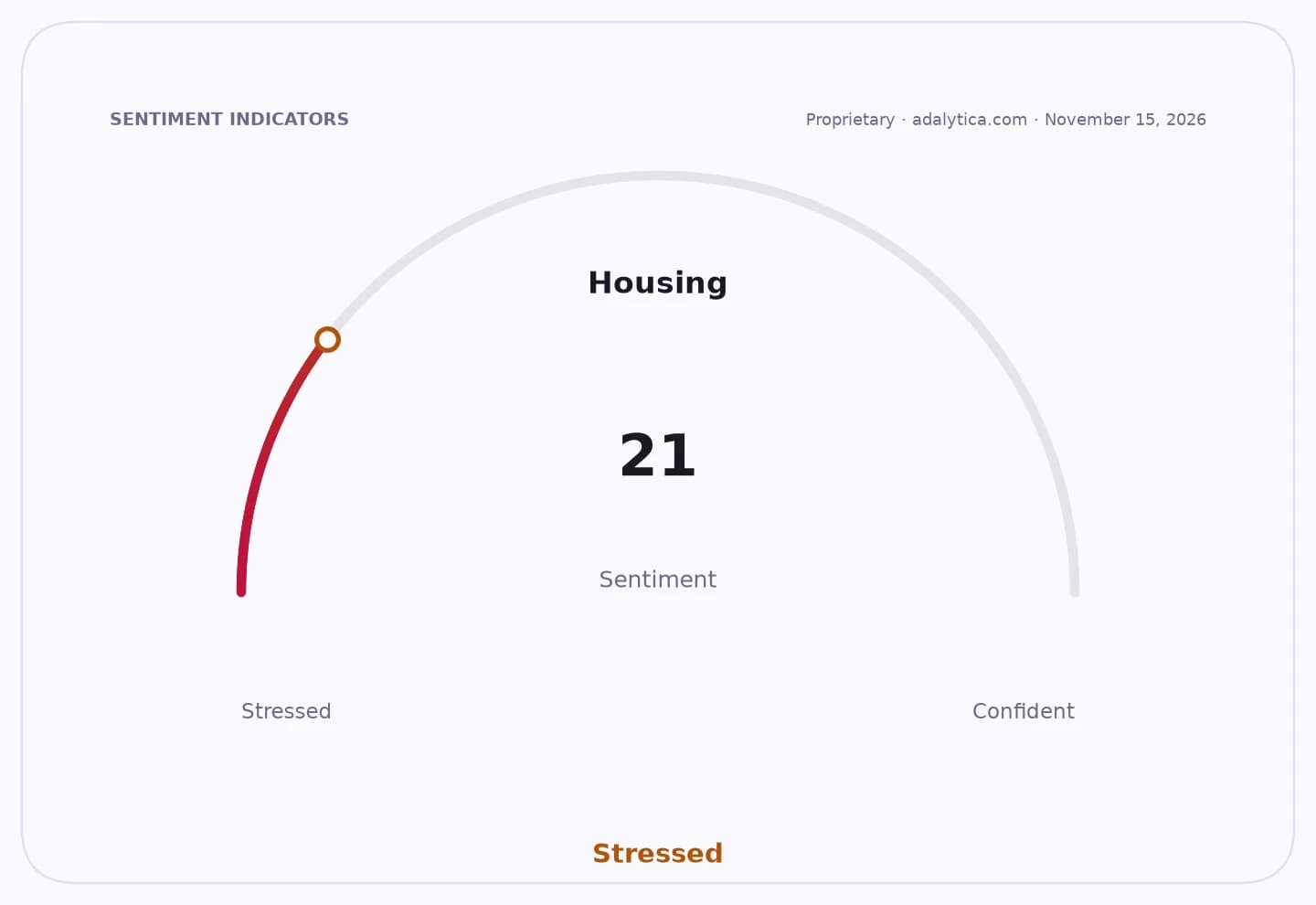
Sentiment Indicators
This matters economically because housing is one of the most rate-sensitive channels in the economy. When homeowners can shave hundreds of dollars off a monthly bill, cash flow improves and consumer spending can hold up better than the market expects. When they cannot, mortgage stress bleeds into retail demand, mobility and delinquency risk. The sudden spike in refinancing activity shows how quickly rate expectations can change behavior even without a deep cut in borrowing costs.
The move is also important for investors because it reshapes the profit pool across the mortgage industry. Rocket Companies and United Wholesale Mortgage both tend to benefit when refinance volume rises, but the mix matters: a refi wave can boost origination volume while squeezing gain margins and amplifying competition for borrowers. Rocket’s shares were trading at $13.71 after a recent run-up, with its 50-day moving average at $12.48 and the stock still below its 200-day average of $14.31, suggesting the market is warming to the theme but has not fully priced in a sustained turnaround. UWM, by contrast, has been far weaker, trading at $1.26 after sliding well below its 200-day average of $2.48, leaving more room for a sharp rerating if refinancing demand proves durable.
The narrative is straightforward: mortgage rates do not need to collapse to trigger a refinancing frenzy; they only need to move far enough below recent highs to make the math work again. That is why the market underestimates the second-order beneficiaries of even a modest easing in Treasury yields. Mortgage originators, servicers and the mortgage-backed securities complex all face a new inflection point, and the next leg will depend on whether the recent pullback in rates extends into the winter.
For investors, the trade is to watch the rate-sensitive lenders and servicers first, because they are the cleanest way to play a refinancing rebound before the wider housing market catches up. The opportunity is in positioning ahead of the next wave of homeowners who realize that, even at 7.11%, switching lenders can still deliver massive monthly savings.
| Entity | Gains | Losses |
|---|---|---|
| Homeowners | ▲Lower monthly payments | ▼Higher lock-in uncertainty |
| Rocket Companies (RKT) | ▲More refinance volume | ▼Margin pressure |
| UWM Holdings (UWMC) | ▲Origination growth if refis rise | ▼Thin spreads and volatility |
| Mortgage bond holders | ▲Faster prepayment expectations priced in | ▼Extension/prepayment risk remains |