Nepal’s parliament is turning a deadly flood disaster into an indictment of China’s warning systems, and the economic stakes run far beyond one country’s loss of life.
Nepal flood article links warning failures to China
A Nepali lawmaker said thousands of deaths and disappearances in the flood-hit region might have been reduced if Beijing had provided timely information, putting pressure on China’s cross-border disaster monitoring at a moment when climate-linked shocks are becoming more frequent and more expensive for governments, insurers and investors across Asia.
The immediate human cost is staggering. Officials in Kathmandu are now discussing a disaster that has reportedly killed more than 1,000 people and left about 5,000 missing, while lawmakers warn the toll could still climb. Beyond the tragedy, the episode raises a hard question for markets: how much value is being destroyed by weak early-warning infrastructure in a region where floods, landslides and glacier-lake outbursts are becoming a structural risk, not a one-off event.
That matters economically because disaster response is no longer just a humanitarian function. It is an infrastructure, logistics and sovereign-capital issue. When warnings fail, emergency spending rises, supply chains are disrupted, tourism and local commerce are hit, and governments are forced into larger reconstruction bills. For countries like Nepal, which rely on aid and fragile transport links, every hour of delay compounds the fiscal damage.
China’s role makes the story bigger. If Beijing is being accused of failing to transmit critical hydrological information in time, the fallout could spill into regional diplomacy and future cooperation on rivers, climate monitoring and border-data sharing. China’s own recent tightening of accountability for environmental failures suggests authorities understand the political sensitivity of prevention lapses, but that does little for neighboring states that need real-time alerts now.
For investors, the sharper takeaway is that climate resilience is becoming a real megatrend. The market still tends to treat flood control, satellite monitoring, remote sensing, emergency communications and grid hardening as boring public-sector spend. I believe that is a mistake. The next decade will reward the picks-and-shovels behind resilience just as AI has rewarded compute and power infrastructure. Countries exposed to monsoons, glacier melt and mountain runoff will have no choice but to spend on early-warning networks, sensors, mapping systems, backup logistics and disaster-response capacity.
That creates an asymmetric opportunity in infrastructure, defense-adjacent logistics, weather analytics and geospatial data. The beneficiaries are the firms that help governments see trouble earlier and move faster when it arrives. The losers are the regions, lenders and insurers that continue pricing climate risk as if it were cyclical instead of secular.
The market signal in China-related assets remains cautious. FXI, the iShares China Large-Cap ETF, is hovering near $35.36, still below its 200-day moving average around $36.50, while MCHI sits at $54.47 versus a 200-day near $57.35. YINN, the leveraged China bull fund, is also trading well under its long-term trend at about $29.05 versus a 200-day around $35.51. Those charts say investors are not paying up for China exposure, and the broader geopolitical backdrop is not helping.
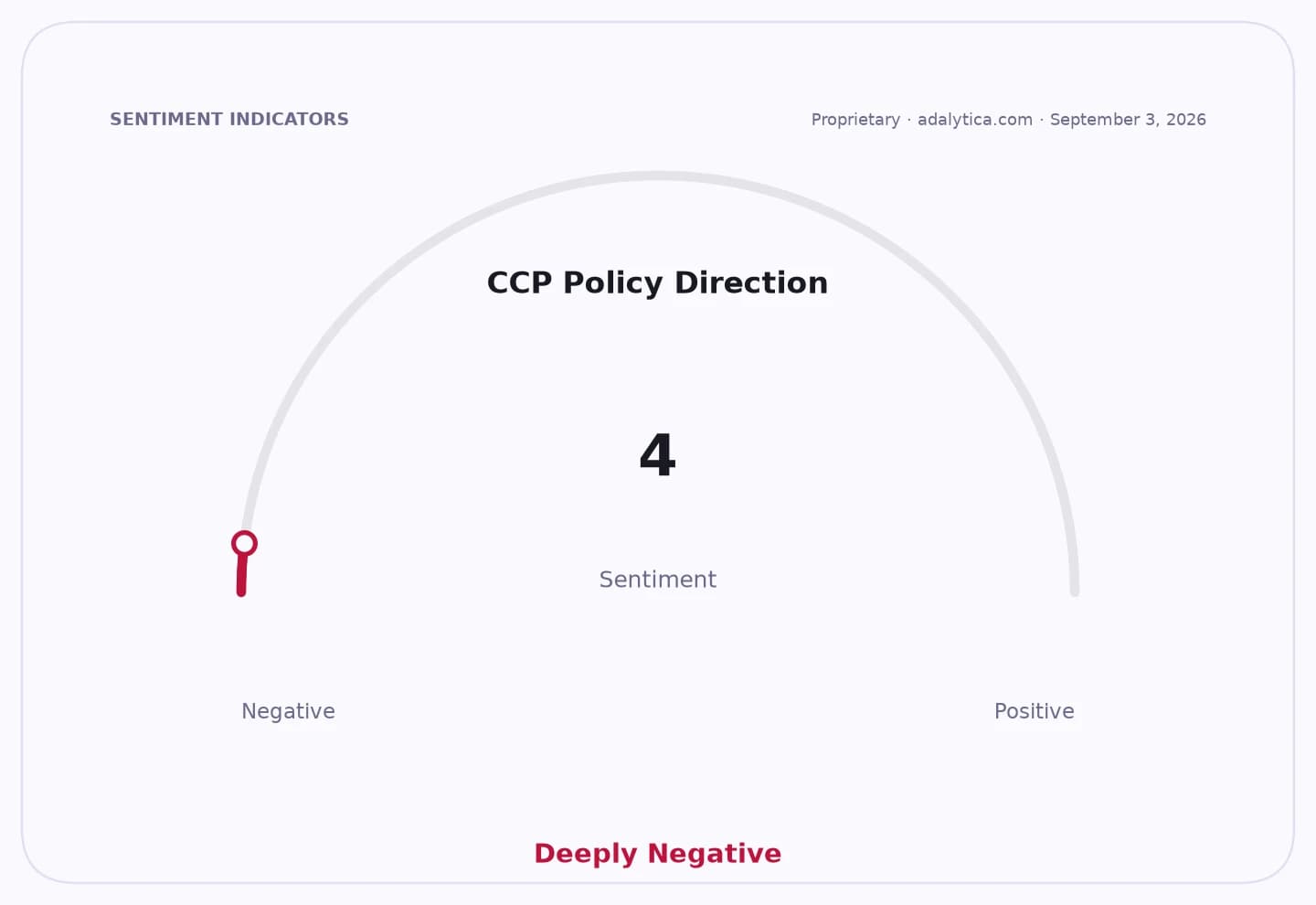
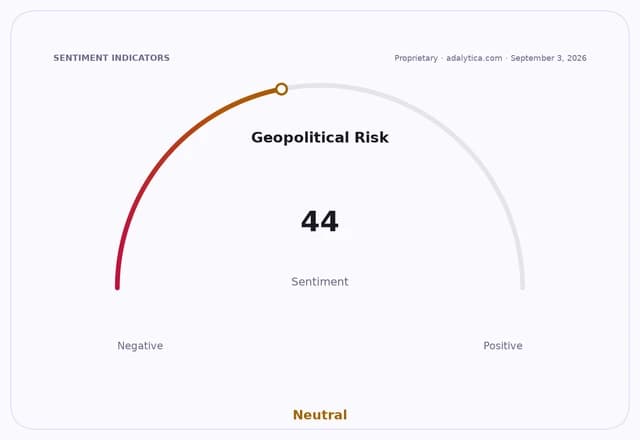
Adalytica’s China CCP Policy Direction sentiment is in “Extreme Fear,” while its Global Stability reading has also weakened, reinforcing the idea that markets are discounting policy and geopolitical risk rather than betting on a clean recovery. In that kind of environment, the better trade is not chasing broad China beta. It is positioning for the second-order winners from instability: resilience hardware, climate monitoring, emergency logistics and energy systems that can keep operating when the weather turns violent.
The next catalyst is obvious. As more disasters expose the cost of weak warning systems, governments will be forced to buy better ones. Investors who position early in the resilience stack may find the opportunity is far bigger than the headline suggests.
| Entity | Gains | Losses |
|---|---|---|
| Resilience infrastructure firms | ▲More government spending | ▼Nothing if budgets tighten |
| Satellite and weather-data providers | ▲Higher demand for alerts | ▼Legacy warning systems |
| Nepal and flood-hit communities | ▲Faster future warnings | ▼Lives, property, fiscal room |
| China’s regional credibility | ▲N/A | ▼Trust in warning cooperation |