Newmont’s Merian gold mine is emerging as one of Suriname’s most important cash engines, with taxes and royalties alone expected to reach about $127 million in 2025, underscoring how the country’s budget has become increasingly tied to gold.
Newmont Merian boosts Suriname gold revenue
That figure matters because it turns a single mine into a meaningful pillar of public revenue in a small economy. Newmont Suriname said Merian’s total economic contribution is estimated at about $633 million this year, a scale that goes well beyond direct government take and points to the mine’s role in jobs, procurement and foreign exchange generation. In a country with limited large-scale export industries, that kind of contribution can help stabilize external accounts and support state spending, but it also deepens dependence on one volatile commodity.
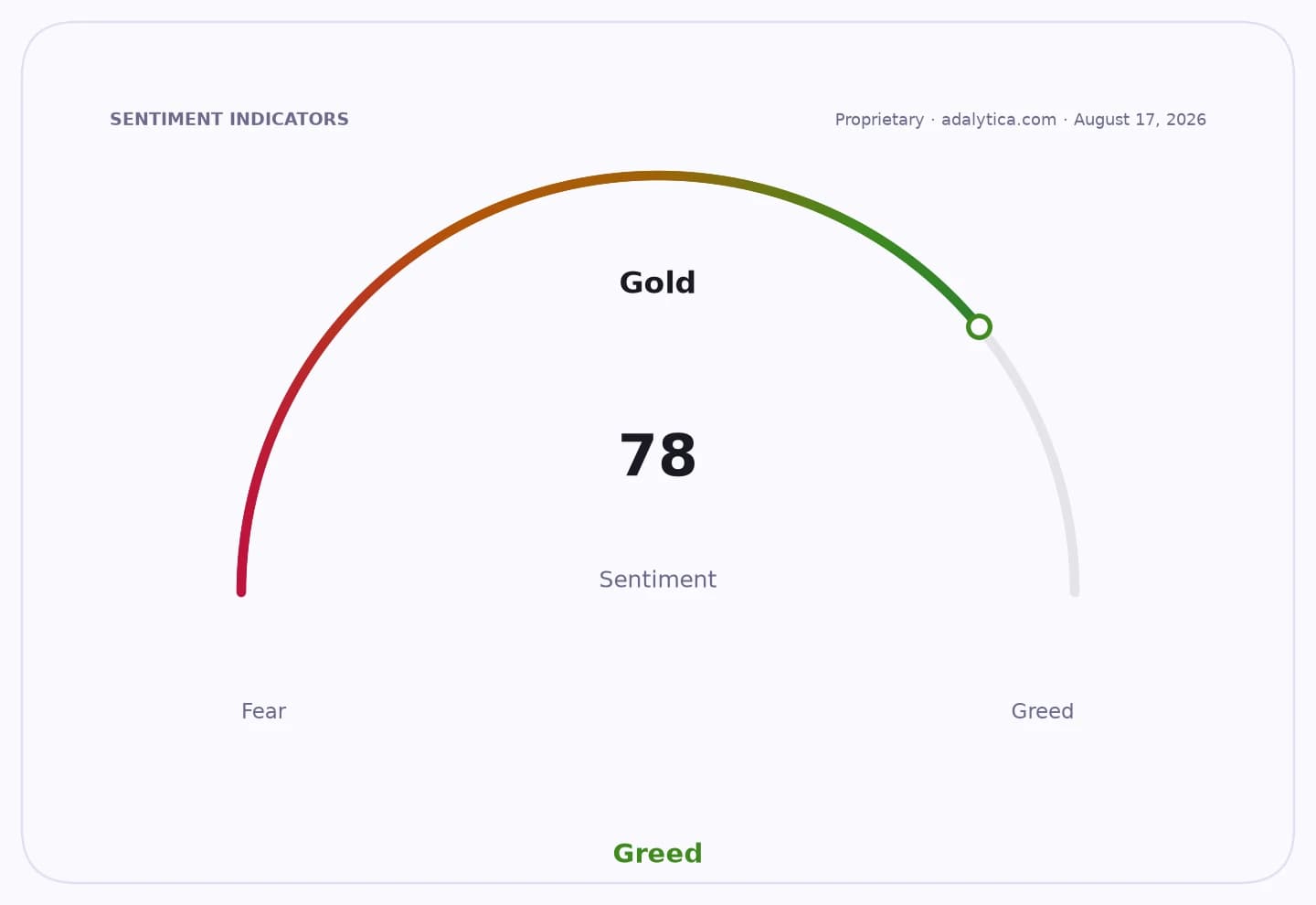
Sentiment IndicatorsⓘProprietary · adalytica.com · August 17, 2026
This is a snapshot — live sentiment, awareness and momentum for 130+ markets update continuously in the dashboard.Open AlphaPulse
For Newmont, the economics are favorable. The company’s latest filings show Merian production rose about 40% to 41% in the recent quarter on higher ore grades milled, while costs per ounce fell on stronger output and inventory effects. That combination improves operating leverage just as gold prices remain elevated globally. Spot bullion has been trading above $4,300 an ounce in recent sessions, after a year of sharp swings, and Newmont’s shares have tracked the rally, with the stock up sharply over the summer as investors reward producers with exposure to record-high margins.
The fiscal windfall is also a reminder that high gold prices redistribute gains across the mining value chain. Governments and host communities capture more through royalties and taxes when prices rise, but miners still retain strong margins if operating costs stay contained. That is the bull case for Newmont and peers such as Agnico Eagle and Barrick: buoyant prices, improving grades and disciplined capital spending can translate into heavy free cash flow.
The bear case is that the same concentration that boosts Suriname today can create political and regulatory friction tomorrow. Newmont’s own filings flag the risk of changing tax, royalty and local-content regimes in mineral-producing countries. For investors, the key question is whether elevated bullion prices prove durable enough to keep cash generation strong, or whether a pullback in gold, a rise in costs or a tougher fiscal stance from host governments erodes the current margin expansion.
The broader message is that gold is no longer just a safe-haven trade; for producer nations like Suriname, it is a budget variable. For Newmont shareholders, Merian is a reminder that in a high-price environment, every ounce carries not only operating value but also growing geopolitical and fiscal weight.
| Entity | Gains | Losses |
|---|---|---|
| Suriname government | ▲Higher royalties and taxes | ▼Greater reliance on gold revenue |
| Newmont / Merian mine | ▲Stronger margins, cash flow | ▼Higher fiscal take on output |
| Local suppliers and workers | ▲More economic activity | ▼Exposure to mine-cycle volatility |
| Gold consumers / jewelry buyers | ▲— | ▼Higher input costs, pricier bullion |