Nicaragua will keep gasoline, diesel and liquefied petroleum gas prices unchanged from Nov. 8 to Nov. 14, extending a fuel subsidy policy that has shielded households from higher international oil costs since March 2022.
Nicaragua keeps fuel prices unchanged through Nov. 14
The decision matters because fuel is one of the fastest channels through which global crude swings hit domestic inflation, transport costs and food prices. By freezing pump prices again, the government is absorbing the gap between international benchmarks and local retail prices rather than allowing the shock to pass through to consumers and businesses.
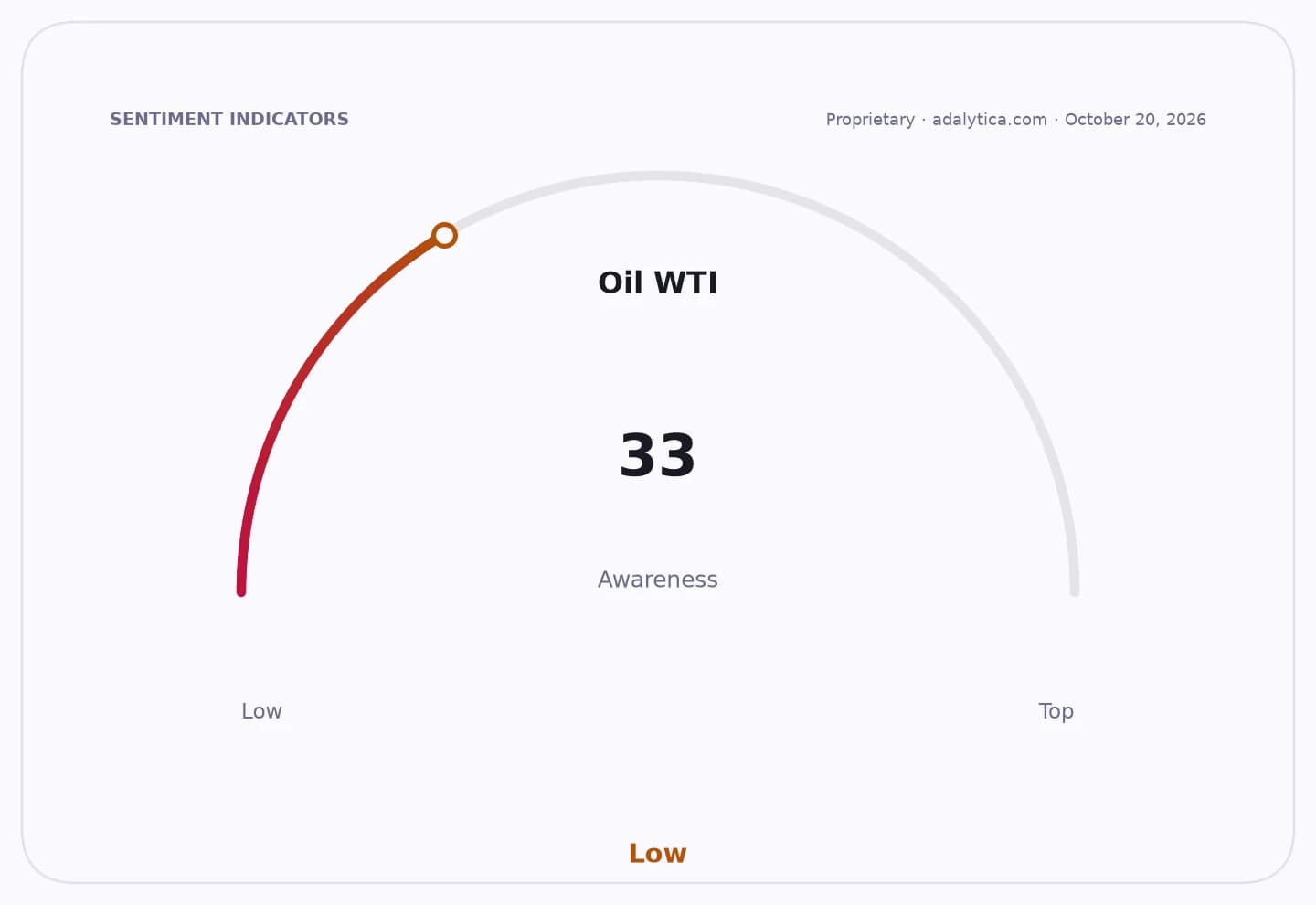
Sentiment Indicators
The Nicaraguan Energy Institute said the move covers gasoline, diesel and LPG in 10-, 25- and 100-pound cylinders, the household cooking fuel used across much of the country. Officials said the policy was prompted by the behavior of international oil and refined-product prices, which have remained elevated.
Jose Antonio Castaneda, the INE’s executive president, said the country ranks 33rd out of 137 nations with the highest fuel prices, underscoring how costly imported energy remains even with state intervention. He said crude has been trading around $90 to $100 a barrel since mid-September, a level that keeps inflation pressures alive globally.
For Nicaragua, the freeze is both a social policy and a macroeconomic defense. Holding fuel steady helps restrain transport fares, food distribution costs and household energy bills at a time when many emerging markets are still vulnerable to imported inflation. It also protects disposable income, particularly for lower-income families that spend a larger share of their budget on cooking gas and commuting.
The trade-off is fiscal. Subsidies reduce the immediate burden on consumers but leave the government carrying more of the commodity risk, especially if crude prices stay high or rise further. That creates a larger budgetary cost and can narrow policy room elsewhere, even as it helps preserve social stability and consumption.
The backdrop in global energy markets remains volatile. WTI has been hovering near the $98 forecast level for Nov. 4 after recent swings, while technical indicators on oil-tracking funds show momentum has cooled sharply from earlier highs. For Nicaragua, though, the key issue is not short-term market noise but the need to keep imported energy shocks from feeding through into domestic prices.
If crude holds near current levels, the government will likely continue rolling over the freeze and subsidizing the difference. If prices climb again, the fiscal burden increases. If they fall, the policy becomes cheaper to maintain — but for now, the message from Managua is clear: households will not be asked to absorb the next move in oil.
| Entity | Gains | Losses |
|---|---|---|
| Nicaraguan households | ▲Stable fuel and gas bills | ▼None immediate |
| Nicaraguan government | ▲Social stability, lower inflation pass-through | ▼Higher subsidy costs |
| Transporters and retailers | ▲More predictable input costs | ▼Limited pricing flexibility |
| Oil producers and fuel importers | ▲Continued demand | ▼Margin pressure from price controls |