The Indian stock market is heading into the session with the same three forces hanging over it: a strong US dollar, elevated crude oil and climbing Treasury yields, all of which are tightening global financial conditions and making it harder for the Nifty to hold the 23,000 level, let alone defend the 22,800 zone investors are now watching closely.
Nifty Watchs 23,000 Support as U.S. Yields Rise

Gift Nifty was pointing to a flat open around 23,092 after Thursday’s sharp selloff, a sign that the damage from the previous session has not yet been repaired. The Nifty closed at 23,063.10 after falling 383.70 points, while the Sensex sank 1,247.71 points to 73,580.54. That kind of decline matters because it shows this is not an isolated weak day; it is a repricing of risk driven by global macro pressure rather than domestic earnings alone.
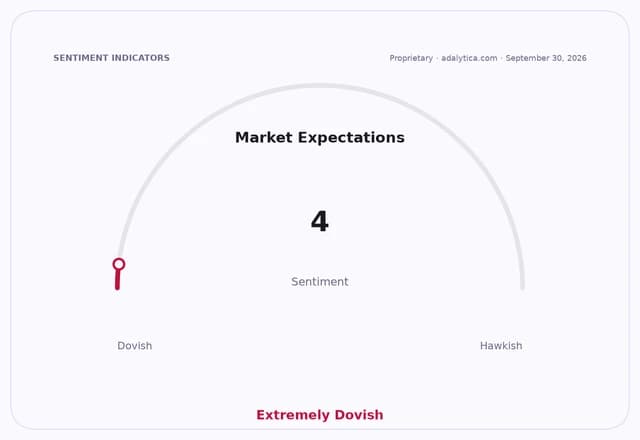
Sentiment IndicatorsⓘProprietary · adalytica.com · September 30, 2026
This is a snapshot — live sentiment, awareness and momentum for 130+ markets update continuously in the dashboard.Open AlphaPulse

At the heart of the move is the bond market. The 10-year US Treasury yield has climbed to around 5.2%, its highest zone in years, and that is a big deal for investors everywhere. Higher yields raise the discount rate used to value equities, especially growth stocks, and they also make dollar assets more attractive than emerging-market shares. In plain terms, money gets more expensive, valuations get less forgiving and foreign flows tend to slow.
Crude is adding another layer of strain. Brent and WTI have been trading near levels that keep inflation worries alive, and that matters for India in a very direct way. Higher oil prices widen the import bill, pressure the current account and can eventually feed into domestic inflation, which then narrows the room for the Reserve Bank of India to stay easy. For a market like India, where energy costs ripple through transport, manufacturing and consumer spending, oil is never just an oil story.
DGS10 vs DCOILWTICO — macro contextadalytica.com
Explore this data interactively — full history, time series and cross-market comparisons.Open AlphaPulse
That is why the 23,000 mark has become such an important line in the sand. Market strategists cited 23,200-23,300 as near-term resistance for the Nifty, with 23,000 acting as the key psychological support. If that level gives way decisively, the next area to watch is 22,900-22,800. On the Sensex, support is being watched around 73,000-73,250, with 73,850-74,000 as immediate resistance.
The technical picture is weak, but not broken beyond repair. Analysts say the Sensex is nearing oversold territory, which means the market could bounce if yields cool, crude eases or foreign selling slows. That does not make the near-term backdrop comfortable, but it does suggest the market is approaching a point where bad news may already be partly priced in.
For long-term investors, this is the kind of tape that rewards discipline more than prediction. When global yields rise and oil stays firm, short-term traders get nervous and index levels can swing hard. But businesses with strong cash flows, pricing power and low debt often survive these stretches far better than the market headline suggests. The bigger question is whether foreign institutional selling eases enough to let domestic buying absorb the pressure.
For now, investors should treat 22,800 as a key watchpoint rather than a verdict. If global yields stabilize and crude retreats, Indian equities could recover quickly. If they do not, the market may have to spend more time digesting this reset before it can move higher again.
| Entity | Gains | Losses |
|---|---|---|
| Bond bears / Treasury sellers | ▲Higher yields | ▼Duration-sensitive equity valuations |
| Oil producers | ▲Firmer crude prices | ▼Oil-importing economies |
| Indian exporters | ▲Weaker rupee tailwind | ▼Domestic growth-sensitive sectors |
| Nifty bulls | ▲Oversold bounce potential | ▼23,000 and 22,800 support levels |