Nigeria’s foreign exchange utilisation surged to $50.93 billion in 2025, the strongest annual level in six years, underscoring how deep demand for dollars remains even after policy efforts to stabilise the naira.
Nigeria FX utilisation hits six-year high in 2025
The Central Bank of Nigeria’s latest statistical bulletin shows FX utilisation rose 91.1% from $26.65 billion in 2024, with demand broad-based across imports and so-called invisible transactions such as services, transfers and financial flows. For investors, the scale of dollar demand matters because it is a direct test of external liquidity, a key driver of naira stability, inflation expectations and the cost of doing business in Africa’s largest economy.
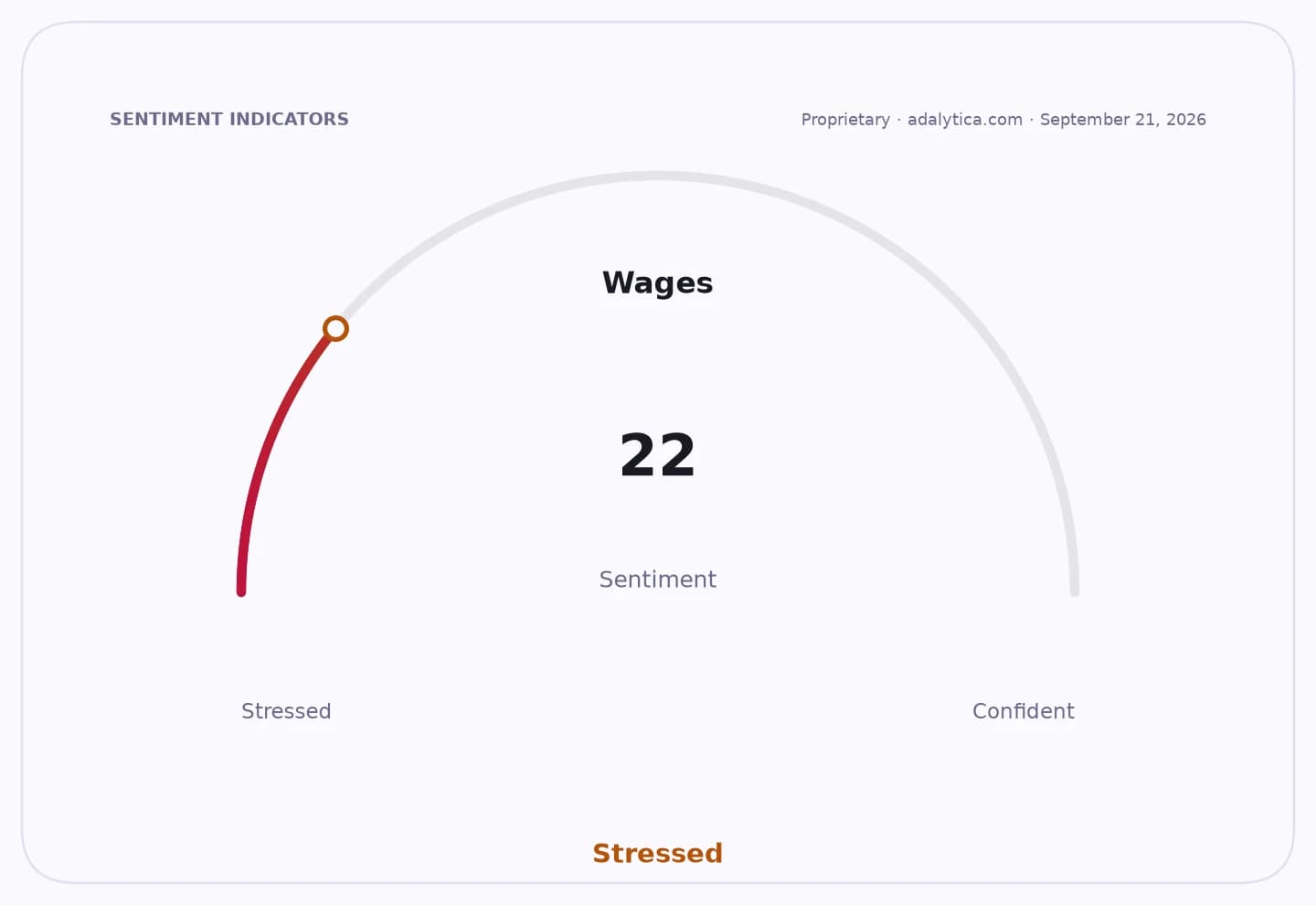
Sentiment IndicatorsⓘProprietary · adalytica.com · September 10, 2026
This is a snapshot — live sentiment, awareness and momentum for 130+ markets update continuously in the dashboard.Open AlphaPulse
The second half of the year did much of the heavy lifting. Utilisation reached $12.71 billion in the first quarter, $13.13 billion in the second, $12.01 billion in the third and $13.08 billion in the fourth, compared with a much weaker 2024 base.
Imports accounted for $19.94 billion of the total, up from $15.54 billion a year earlier, while invisible transactions jumped to $30.99 billion from $11.11 billion. Within that category, financial services alone rose to $20.30 billion from $10.76 billion, while business services climbed to about $5.45 billion from $702 million.
The data points to a recovery in activity but also to persistent foreign-currency dependence in the real economy. Industrial users remained the biggest import-related demand centre at $8.60 billion, followed by oil at $4.73 billion, manufactured products at $2.69 billion and food products at $2.36 billion.
That is important for markets because heavy FX utilisation can tighten pressure on reserves if inflows do not keep pace, even as Nigeria has recently seen stronger foreign currency receipts. The CBN said total FX inflows reached $109.86 billion in 2025, while outflows also rose to $49.05 billion, leaving a net inflow of $60.81 billion.
For the naira, the message is that demand remains strong even as official liquidity improves. Investors will be watching whether higher inflows, firmer reserves and ongoing market reforms are enough to absorb import and services demand without renewed exchange-rate stress.
| Entity | Gains | Losses |
|---|---|---|
| Exporters and FX earners | ▲Higher dollar liquidity | ▼Stronger naira volatility |
| Importers and service users | ▲Easier access to FX | ▼Higher funding costs |
| Nigeria’s central bank | ▲Better visibility on flows | ▼Continued FX demand pressure |
| Naira bulls | ▲Reserve support and inflows | ▼Persistent dollar appetite |