Nigeria’s inflation slowed in September as falling food prices offered a rare reprieve for households squeezed by a prolonged cost-of-living crisis, but core pressures remain high enough to keep the policy outlook tight.
Nigeria inflation slows to 14.63% in September
The National Bureau of Statistics said headline inflation eased to 14.63% year on year from 15.39% in August, a decline of 0.76 percentage point, while month-on-month inflation slowed sharply to 0.06% from 0.71%. The bigger relief came from food: prices fell 1.55% on the month after rising 1.02% in August, helped by lower costs for staples including rice, maize flour, guinea corn flour, onions, palm oil, tomatoes, okra, potatoes, plantain and eggs.
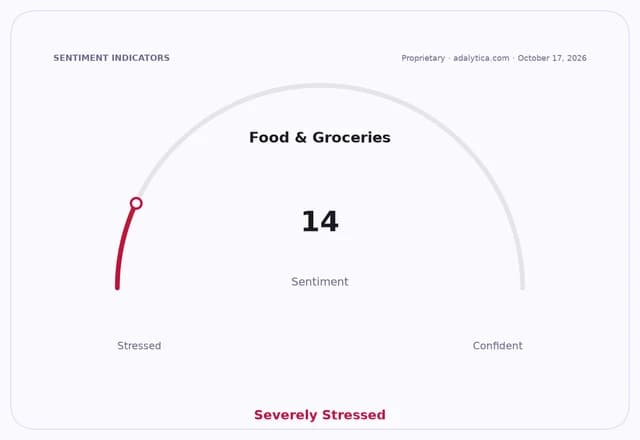
Sentiment IndicatorsⓘProprietary · adalytica.com · October 17, 2026
This is a snapshot — live sentiment, awareness and momentum for 130+ markets update continuously in the dashboard.Open AlphaPulse
For Africa’s biggest economy, the data matters because food carries heavy weight in household budgets and inflation expectations. After two years in which rising food and transport costs eroded real incomes and constrained consumer spending, even a temporary easing can support purchasing power and reduce pressure on the poorest consumers. The drop also suggests some supply-side relief in key staples, which can help stabilise market sentiment around near-term living costs.
But the headline figure still masks stubborn underlying inflation. Core inflation, which excludes volatile food and energy items, was 12.95% year on year, underscoring that domestic price pressures have not been fully contained. That matters for policymakers because it limits how much room they have to ease monetary settings, especially if food disinflation proves temporary or if currency weakness, transport costs or imported goods prices reassert themselves.
For investors, the reading is cautiously positive for consumer-facing businesses and retailers, especially those exposed to discretionary spending that has been crushed by inflation. Lower food costs can ease pressure on sales volumes at grocers and improve the spending environment more broadly. But the persistence of high core inflation means margins may remain under strain and any rally in consumer equities would likely depend on a sustained decline in monthly price gains, not just one softer print.
The market also has to weigh the risk that food relief is seasonal rather than structural. Nigeria’s inflation path remains vulnerable to harvest patterns, logistics bottlenecks, energy costs and the exchange rate. If those pressures return, the recent moderation could unwind quickly, leaving monetary authorities little choice but to keep policy restrictive until there is clearer evidence that price momentum has broken.
| Entity | Gains | Losses |
|---|---|---|
| Nigerian households | ▲Slight relief on food bills | ▼Still-hit purchasing power |
| Retailers and grocers | ▲Better spending backdrop | ▼Margin pressure from inflation |
| Central bank policymakers | ▲Lower headline inflation | ▼Little room to ease rates |
| Food importers | ▲Potentially softer local prices | ▼Volatile supply conditions |