Nigeria’s National Health Dialogue is set to spotlight one of the country’s most consequential economic policy gaps: how to finance primary healthcare in a way that expands access without deepening pressure on public finances.
Nigeria health dialogue on primary care financing
That matters because weak primary care systems tend to push patients into more expensive hospitals, raise out-of-pocket spending and worsen productivity losses across the broader economy. For investors, the issue reaches beyond public health: it affects the fiscal outlook, consumer discretionary income and the long-term operating environment for insurers, drugmakers, hospitals and health-service providers.
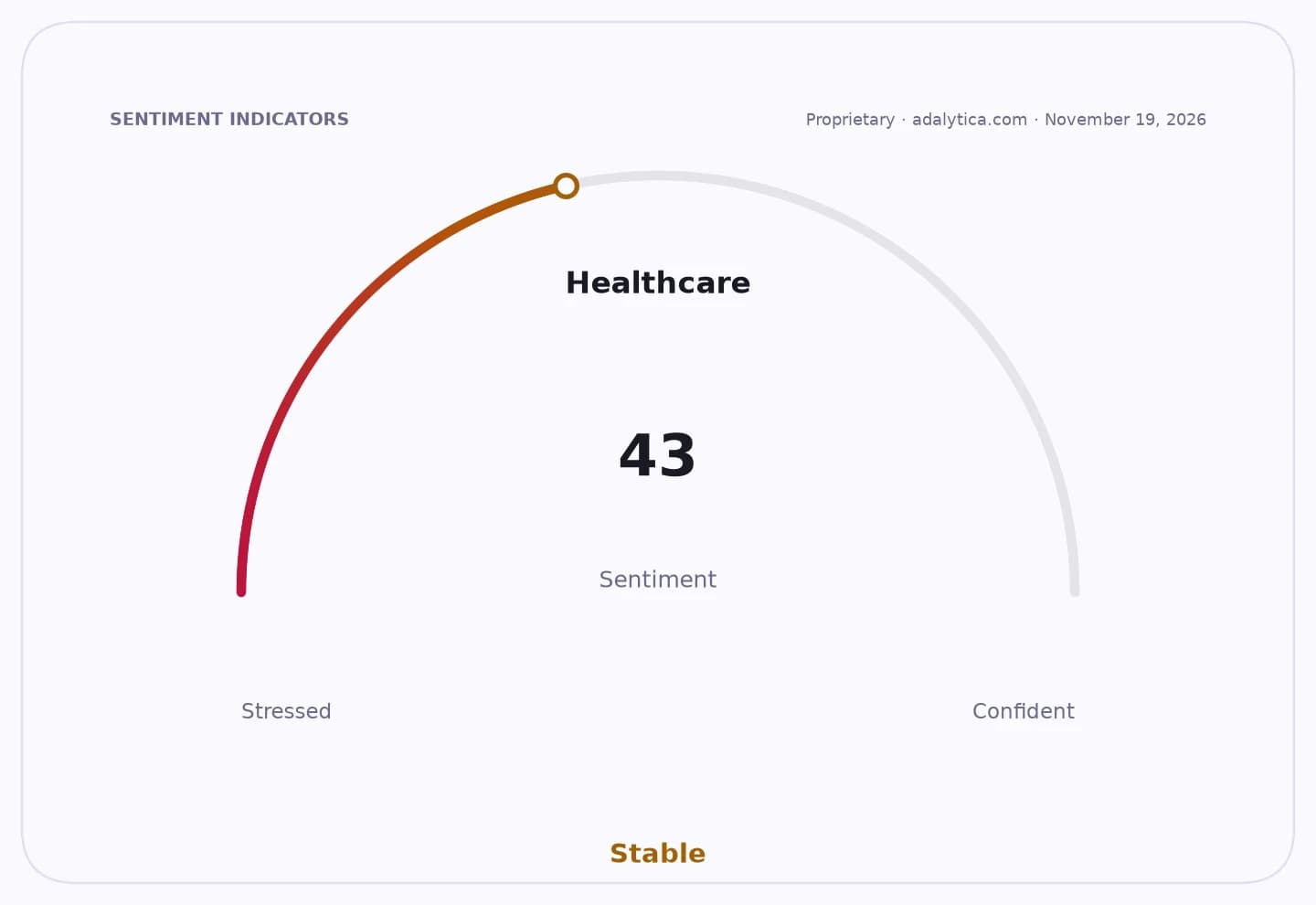
Sentiment Indicators
The dialogue, which will bring together policymakers and experts, is expected to focus on financing, insurance and human resources for health. Those are the three constraints that most directly determine whether Nigeria can move from reactive, hospital-based treatment toward a more sustainable prevention-led model. In practical terms, the debate is about whether government can widen coverage and improve service quality without relying on ad hoc spending that often leaves clinics underfunded and understaffed.
The policy backdrop is increasingly relevant for markets because health spending is under strain globally, while insurers and providers are being forced to adapt to tighter reimbursement conditions. In the U.S., for example, major health groups have recently warned that payment rates remain insufficient to cover patient needs, underscoring how reimbursement gaps can compress margins. Similar dynamics in Nigeria would likely leave households paying more directly for care, reduce uptake of insurance and slow growth in the formal health-finance system.
A stronger financing framework for primary care could support insurers by enlarging the insured pool and improving premium collection. It could also benefit hospitals and private providers if it channels more predictable patient flows into the system. But the upside depends on execution. Without more funding, better budget discipline and a plan to retain health workers, any reform risks becoming another policy statement rather than a durable shift in healthcare delivery.
For investors, the key question is whether the dialogue leads to a clearer framework for pooling risk, expanding coverage and directing spending toward clinics and community-level care. If it does, the result would be a more investable healthcare ecosystem over time. If not, Nigeria’s health burden will continue to fall heavily on households and leave the sector structurally underfunded.
| Entity | Gains | Losses |
|---|---|---|
| Nigerian households | ▲Lower out-of-pocket costs | ▼Continued treatment burden |
| Insurers | ▲Larger covered population | ▼Weak premium growth |
| Primary care providers | ▲More stable funding | ▼Persistent underinvestment |
| Government budget | ▲Better health efficiency | ▼Upfront fiscal pressure |