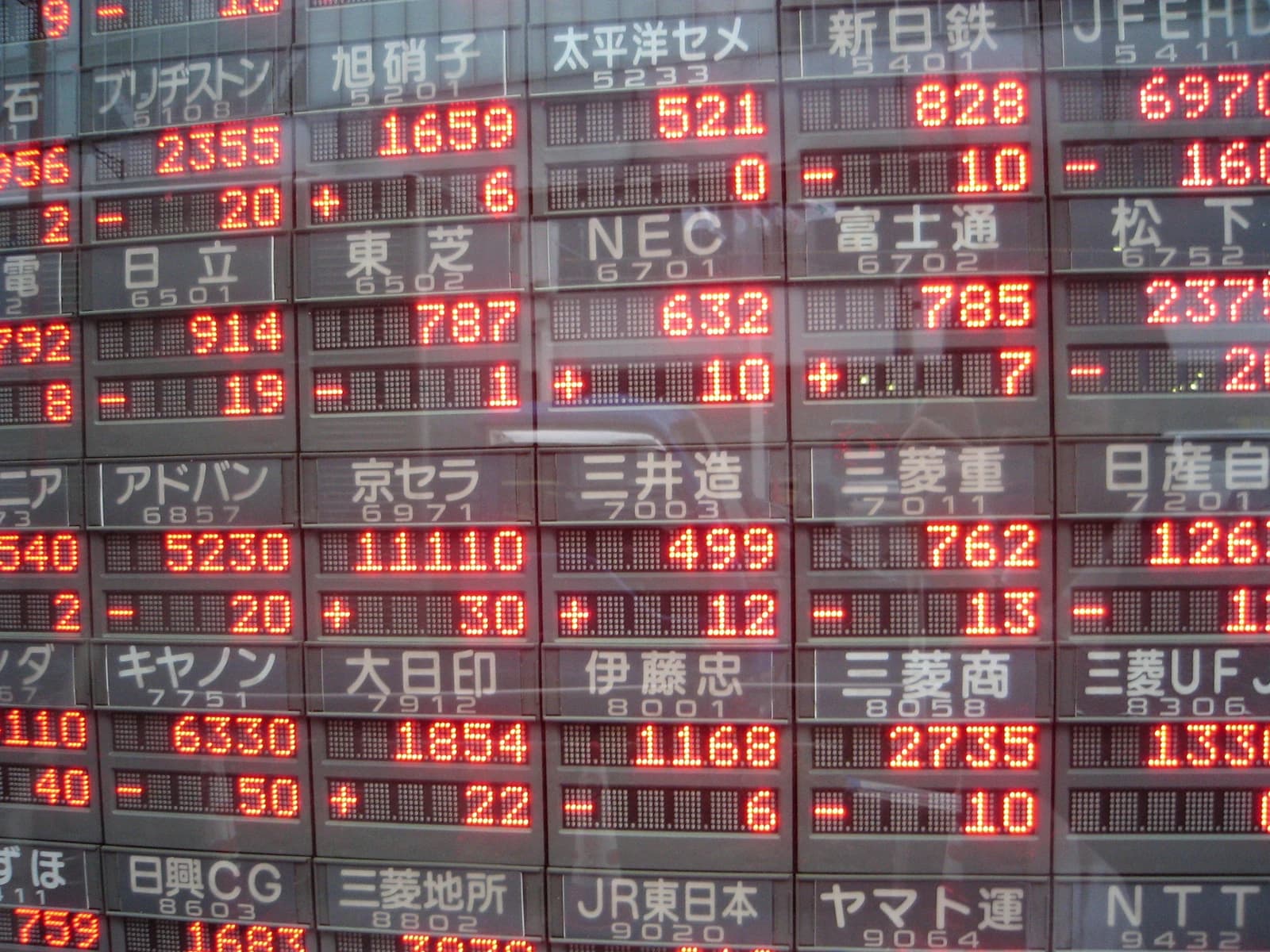
Japan’s Nikkei average jumped to 66,460 yen on Monday, with investors moving back into AI and semiconductor shares as the recent surge in long-term yields finally paused.
Nikkei Jumps on AI Stocks and Yield Pause

That matters because the rally is being driven by the two forces that have dominated Japan’s market this year: falling fear around rates and relentless demand for anything tied to compute. When long-term borrowing costs stop climbing, equity valuations get breathing room, especially for high-multiple growth names and rate-sensitive sectors. At the same time, a fresh bid in U.S. chip stocks on Friday spilled straight into Tokyo, where the Nikkei is heavily leveraged to semiconductors and AI infrastructure.
Sentiment IndicatorsⓘProprietary · adalytica.com · September 7, 2026
This is a snapshot — live sentiment, awareness and momentum for 130+ markets update continuously in the dashboard.Open AlphaPulse
The benchmark closed the morning session up 1,439.17 yen, or more than 2%, at 66,460.11 yen after briefly rising more than 1,600 points. The move extended a powerful rebound in Japanese equities and came as the 30-year Japanese government bond yield, which touched 3% for the first time in about three decades on Sept. 1, stopped rising for now. For equity investors, that pause is important: it eases pressure on discounted cash flow assumptions, reduces anxiety over a rapid tightening in financial conditions, and supports the kind of multiple expansion that has powered the Nikkei’s run.
This is not just a domestic rate story. It is part of a broader global trade in which capital is chasing the picks-and-shovels of the AI boom. Japanese stocks linked to chips and advanced electronics remain the clearest local beneficiaries, while U.S. semiconductor strength helped set the tone after the weekend. The fact that the Nikkei can rally this sharply even after a historic surge in bond yields shows how much of the market still wants exposure to Japan’s industrial and technology winners.
There is also a more structural investor case. A large house broker said solid earnings in both Japan and the U.S. should continue to underpin shares, and that is the right framework for this market. Japan’s corporate sector has been improving governance, buybacks remain a support, and global capex linked to AI is still early. If rates merely stabilize instead of accelerating higher, that removes a major headwind without ending the secular growth case.
For investors, the message is straightforward: the market is rewarding duration again, but selectively. AI chip names, equipment makers and other semiconductor beneficiaries should keep attracting flows as long as bond volatility stays contained. The bigger risk is not that Japan’s rally has run too far; it is that investors miss the second-order winners from a pause in yields and a new leg of AI spending.
| Entity | Gains | Losses |
|---|---|---|
| Nikkei 225 | ▲Rate relief bid | ▼Yield-sensitive bears |
| AI and semiconductor stocks | ▲Multiple expansion | ▼Value laggards |
| Japan equity bulls | ▲Renewed inflows | ▼Bond-market hawks |
| Long-term bond sellers | ▲None | ▼Short-duration equity holders |