Japan’s stock market is being forced to confront a simple but powerful shift: higher interest rates are no longer a distant macro risk, they are an immediate valuation problem.
Nikkei Falls as Japan Rates Move Higher
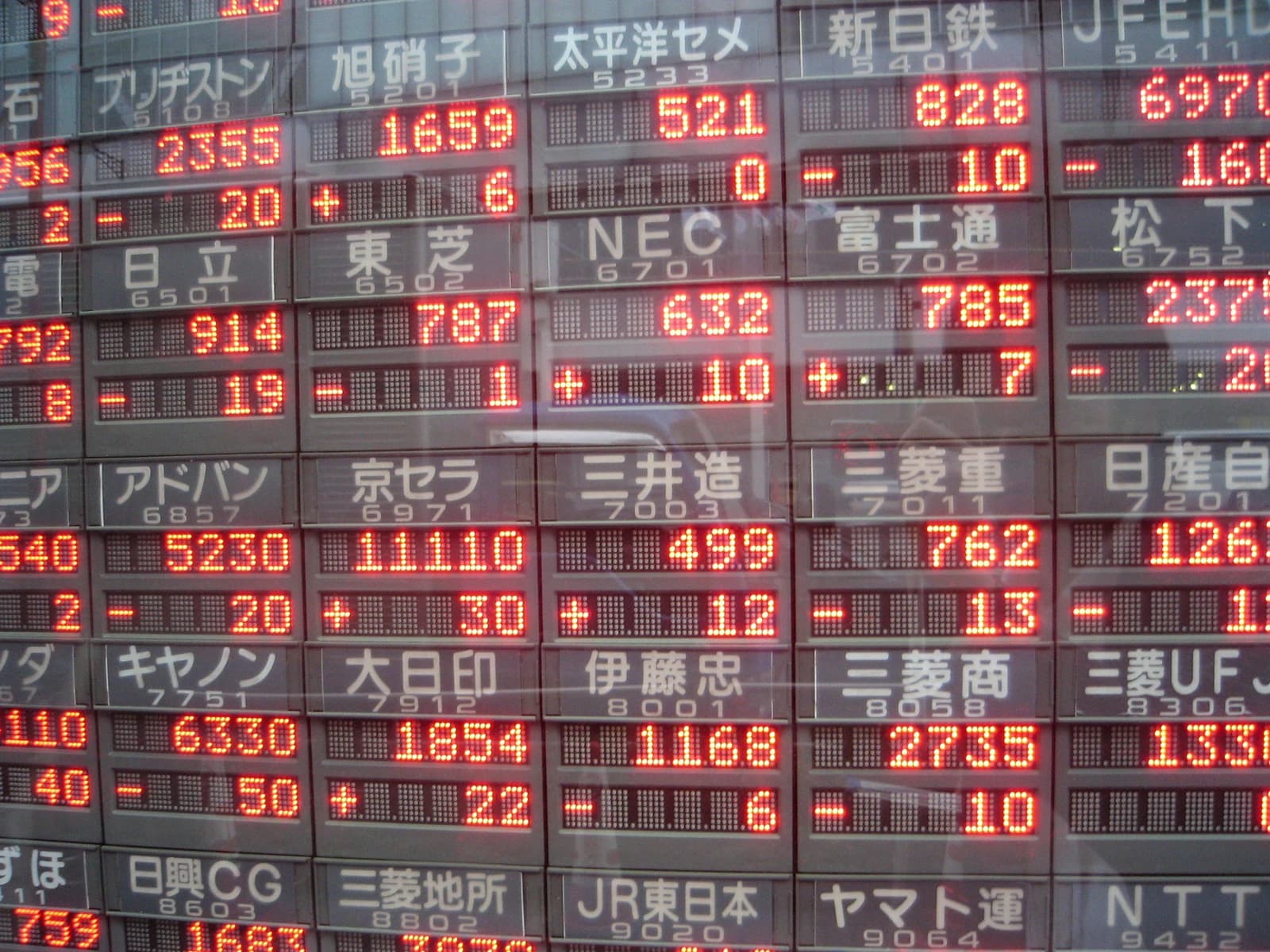
The Nikkei average closed 993 yen lower as investors sold on concern that borrowing costs are heading up in Japan and abroad, undermining the easy-money backdrop that helped propel the index to record territory. The decline matters because the rally has been built on a mix of abundant liquidity, a weaker yen and improving corporate capital efficiency. When rates rise, that support weakens across the board.
Sentiment IndicatorsⓘProprietary · adalytica.com · October 10, 2026
This is a snapshot — live sentiment, awareness and momentum for 130+ markets update continuously in the dashboard.Open AlphaPulse

The index finished at 69,030.92, slipping from 70,035.71 the previous day, while the yen held near 158.25 per dollar. That currency level still leaves exporters with a favorable translation tailwind, but it also reflects a market that remains highly sensitive to any change in the rate differential with the U.S. Japan’s benchmark 10-year Treasury yield sits around 5.27% in the U.S. data set, while the two-year is near 4.73%, underscoring how restrictive global financial conditions remain even before Japan fully normalizes policy.
For equities, the issue is not just sentiment. Higher rates compress price-to-earnings multiples, raise discount rates on future cash flows and make shareholders more demanding about capital allocation. That is especially important in Japan, where the equity story has increasingly centered on return on equity, buybacks and governance reform. A sustained rise in yields can still be constructive for banks and insurers, but it is usually a headwind for the broader market if investors start to question whether the peak in liquidity-driven gains is behind them.

Technical positioning suggests the market had been stretched. The Nikkei’s relative strength index was 72.3, a reading that typically points to overbought conditions, even after the index climbed well above its 50-day and 200-day moving averages. That leaves room for a sharper pullback if rate fears intensify. In the U.S., the S&P 500 has also stayed in an “extreme greed” zone in Adalytica’s sentiment snapshot, a reminder that global risk appetite remains elevated and therefore vulnerable to a macro wobble.
The asymmetric opportunity here is not to chase the index higher blindly, but to own the beneficiaries of a rate repricing while being selective on duration-sensitive risk. Financials, cash-generative industrials and companies with pricing power should outperform if Japan’s yield curve continues to steepen and the yen stays weak. Highly valued growth names and domestically oriented sectors are more exposed if bond yields keep climbing.
My takeaway: this is a transition market, not a momentum market. If Japanese rates are moving higher for longer, investors should position for a broader reset in valuation and favor the parts of the market that can actually earn a higher-rate world.
| Entity | Gains | Losses |
|---|---|---|
| Japanese banks and insurers | ▲Wider lending margins | ▼None |
| Exporters | ▲Weak yen support | ▼Higher funding costs |
| Nikkei bulls | ▲Liquidity tailwind if rates stabilize | ▼Multiple compression |
| Duration-heavy growth stocks | ▲Rate repricing if yields fall | ▼Higher discount rates |