The Nikkei Stock Average widened its midday advance as buying spread across almost the entire Tokyo stock market, with 95% of Prime Market issues rising.
Nikkei Rallies as 95% of Prime Market Issues Rise
The broad-based move matters because it points to demand that is not limited to a handful of heavyweight exporters or technology names. When gains reach that kind of breadth, it often reflects a stronger risk tone in Japan equities and can support the market’s near-term momentum.
Sentiment Indicators
U.S.-listed iShares MSCI Japan ETF EWJ and WisdomTree Japan Hedged Equity Fund DXJ were both firmer in recent trading, tracking the rebound in Japanese shares. EWJ ended the latest session at 91.76, while DXJ finished at 59.44, both holding above their 200-day moving averages, a sign the longer-term trend remains intact even after recent volatility.
EWJ’s technical readings show the fund recovering from an early-November pullback: the ETF’s 50-day average stood at 95.65 versus a latest close of 91.76, while RSI was 42.8, below overbought territory. DXJ was flatter, closing near 59.44 with its 50-day average at 59.47 and RSI at 51.3, suggesting a more balanced setup.
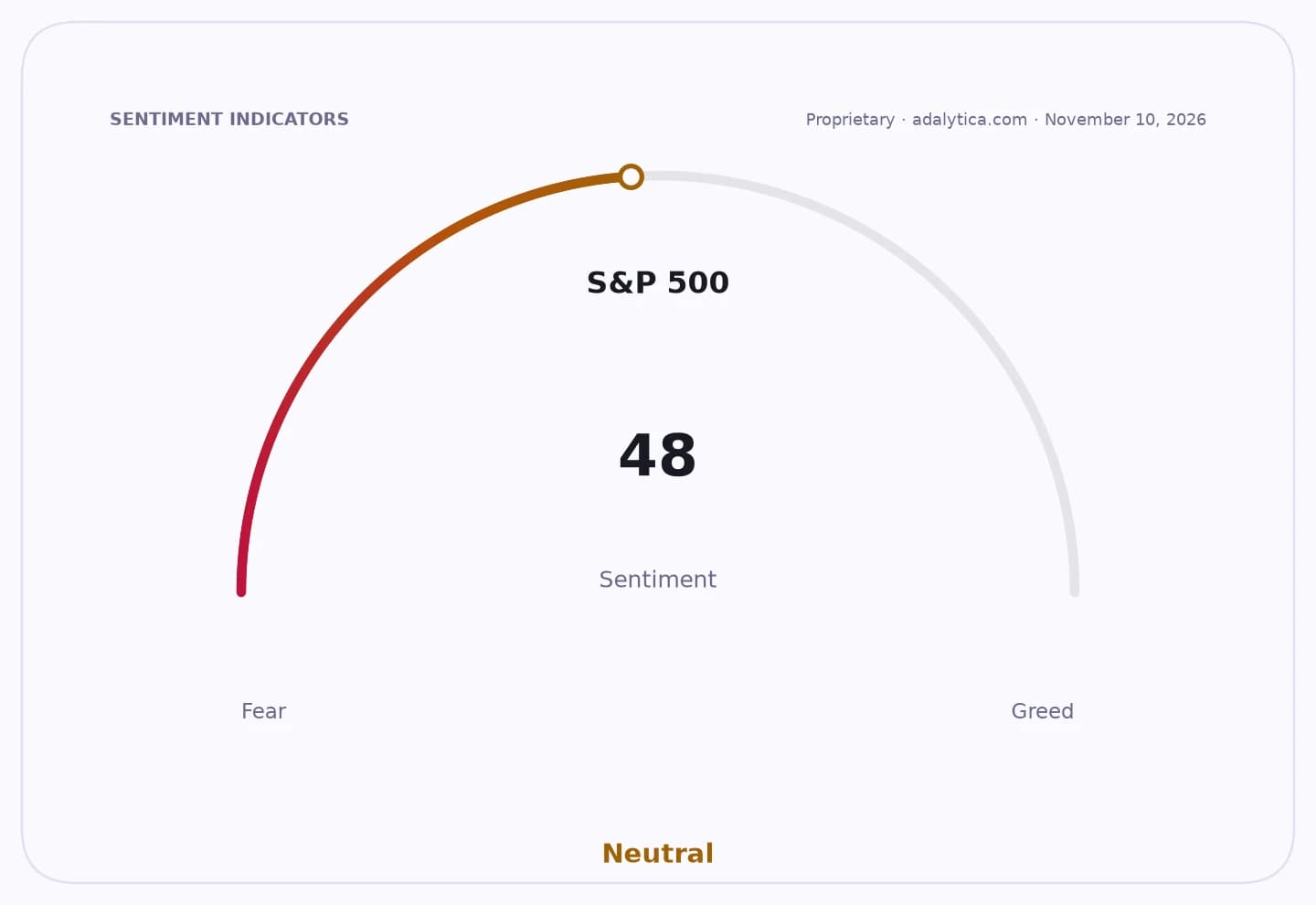
The backdrop also includes a sharply bullish U.S. equity tone, with Adalytica’s S&P 500 Trade Signals showing “Extreme Greed” and sentiment at 100, a risk backdrop that can spill over into global equities. For Japan, investors will be watching whether the breadth-led rally can extend beyond midday trade and whether foreign buying joins domestic demand in the next sessions.
| Entity | Gains | Losses |
|---|---|---|
| Nikkei bulls | ▲Broad market upside | ▼Pullback risk if breadth fades |
| Prime Market stocks | ▲More participation | ▼Short sellers |
| EWJ holders | ▲Exposure to Japan rebound | ▼Weak yen-sensitive bears |
| DXJ holders | ▲Stable hedged exposure | ▼Momentum traders waiting for trend break |