Norway’s government will draw NOK 608.4 billion from the sovereign wealth fund next year, a transfer that keeps the state’s spending path anchored to oil wealth at a time when investors are weighing how much fiscal support the economy can absorb without stoking inflation.
Norway Budget to Draw NOK 608.4 Billion From Oil Fund
The proposed withdrawal, equivalent to 2.7% of the fund’s value, is the central figure in the 2027 budget and underscores how dependent Norway’s public finances remain on returns from the Government Pension Fund Global. The transfer finances a large share of the state budget and, because the fund is invested abroad, the amount sent home also affects the balance between domestic demand and the krone.
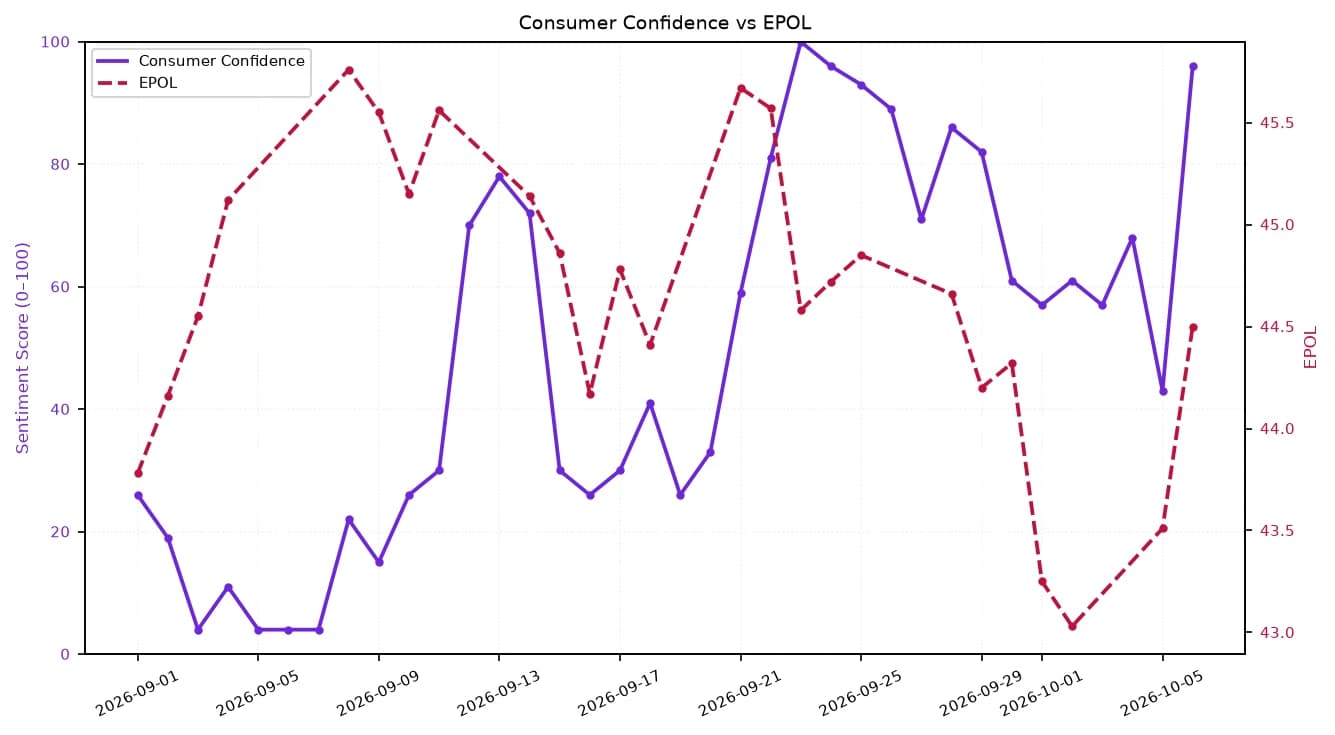
Sentiment IndicatorsⓘProprietary · adalytica.com · October 8, 2026
This is a snapshot — live sentiment, awareness and momentum for 130+ markets update continuously in the dashboard.Open AlphaPulse
For markets, the size of the draw matters because it is one of the clearest signals of how expansionary fiscal policy may be. A larger-than-expected use of oil money would tend to support growth, public consumption and investment, but it can also keep pressure on prices and complicate the work of Norges Bank if household demand proves resilient. A smaller draw would be more conservative, but could also imply less fiscal cushioning for the non-oil economy.
The decision comes against a backdrop of mixed risk appetite globally. Adalytica’s S&P 500 trade signals show extreme greed in U.S. equities, while its consumer spending gauge has slipped to neutral, a combination that suggests markets are still comfortable taking risk even as underlying demand signals soften. For Norway, that matters because domestic policy and oil fund withdrawals are increasingly being judged alongside wider shifts in liquidity, rates and growth expectations.
Equinor, the country’s flagship energy company, is also in focus because budget policy and oil wealth are tightly linked in investor perceptions even when direct cash flows are separate. Equinor shares have been volatile in recent sessions, but the broader issue for investors is whether Norway’s use of the fund remains disciplined enough to preserve long-term capital while funding near-term spending.
The number that will matter next is not just the transfer itself, but whether the final budget process changes the pace of spending or the assumptions behind it. Investors will watch for any sign that the government is leaning harder on the fund to support activity, or instead trying to rein in the fiscal impulse as inflation and rates remain key constraints.
| Entity | Gains | Losses |
|---|---|---|
| Norwegian government | ▲More fiscal room | ▼Lower budget discipline |
| Households/public sector | ▲Higher spending support | ▼Inflation pressure |
| Norges Bank | ▲— | ▼Harder policy trade-off |
| Oil Fund savers/long-term capital | ▲— | ▼Smaller capital buffer |