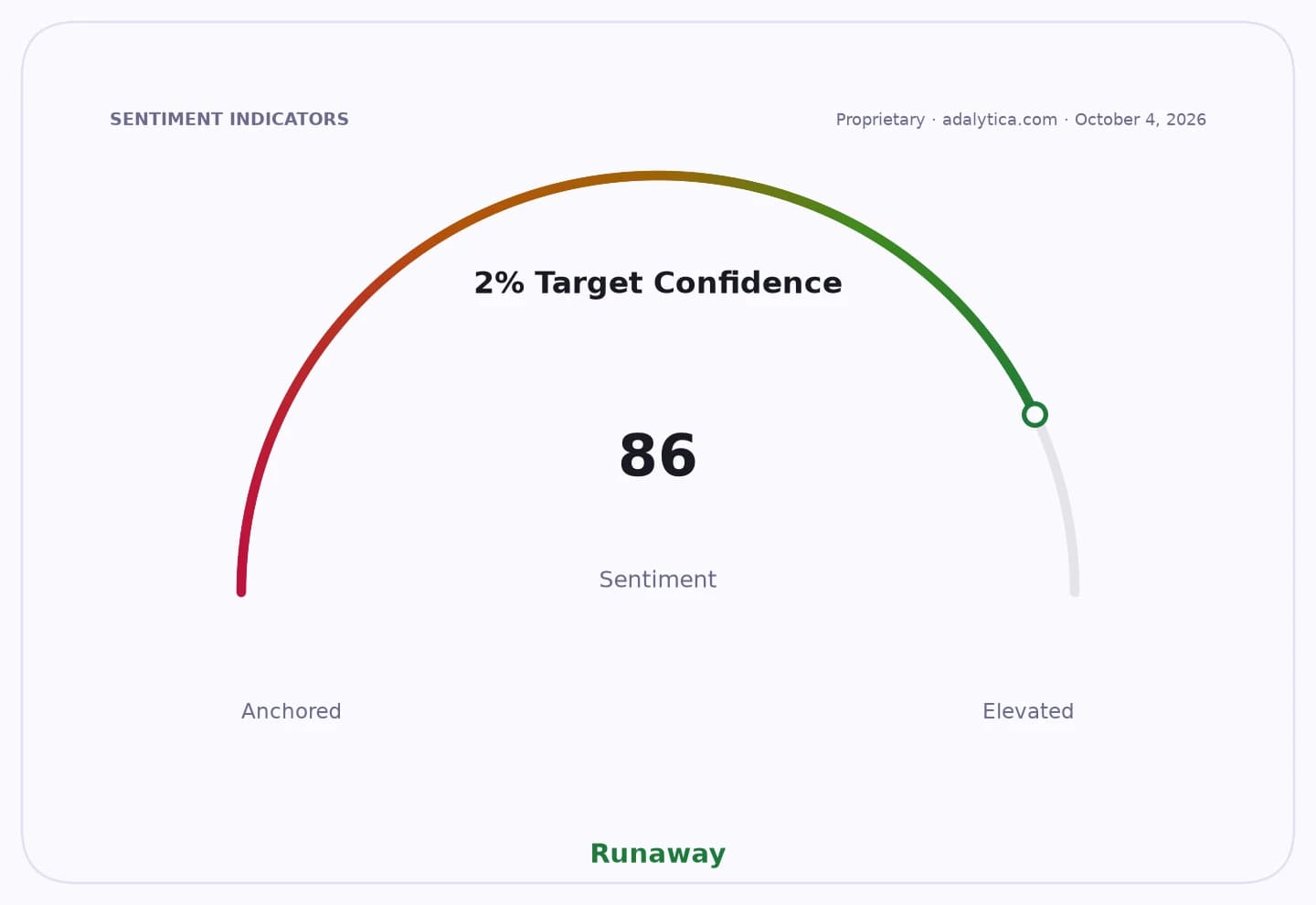
Sweden’s inflation rate has fallen back to the Riksbank’s 2% target on headline measures, but a sharp rise in borrowing costs is making the next policy move far less straightforward for investors.
Sweden inflation returns to 2% as borrowing costs rise

Consumer prices rose 1.5% from a year earlier, while core inflation excluding energy slowed to 0.5%, according to fresh data from across the Öresund. The reading supports the view that Sweden’s disinflation process is intact, yet it lands at a moment when rate expectations have already been moving higher and market pricing is adjusting to the reality that easier inflation does not automatically mean easier policy.
Sentiment IndicatorsⓘProprietary · adalytica.com · October 9, 2026
This is a snapshot — live sentiment, awareness and momentum for 130+ markets update continuously in the dashboard.Open AlphaPulse
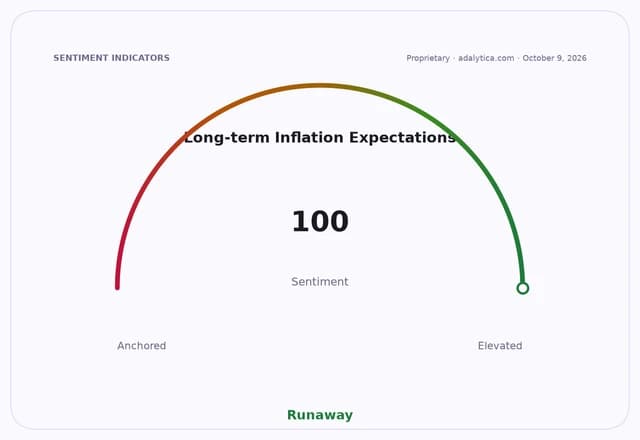
That tension is the key story for Swedish assets. Lower inflation would normally strengthen the case for a central bank pause or even a cut, especially in an economy that has struggled with weak growth. But the jump in rates is now feeding through to financial conditions, meaning the Riksbank has to balance a softer price backdrop against the risk that tighter market yields will do some of its work for it. In other words, inflation is no longer the problem it was, but the cost of money is still rising.
For households and companies, that matters more than the headline target suggests. Mortgage-sensitive Sweden is among the most rate-exposed economies in Europe, so a higher interest-rate path can restrain consumption and investment even if inflation is easing. That is why investors will focus less on the headline CPI number alone and more on whether the central bank treats the move as evidence that policy can stay restrictive for longer, or as cover to begin easing earlier than the bond market expects.
The market backdrop also complicates the signal. Sweden’s benchmark long-term yields have been climbing alongside broader global bond moves, reflecting tighter financial conditions even without a policy hike. If those yields remain elevated, they effectively reinforce the central bank’s job and reduce the need for aggressive action. But if growth weakens further, the Riksbank may be forced to choose between protecting the inflation target and cushioning the real economy.
For investors, the implication is that Swedish rate-sensitive sectors — especially banks, housing-linked names and domestic cyclicals — remain tied to the path of real yields rather than to the inflation print alone. A return to target inflation is supportive in theory, but only if it translates into a credible easing cycle. Until then, Sweden looks like a market where price stability is returning faster than monetary relief.
The next catalyst will be the Riksbank’s reaction function: whether officials read the latest inflation data as confirmation that policy is sufficiently tight, or as a reason to keep rates elevated while waiting for labor demand and activity to slow further. For now, the message to markets is clear — Sweden has won the inflation fight, but the debt-service bill is still going up.
| Entity | Gains | Losses |
|---|---|---|
| Riksbank | ▲More room to hold policy steady | ▼Less urgency to cut quickly |
| Swedish borrowers | ▲Lower inflation pressure | ▼Higher debt-service costs |
| Swedish banks | ▲Wider rate margins | ▼Slower loan growth risk |
| Domestic growth sectors | ▲Easier inflation backdrop | ▼Tighter financial conditions |