Novartis shares slumped as much as 14% after its most advanced drug tied to the Avidity Biosciences deal failed a key phase 3 trial, dealing a sharp blow to the Swiss drugmaker’s growth story and raising fresh doubts about its acquisition-led strategy.
Novartis Shares Fall After Del-desiran Phase 3 Failure
For investors, this matters because Novartis had been paying up for pipeline assets to keep earnings and sales climbing well into the next decade. Del-desiran was the crown jewel of the $12 billion Avidity takeover completed in February, and management had described it as a potential blockbuster with more than $5 billion in annual sales. A failure that late in development is not just a bad day for the stock; it removes a major pillar from the company’s long-term revenue case.
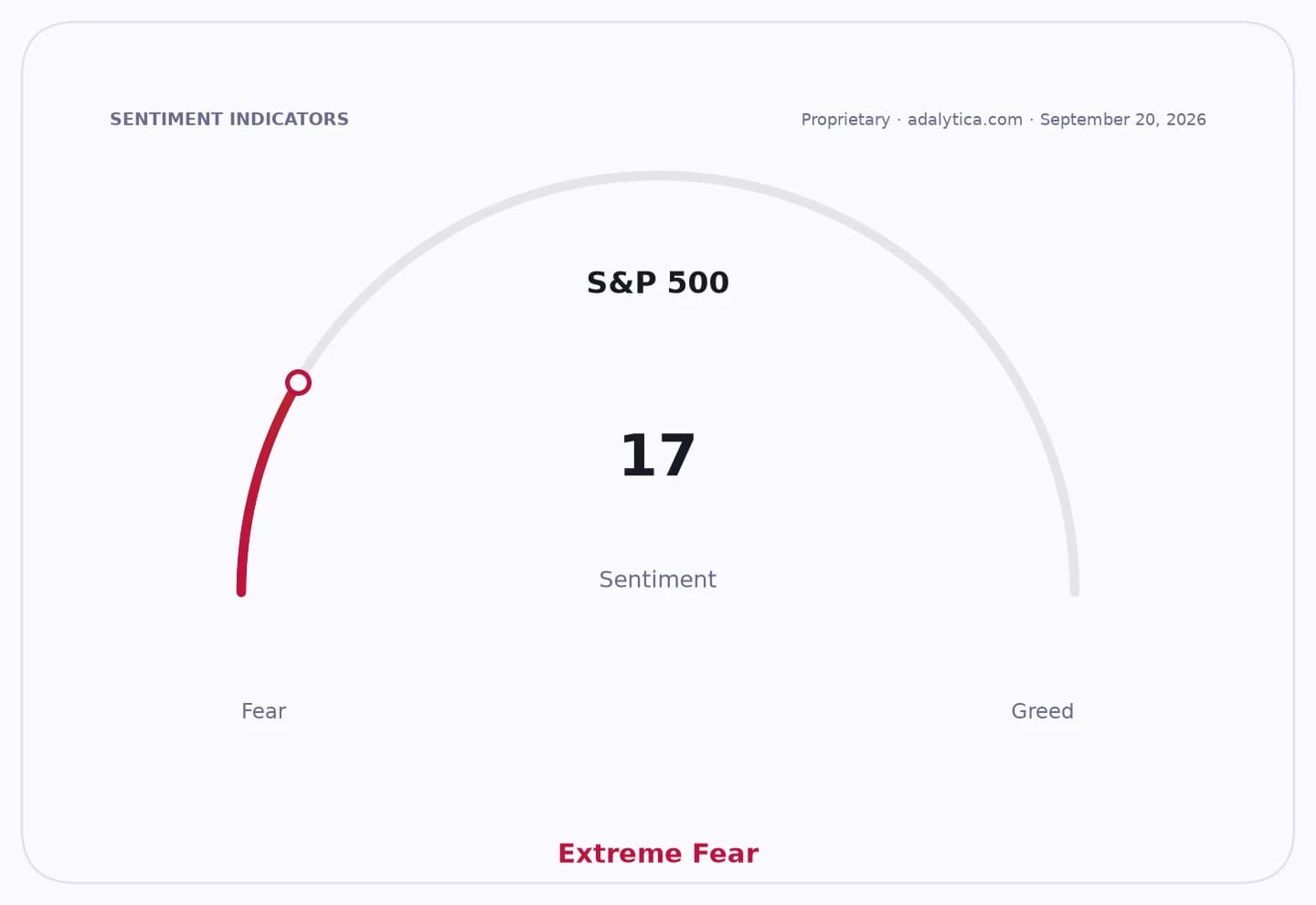
Sentiment IndicatorsⓘProprietary · adalytica.com · September 10, 2026
This is a snapshot — live sentiment, awareness and momentum for 130+ markets update continuously in the dashboard.Open AlphaPulse
The selloff was brutal. The shares fell 14% in early trading, the steepest drop for Novartis since 1987, and the decline was about 10% on the Zurich market. On the U.S.-listed ADR, the loss was even more pronounced, wiping out $22.49 a share in a single session. The stock’s sharp break also pushed it below its 50-day moving average, with momentum gauges such as RSI flashing oversold territory after the post-news plunge.
Del-desiran, also known as delpacibart etedesiran, was being tested in patients with myotonic dystrophy type 1, a rare genetic disease that progressively weakens muscles. The Harbor study missed its main goal, showing no meaningful improvement versus placebo in hand-opening ability, a key measure of whether the therapy was working. That matters not only because the asset failed, but because it was supposed to validate Novartis’ bet on a new class of medicines coming out of Avidity.
The disappointment landed on top of two other recent setbacks: Novartis said last week that its cholesterol drug Pelacarsen failed to cut the risk of major cardiovascular events, and in late August it paused eight trials of its rap-cel cell therapy after three patient deaths. Put together, the run of failures is forcing investors to ask whether the company’s research engine and capital-allocation discipline are as resilient as the market once assumed.
Novartis still says it can grow sales 5% to 6% a year through 2030, but analysts are becoming more skeptical. Jefferies has said that target looks hard to reach without more deals, while Barclays argues the latest failure calls the Avidity purchase and the broader merger-and-acquisition strategy into question. That is the real economic issue here: if premium-priced acquisitions stop producing late-stage winners, the return on those billions of dollars shrinks fast.
There is still a reason long-term investors may want to keep Novartis on the watchlist. The company said remibrutinib delivered encouraging results in a separate multiple sclerosis study, showing the pipeline is not empty. But one encouraging readout does not erase the damage from a failed flagship asset, and it will likely take more clinical wins before the market is willing to reward Novartis for its pipeline again.
For patient investors, the key question is whether this is a temporary setback or the start of a bigger reset in expectations. Novartis remains a high-quality global pharma franchise with real cash flow and a broad medicines base, but the stock now has to prove that its next wave of drugs can justify the aggressive dealmaking. That makes the shares worth watching closely, but only for investors willing to think in years, not days.
| Entity | Gains | Losses |
|---|---|---|
| Short sellers | ▲Sharp stock drop | ▼Rebound risk |
| Long-term Novartis investors | ▲Lower entry price | ▼Pipeline setback |
| Avidity stakeholders | ▲Takeover proceeds already booked | ▼Deal thesis weakened |
| Rival drugmakers | ▲Relative confidence | ▼Less near-term pressure |