A new “Novel Blue Moon” exploit kit aimed at Chrome and Windows underscores how fast artificial intelligence is changing the economics of cybercrime, with attackers now able to scale vulnerability discovery and weaponization far more quickly than many defenses can adapt.
Novel Blue Moon Exploit Kit Hits Chrome and Windows
That matters because the threat is no longer limited to isolated phishing emails or one-off malware campaigns. Security vendors and software platforms are being pushed into a higher-spend, higher-urgency cycle as AI lowers the cost of finding attack paths and accelerates the pace at which flaws can be turned into revenue-generating exploits. For enterprises, that means more pressure to harden browsers, endpoints and identity layers at the same time. For investors, it reinforces why cybersecurity remains one of the few software categories with durable demand even in a broader capex pullback.
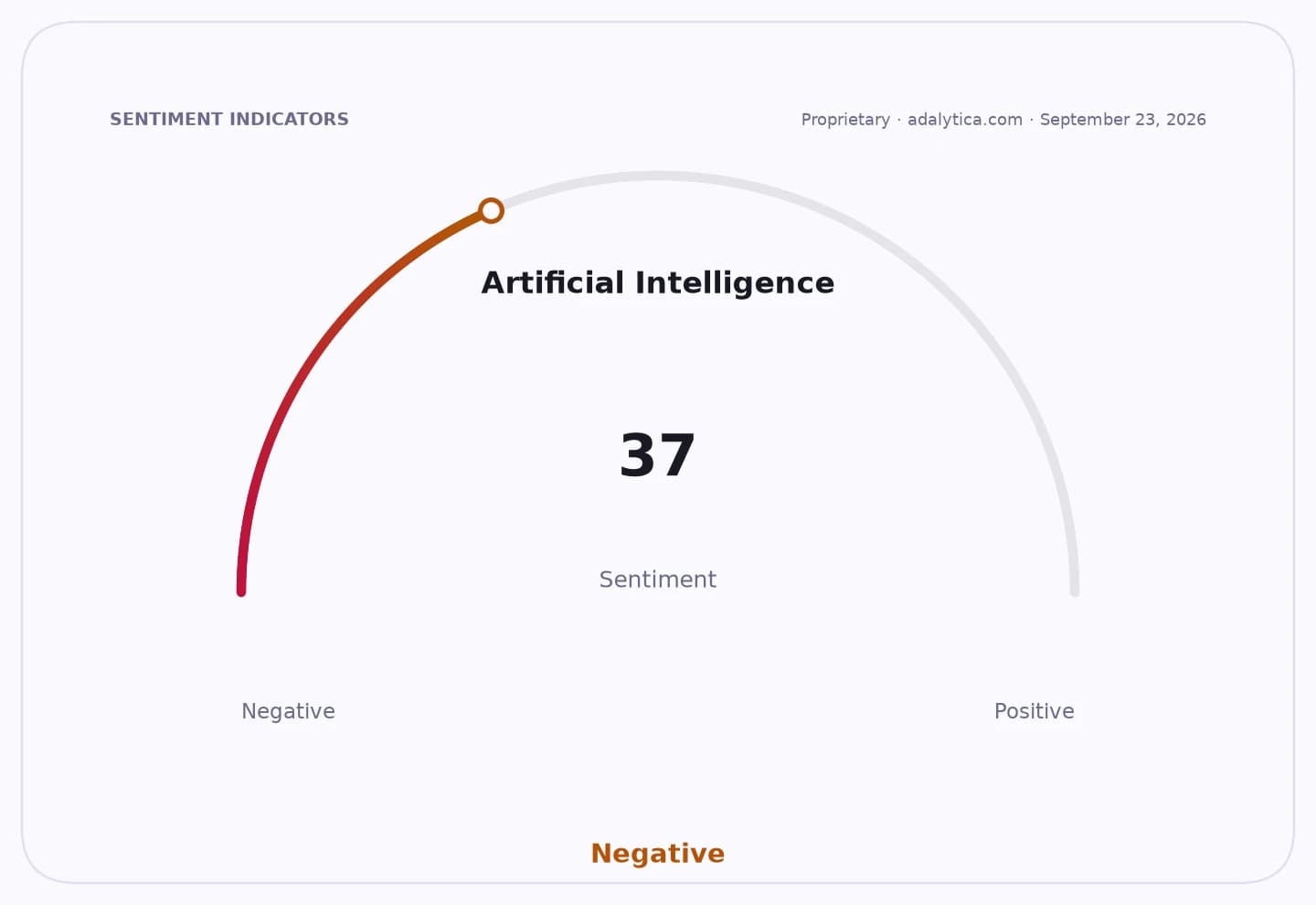
Sentiment IndicatorsⓘProprietary · adalytica.com · September 11, 2026
This is a snapshot — live sentiment, awareness and momentum for 130+ markets update continuously in the dashboard.Open AlphaPulse
The market has already started to price that reality into the leaders and the challengers. CrowdStrike, whose shares trade around $208.86, is far above its 50-day moving average near $202.31 and well above the 200-day trendline around $143.70, showing how investors continue to reward platforms that can consolidate endpoint, identity and threat response. Microsoft, at about $492.44, is also holding above its 50-day average of $450.87, while Alphabet’s $332.60 share price sits just under its 50-day average near $347.43, a reminder that the market is still separating core platform strength from the rising cost of defending those platforms. Adalytica’s Microsoft earnings sentiment reading has jumped to 93, or “Extreme Greed,” even as its awareness gauge sits at 4, reflecting intense investor focus on the company’s AI and security exposure.
The bigger investment point is that exploit kits like Blue Moon do not just hurt victims; they create an installed-base tax on the digital economy. Every new campaign makes it harder for companies to rely on patching alone and increases the value of vendors that can monitor endpoints, browsers, cloud identities and AI-assisted response in real time. Microsoft remains a natural beneficiary because Chrome and Windows are precisely where enterprise workflows live. CrowdStrike stands out as the purest leveraged play on the need for faster detection and automated containment. Alphabet is more exposed to the user-layer consequences if browser-based attacks intensify, even if its own scale gives it strong defensive advantages.
This is the kind of trend investors should treat as a secular demand catalyst, not a temporary scare. The same AI tools that are supercharging attackers are also forcing enterprises to buy more security software, adopt more managed detection services and push budget toward vendors with platform breadth. The market underestimates how sticky that spending can become once chief information security officers conclude that human-only defenses are no longer enough.
Novel Blue Moon is therefore less a one-off cyber headline than another sign that AI is widening the attack surface across the world’s most important operating systems and browsers. That supports a straightforward thesis: own the companies that sit on the toll roads of digital risk, and stay underweight those that will be forced to absorb higher security costs without commensurate pricing power.
| Entity | Gains | Losses |
|---|---|---|
| Microsoft | ▲Security and cloud demand | ▼More pressure on Windows ecosystem |
| CrowdStrike | ▲Endpoint spending cycle | ▼Competitors with narrower platforms |
| Alphabet | ▲Need for browser security | ▼Chrome trust and defense costs |
| Attackers | ▲Faster exploit scaling | ▼Greater defender awareness |