Nvidia and Broadcom remain the most widely held chip stocks among active U.S. fund managers, but the sharp rise in ownership of Micron and AMD shows investors are broadening their bets across the semiconductor cycle.
Nvidia, Broadcom Lead Chip Ownership as Micron, AMD Rise

That shift matters because it suggests the market is no longer treating artificial intelligence as a single-name trade. Bank of America’s August equity strategy data showed Nvidia in 82% of active U.S. fund manager portfolios and Broadcom at a similar level, underscoring their status as the sector’s core consensus holdings. But AMD ownership climbed to 51% and Micron to 50%, a notable increase for both and evidence that portfolio managers are seeking more exposure beyond the two dominant AI infrastructure names.
The economic significance is in where capital is flowing inside the chip complex. Ownership remains concentrated in compute, at 74%, but memory and semiconductor equipment are becoming more prominent parts of the trade. Memory ownership rose 612 basis points from July, while equipment climbed 324 basis points, pointing to a broader bet on demand from data centers, AI servers and the supply chain that supports them. That mix matters because memory and equipment are typically more cyclical than the dominant GPU and networking names, meaning investors are starting to price a wider set of beneficiaries from the AI buildout.
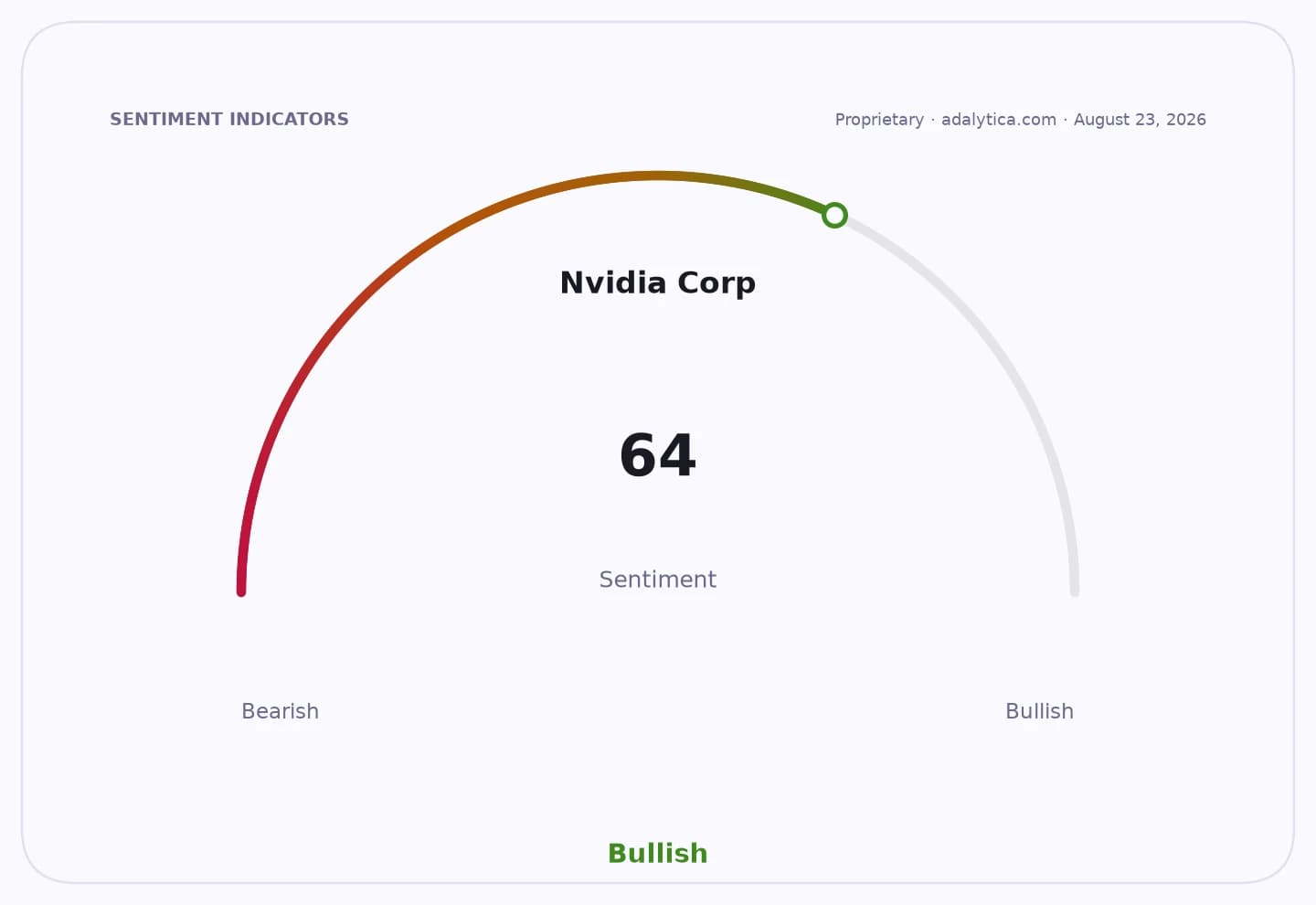
For Nvidia, the data reinforce its position as the sector’s benchmark holding even as the stock has eased from recent highs. The shares were last around $218.50, below their 50-day moving average of about $212.17 and with the relative strength index near 51, suggesting a market still digesting a volatile run rather than abandoning the name. Broadcom, trading near $362.15, has also held a large institutional base, with its ownership supported by the company’s expanding role in custom AI chips and networking. Broadcom’s recent agreement with Apple to extend their long-standing silicon collaboration through 2031 also adds a second narrative beyond AI: recurring design wins in high-value custom silicon.
Micron’s and AMD’s rise is more important for what it says about investor positioning. Micron has benefited from renewed enthusiasm around memory demand tied to AI servers, while AMD has been trying to convince investors it can capture a larger share of the AI accelerator market. Micron’s shares, near $982.63, remain far above the 50-day average around $929.85, while AMD’s weight gains suggest active managers are willing to pay for a possible catch-up trade if the company can convert product launches and customer wins into sustainable data-center share.
The split between long-only investors and hedge funds also highlights the market’s internal debate. Hedge funds preferred names such as Seagate, Teradyne and Sandisk, while long-only managers leaned toward Skyworks, Western Digital, Marvell, Monolithic Power, Microchip, NXP, KLA, Intel, Corning and Qualcomm. That divergence suggests some investors are looking for value and cyclical recovery, while others are still crowding into the highest-conviction AI infrastructure names.
The bull case is that the semiconductor rally is widening and becoming less dependent on a handful of megacap winners. The bear case is that broader ownership can also mean crowded positioning, leaving the group vulnerable if AI capital spending slows or if earnings fail to keep pace with elevated expectations. For investors, the key test is whether rising ownership in Micron, AMD and equipment names turns into durable earnings momentum, or whether Nvidia and Broadcom remain the only stocks with enough growth visibility to justify their near-universal ownership.
| Entity | Gains | Losses |
|---|---|---|
| Nvidia | ▲Core institutional support | ▼Crowding risk |
| Broadcom | ▲Broad AI/design-win exposure | ▼Limited upside if rotation widens |
| Micron | ▲Rising memory demand bet | ▼Cyclical volatility |
| AMD | ▲Increased AI-share speculation | ▼Execution pressure vs Nvidia |