Jensen Huang’s blunt critique of Germany’s competitiveness is more than a political sound bite: it underscores how the AI boom is being shaped by the countries that can build power-hungry data centers, accelerate permitting and attract capital fast enough to keep pace with Nvidia’s demand. For investors, that makes the real trade not just Nvidia itself, but the infrastructure and industrial winners that can help Europe close the gap.
Nvidia, Germany and the AI power bottleneck
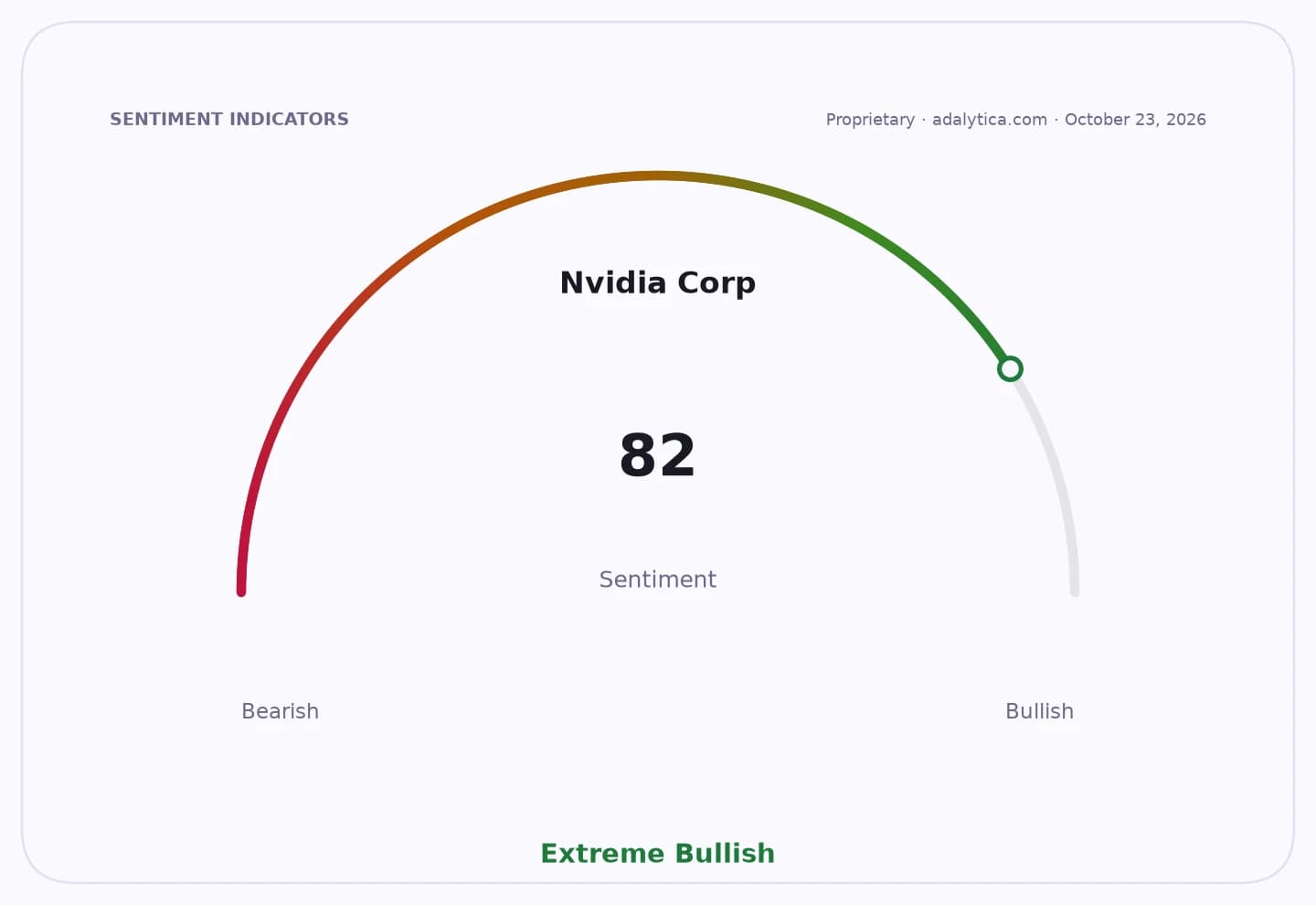
Huang said he was “shocked” by the conditions in Germany and lamented that a highly industrialized country was being left behind. The comment lands at a moment when AI spending is becoming a macro story, not just a tech one. The winners will be the regions that can translate semiconductor demand into energy supply, grid upgrades, cooling systems, automation and domestic manufacturing capacity. The losers are the economies that keep talking about strategic autonomy while letting the bottlenecks pile up.
That matters because Nvidia sits at the center of the AI supply chain. Its shares have been volatile, with conventional technical indicators showing the stock well below its 50-day moving average and its relative strength index sliding into oversold territory after a sharp pullback. Yet the broader setup is still constructive: Adalytica’s Nvidia earnings sentiment remains elevated at 82, even after a one-day dip, suggesting the market still sees the company as the clearest way to own AI capex. The message from Berlin is that demand is not the problem. Execution is.
Germany’s challenge is that AI is no longer just about software leadership. It is about whether a country can support the physical layer of the boom: cheap and reliable electricity, grid capacity, industrial power equipment, advanced cooling, chips, and the logistics needed to deploy them at scale. That is where the market underestimates the second-order beneficiaries. European utilities, grid equipment makers, data-center infrastructure providers and automation companies can all gain if governments move from rhetoric to investment. If they do not, capital will flow elsewhere.
The contrast with U.S. chip names also matters. AMD has been far more volatile, with its shares sharply below the 50-day average after a steep selloff, while Intel’s move has been even more violent, with technical indicators showing deeply oversold conditions after an enormous round-trip rally. That tells you the market is still sorting winners from near-term momentum trades. But the structural winner remains the same: whoever sells the picks and shovels for AI infrastructure, not just the model itself.
For investors, the takeaway is straightforward: Huang’s comments are a warning that AI leadership will concentrate in places that can actually build. That favors Nvidia as the core growth engine, but the bigger asymmetric opportunity may lie in the industrial and infrastructure names that turn AI demand into physical capacity. The market still treats this as a chip story. It is really becoming a power-and-capex story.
| Entity | Gains | Losses |
|---|---|---|
| Nvidia | ▲AI demand narrative | ▼Germany’s underinvestment |
| European grid and utility suppliers | ▲More capex spending | ▼Policy delays |
| Data-center infrastructure firms | ▲Higher buildout demand | ▼Slow permitting |
| Germany’s industrial base | ▲Little, if reform lags | ▼Competitiveness |