The biggest lesson for Vorarlberg’s business leaders is that the AI race is no longer about access to the technology — it is about whether companies can convert it into higher productivity, better margins and new revenue before the advantage shifts elsewhere.
Vorarlberg firms and AI productivity gains
That is the core message behind this year’s Vorarlberg Economic Forum, where Silicon Valley investor Alexander Niehenke will argue that Europe’s problem is not invention but execution. His warning lands at an important moment for investors: roughly 80% of global venture capital for artificial intelligence still flows to the U.S., underscoring how much of the industry’s capital, talent and speed advantage remains concentrated in America.
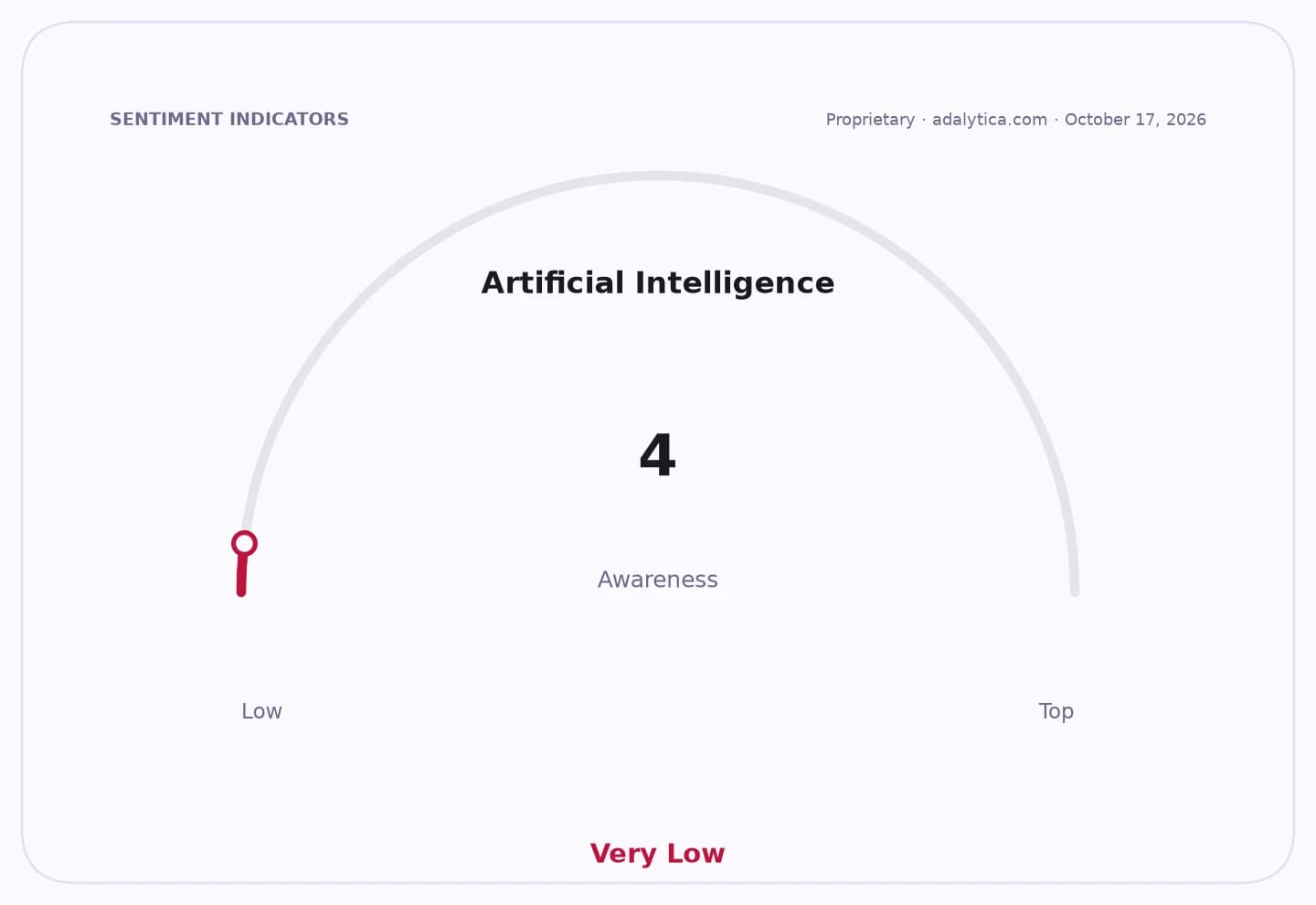
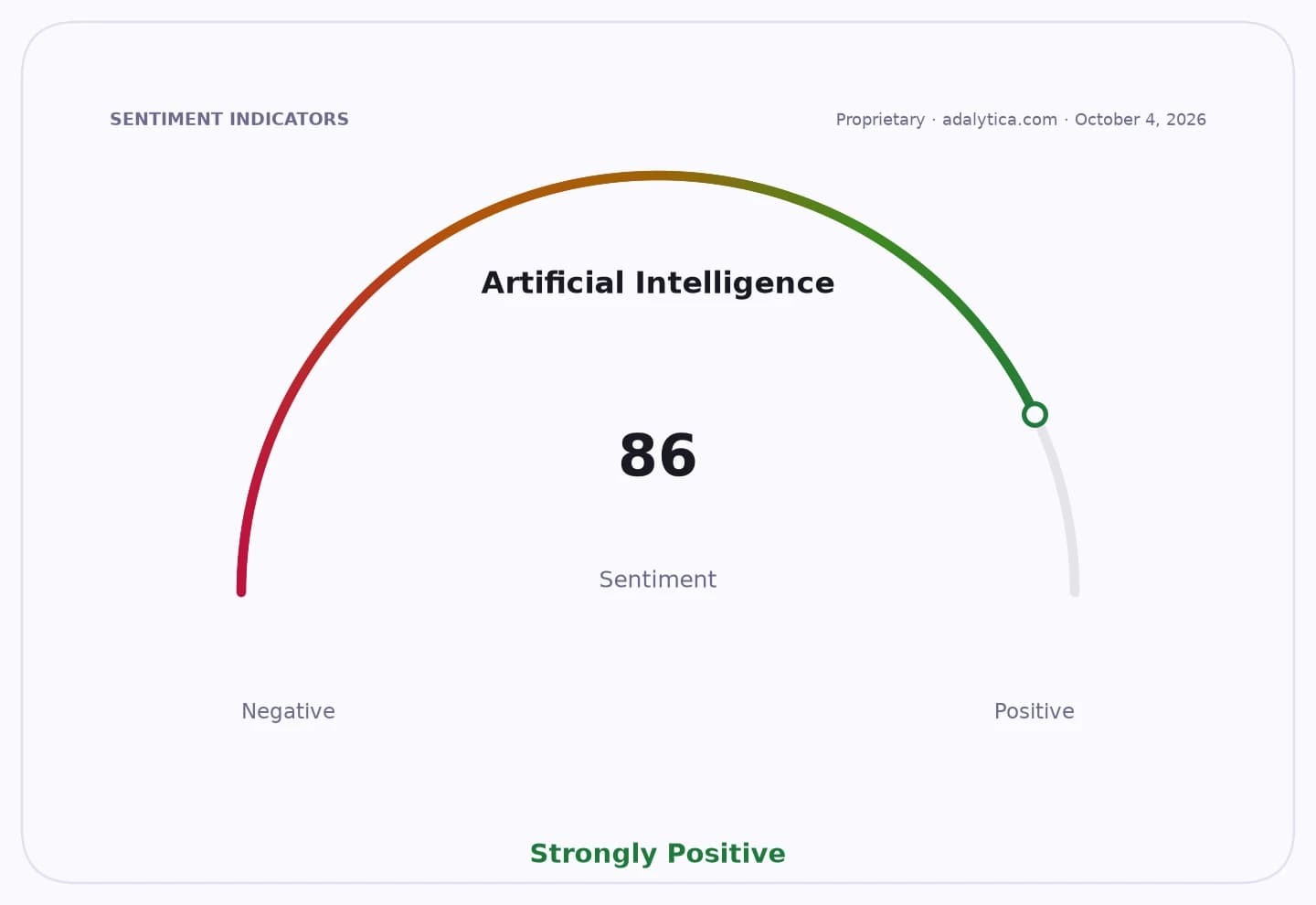
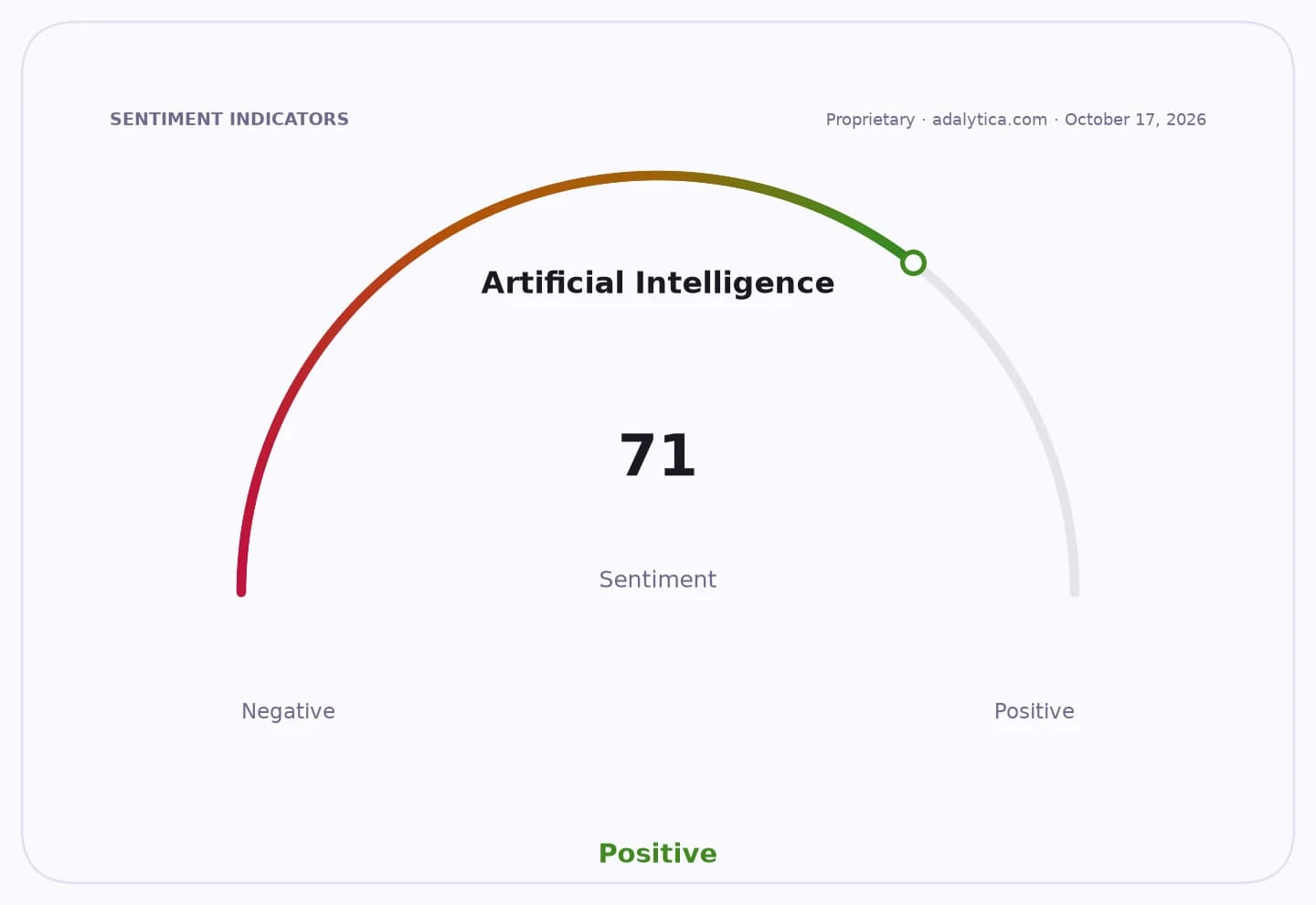
Sentiment IndicatorsⓘProprietary · adalytica.com · October 17, 2026
This is a snapshot — live sentiment, awareness and momentum for 130+ markets update continuously in the dashboard.Open AlphaPulse
For a region like Vorarlberg, that gap matters because industrial companies are not competing on software alone. They are competing on how quickly they can embed AI into production lines, sales, logistics and customer service. That is where the economic payoff will be won or lost. A factory that uses AI to reduce downtime, optimize inventory or improve quality control can lift profitability without waiting for a new product cycle. A supplier that uses it to speed engineering or automate back-office work can defend margins even if demand softens.
Niehenke’s point is that Europe’s mistake would be to treat AI as a lab project rather than an operating model. The companies best positioned to benefit are often not the flashiest tech names but those with deep industry know-how, loyal customer bases and complex workflows — precisely the profile many Vorarlberg manufacturers and industrial groups fit. That makes the region a plausible AI beneficiary, not because it will produce the next ChatGPT, but because it can become a fast adopter of the tools that make established businesses more competitive.
Investors should read that as a second-order opportunity. The market continues to reward the obvious AI winners — chipmakers, cloud providers and model developers — but the next leg of value creation may come from the “picks-and-shovels” layer inside industrial economies: automation software, factory digitization, cybersecurity, data infrastructure and enterprise tools that help traditional businesses extract measurable gains. In the U.S., Nvidia remains the clearest barometer of the AI capex boom, while Microsoft has tied its future to the same spending wave; both names have been volatile, reflecting how crowded and sensitive the trade has become. The more interesting upside may now lie in companies that can prove AI is not just spending, but return on invested capital.
That is also why regulation and strategic autonomy are part of the investment case. Europe cannot outspend Silicon Valley, but it can still narrow the gap if companies move faster on implementation and policymakers create conditions that encourage deployment rather than delay. For investors, that means watching which sectors in Austria and across Europe can translate AI adoption into measurable productivity gains first. Those firms will likely be the ones to protect margins, gain market share and justify premium valuations.
The conclusion is simple: the AI race is shifting from model-building to operational execution. In that phase, the winners will be the companies that know their industries best and act fastest. Vorarlberg’s industrial base gives it a credible shot — but only if it treats AI as a profit engine, not a slogan. My view is that the market is still underestimating the upside in industrial AI adoption, and that is where the smartest capital should position now.
| Entity | Gains | Losses |
|---|---|---|
| Vorarlberg industrial firms | ▲Productivity gains | ▼AI laggards |
| U.S. AI capital hubs | ▲Capital inflows | ▼Europe’s funding base |
| AI infrastructure suppliers | ▲Capex demand | ▼Legacy vendors |
| Investors in adopters | ▲Margin expansion upside | ▼Late movers |