Wall Street may be dumping Nvidia, but the market for its older AI chips is still getting tighter, and that gap is what matters for investors.
Nvidia H100 rental prices rise as GPU supply tightens
The clearest sign is the rental price for Nvidia’s H100, which has climbed nearly 60% over the past year to about $3.11 an hour, according to Silicon Data. That is not a story about fading demand for AI compute. It is a story about scarcity, financing stress and a scramble to secure usable chips even as Nvidia’s stock has been cut nearly in half from its October peak, erasing more than $2.7 trillion in market value.
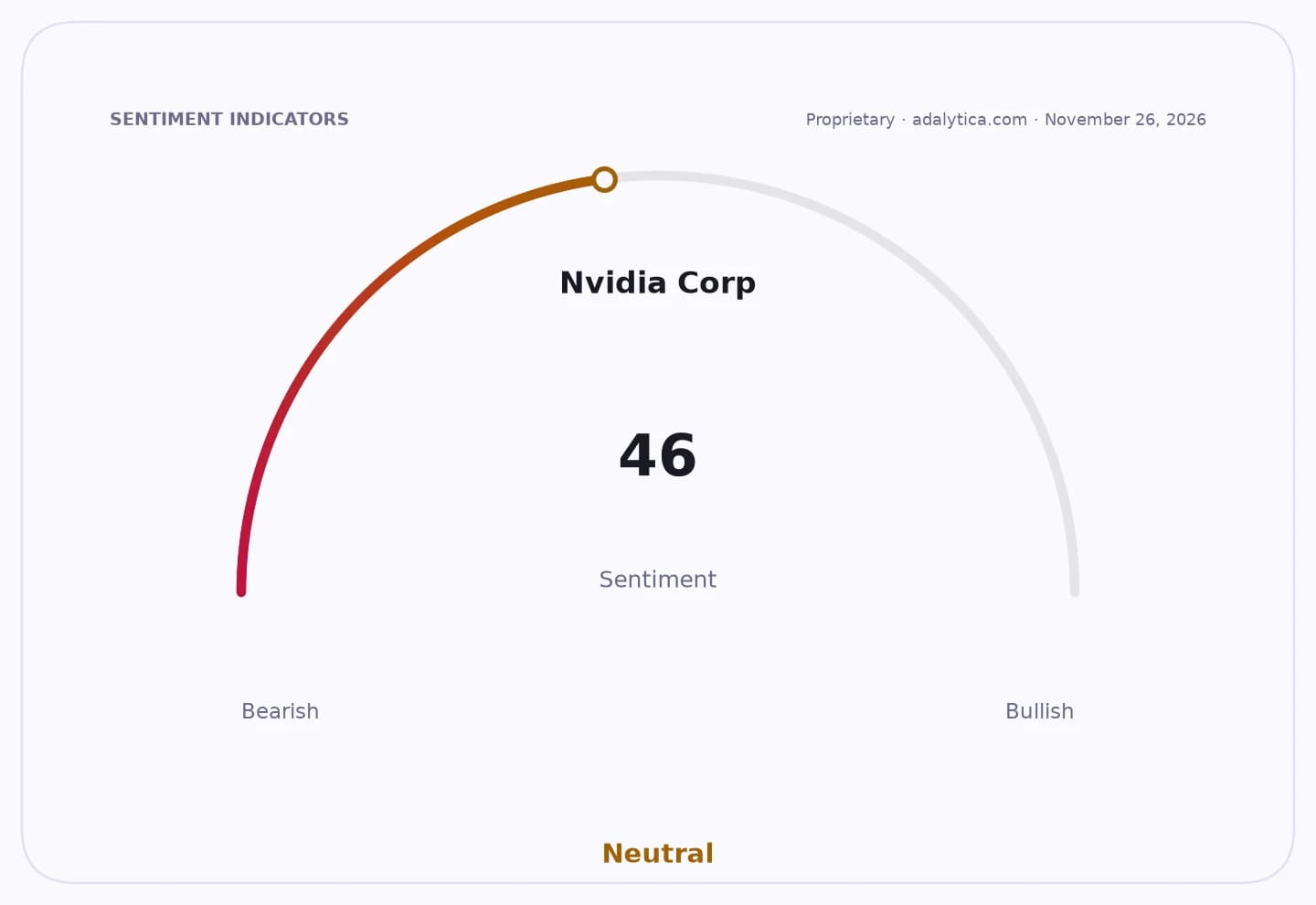
Sentiment Indicators
That divergence should force investors to separate the trade in Nvidia shares from the economics of Nvidia hardware. The company’s stock has been punished by fears that AI spending is peaking, that depreciation assumptions are too aggressive and that the most expensive part of the AI build-out is no longer being rewarded with the same multiple. Yet the rental market says customers are still willing to pay up for older Hopper chips, and CoreWeave’s latest comments back that up: the company said pricing for its Amperes and Hoppers rose 30% to 50% quarter-over-quarter.
In other words, the market is not rejecting AI compute. It is repricing the capital structure around it. When chip rentals rise, the value of those chips as collateral rises too, which is welcome news for lenders financing billions of dollars of Nvidia hardware. It also helps explain why some operators are extending commitments beyond the depreciable life of the GPU — a sign that supply remains tight enough to support economics that look far better than the stock chart would suggest.
Michael Burry’s bet against Nvidia and his argument that Big Tech was understating chip depreciation by $176 billion through 2028 may have landed a blow on sentiment, but the rental data says the physical asset is still earning. That is the key asymmetry here: the market is treating Nvidia like a crowded momentum stock, while the infrastructure behind AI still looks like a shortage market.
For investors, that creates a two-layer opportunity. Nvidia itself remains volatile and vulnerable to de-rating as sentiment swings and regulators scrutinize chip exports to China, but the broader AI infrastructure trade is not going away. The better positioned plays may be the toll collectors — chip lessors, GPU cloud providers, data-center financiers and power infrastructure suppliers — rather than the most obvious megacap hardware name. If H100 rents stay elevated, the AI build-out is still in its capex phase, not its bust phase.
The next catalyst is whether this rental strength spreads further across the GPU stack and whether operators keep signing longer-dated commitments. If they do, the market may have to admit that the selloff in Nvidia shares says more about positioning than about demand. For now, the smarter bet is that AI compute remains scarce, and scarcity is still worth paying for.
| Entity | Gains | Losses |
|---|---|---|
| Nvidia hardware owners | ▲Higher chip rental value | ▼Faster investor de-rating |
| GPU cloud providers | ▲Stronger pricing power | ▼More scrutiny on depreciation |
| AI buyers | ▲Access to scarce compute | ▼Higher operating costs |
| Nvidia shareholders | ▲Potentially over time from tight supply | ▼Near-term volatility and markdowns |