Nvidia may be moving toward a more hybrid business model, and that could matter more to long-term investors than another quarter of blistering chip sales.
Nvidia Hybrid AI Model and Data Center Revenue

The reason is simple: if the world’s most valuable AI hardware company starts pairing its dominant chips with more platform-like, recurring revenue streams, it could make Nvidia’s growth more durable and its margins less dependent on the next hardware cycle. That is the kind of shift investors should pay attention to because it changes the quality of the earnings stream, not just the size of it.
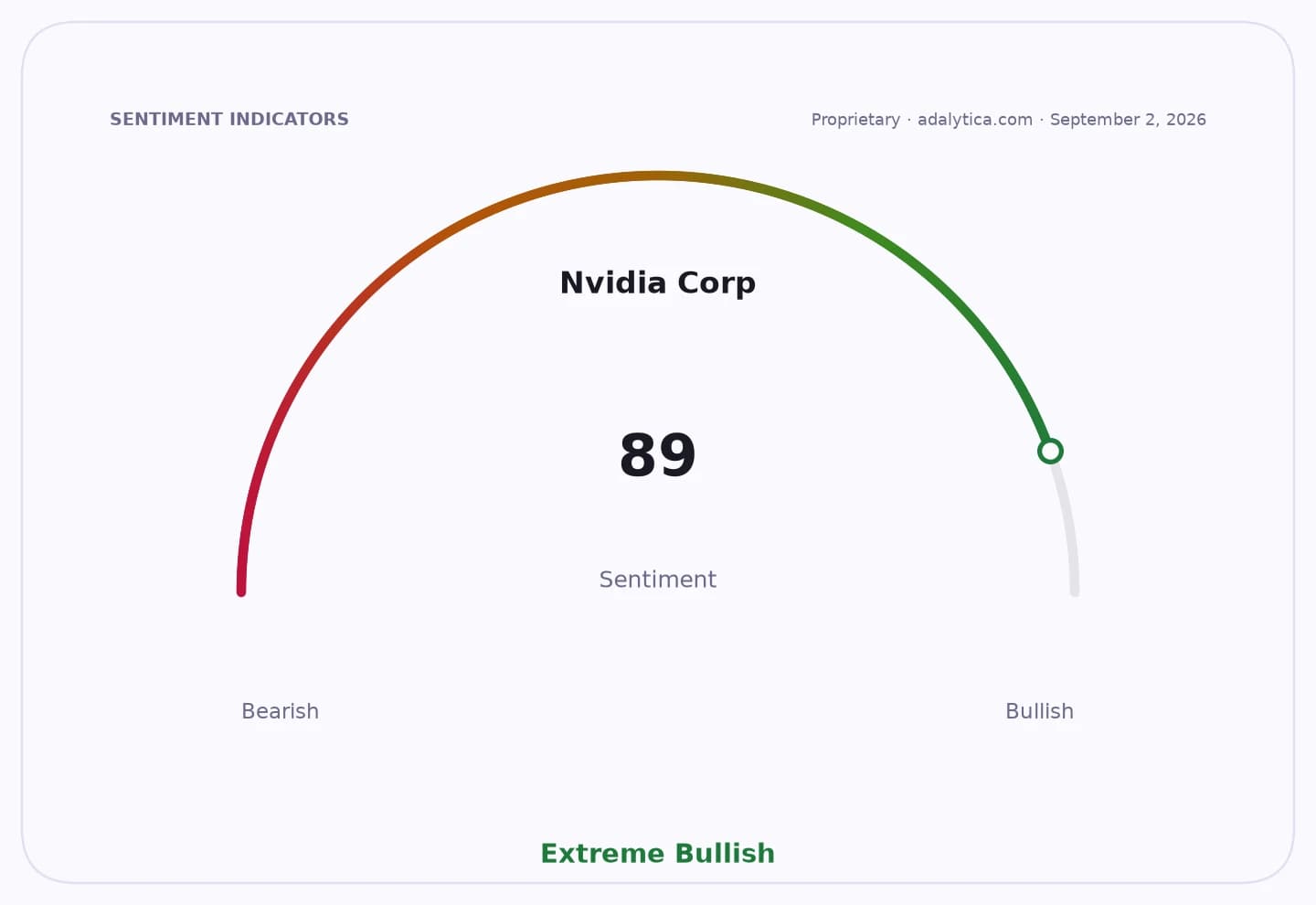
Sentiment IndicatorsⓘProprietary · adalytica.com · September 10, 2026
This is a snapshot — live sentiment, awareness and momentum for 130+ markets update continuously in the dashboard.Open AlphaPulse

Nvidia is still overwhelmingly a data center powerhouse. In its latest filing, the company said data center revenue reached $89.0 billion for the quarter ended July 26, up 117% year over year, with hyperscale customers contributing $48.7 billion and AI clouds, industrial, and enterprise customers adding $40.3 billion. That is extraordinary growth by any standard. But it also shows how central a small number of massive customers remain to the story.
A hybrid model would suggest Nvidia is trying to deepen those relationships. Instead of relying only on selling accelerators, the company can attach software, networking, systems, and broader AI infrastructure products that make customers stickier over time. That is important in a market where the biggest buyers are no longer asking whether to spend on AI, but how to build out entire AI factories efficiently. The more Nvidia becomes the operating layer for that buildout, the harder it is for rivals to displace it.

Investors should like that because recurring or ecosystem-driven revenue is usually more resilient than one-time hardware demand. It can smooth out volatility, support stronger free cash flow, and justify a premium valuation if growth stays strong. It also helps explain why Nvidia’s stock has remained so powerful even after a sharp run: the market is not just buying current shipments, it is buying the possibility that Nvidia becomes a much broader AI platform.
The stock itself still reflects that enthusiasm. Nvidia closed at $223.67 on Sept. 9, with the shares sitting above both the 50-day moving average of $211.80 and the 200-day moving average of $196.94. The relative strength index was 54.2, a sign the stock is neither washed out nor overheated on a conventional technical basis, while the Adalytica earnings sentiment snapshot showed “Extreme Greed.” For long-term investors, that combination usually means expectations are high, but the market still believes the AI narrative has room to run.
There are risks, of course. A hybrid model can take time to scale, and the company still depends heavily on the cadence of data center spending. Microsoft’s own filings show how cloud and AI capex decisions can be difficult to forecast, and that matters because Nvidia’s fortunes are tied to customer buildouts. Competition, export controls, and manufacturing dependencies also remain real issues.
Still, the bigger picture is constructive. If Nvidia is evolving from a pure chip supplier into a more complete AI infrastructure company, the story becomes less about a single product cycle and more about a platform compounding over years. That is exactly the sort of transition long-term investors should watch closely. For patient shareholders, Nvidia remains one of the most important names in AI, and any move toward a hybrid model is worth a place on the watchlist.
| Entity | Gains | Losses |
|---|---|---|
| Nvidia | ▲Stickier revenue mix | ▼Pure hardware margins |
| AI customers | ▲Broader platform support | ▼Less pricing leverage |
| Microsoft and hyperscalers | ▲Better AI infrastructure options | ▼Greater dependence on Nvidia |
| Short-term bears | ▲More volatile thesis to attack | ▼Stronger long-term compounding case |