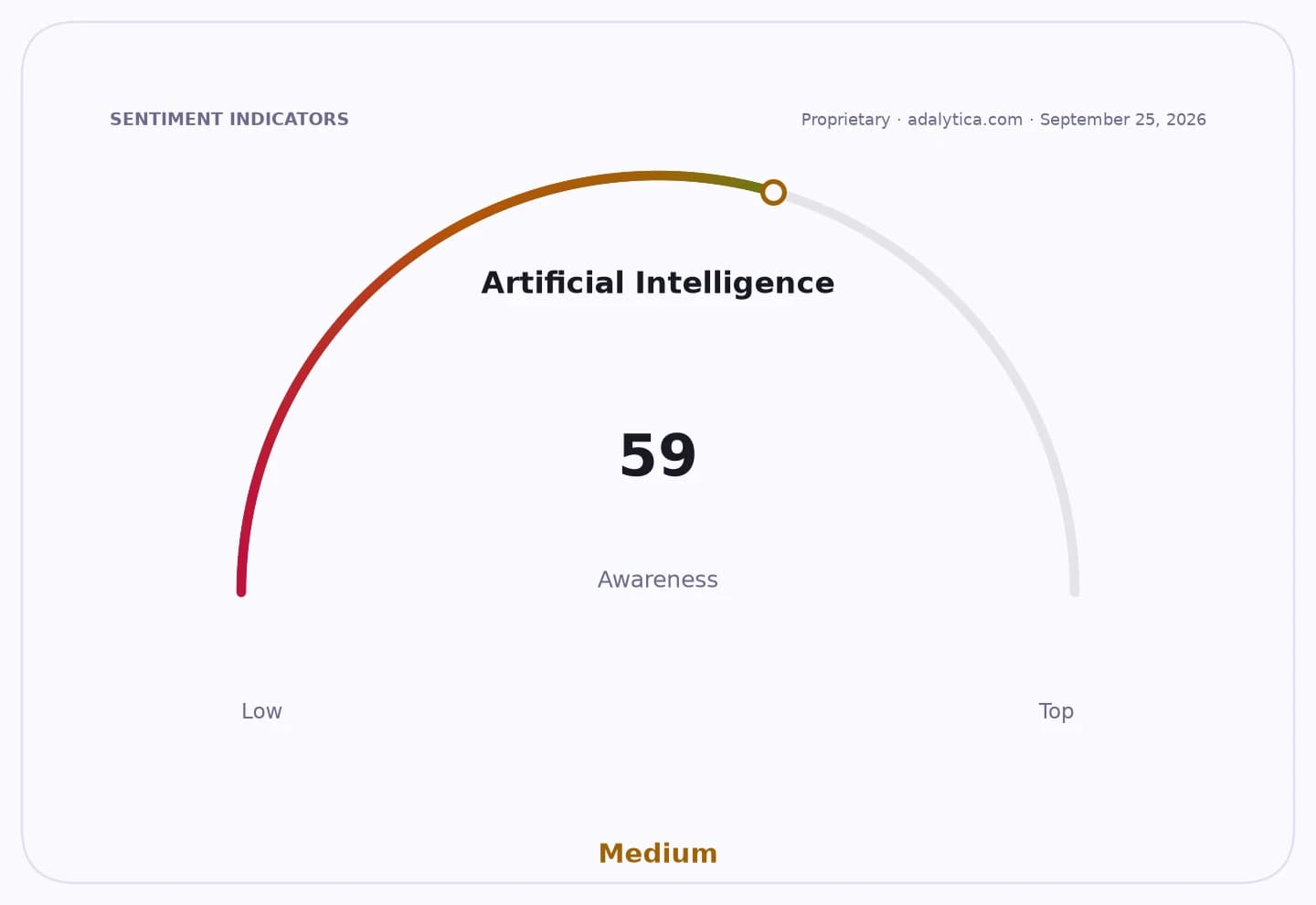
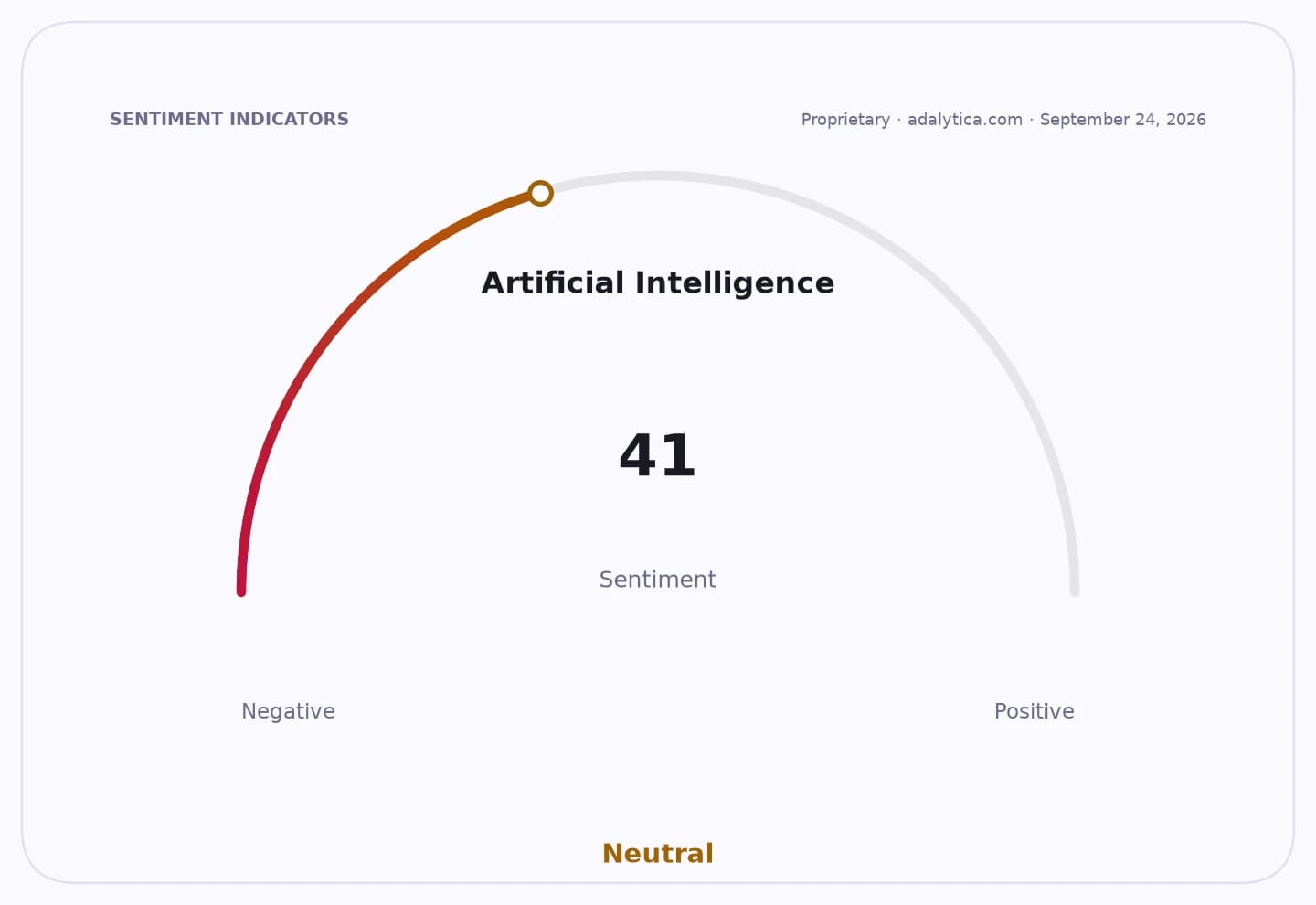
The biggest investment story in artificial intelligence right now is no longer just chips and cloud spend — it is the spread of AI chatbots into the most intimate parts of consumer life, a shift that could deepen engagement for platforms while raising new social and regulatory risks.
Nvidia and Microsoft AI chatbot engagement risks

A Spanish opinion piece circulating around the theme of loneliness argues that conversational AI is increasingly occupying the role of company, listener and emotional outlet for isolated users. That matters economically because the most valuable AI products are moving beyond productivity tools and into habit-forming consumer subscriptions, where retention and daily use can translate into recurring revenue and stronger pricing power.
Sentiment IndicatorsⓘProprietary · adalytica.com · September 13, 2026
This is a snapshot — live sentiment, awareness and momentum for 130+ markets update continuously in the dashboard.Open AlphaPulse
For investors, that is a double-edged development. The upside is clear for companies building the models, infrastructure and distribution layers behind these services: more usage means more inference demand, more compute consumption and more dependency on cloud and accelerator suppliers such as Nvidia and Microsoft. The downside is that products designed to simulate companionship can trigger scrutiny over addiction, transparency and protections for minors or vulnerable users, creating a policy overhang that could hit consumer AI monetization.
Technical and market data underscore how much investor attention is already tied to the AI trade. Nvidia shares recently traded at $218.29, above both the 50-day moving average of $212.36 and the 200-day average of $197.11, while Microsoft was at $495.63, also above its 50-day average of $453.12 and 200-day average of $429.65. Adalytica’s earnings sentiment snapshots show Microsoft at “Extreme Greed” and Nvidia at “Greed,” even as broader AI sentiment has swung to “Extreme Fear,” reflecting how fast conviction can change when the narrative shifts from growth to dependence and risk.
Artificial Intelligence vs NVDAadalytica.com
Explore this data interactively — full history, time series and cross-market comparisons.Open AlphaPulse
The economic narrative is straightforward: AI is no longer just a back-office efficiency tool, but a consumer behavior product. That expands the addressable market, but it also raises the probability that lawmakers, app stores and platform operators will eventually demand disclosure around emotional manipulation, age safeguards and design limits.
For investors, the next catalyst is whether AI companies can prove that engagement-driven products can grow without drawing the kind of backlash that would slow adoption. The more AI becomes a substitute for human interaction, the more the market will have to price not just revenue potential, but legal, ethical and reputational exposure.
| Entity | Gains | Losses |
|---|---|---|
| AI platform operators | ▲More daily use, higher retention | ▼Regulatory scrutiny |
| Nvidia | ▲More inference demand | ▼Policy backlash risk |
| Microsoft | ▲Deeper AI engagement, cloud traffic | ▼Reputational and compliance pressure |
| Vulnerable users / regulators | ▲Access to support tools, oversight leverage | ▼Higher dependence concerns |