Asian equities are under pressure as investors pull back from richly valued technology names, with Nvidia’s latest pullback rippling through suppliers and rival growth stocks from Seoul to Hong Kong. The selling underscores a broader repricing in the AI trade: when bond yields stay elevated and the market starts to question how much more upside is left in megacap semiconductors, capital rotates fast and the weakest links get hit first.
Nvidia pullback hits Asia tech and AI stocks
That matters because Asia is not just following Wall Street — it is deeply exposed to the same AI capex cycle that has driven the last leg of global equity gains. Samsung Electronics, a key memory and chip-gear bellwether, was among the sharp losers, alongside Alibaba, which has become a proxy for China’s fragile growth and tech sentiment. When these stocks fall together, it is a sign that investors are no longer treating the AI boom as a one-way trade but as a crowded positioning theme vulnerable to higher discount rates and slower earnings revisions.
Sentiment IndicatorsⓘProprietary · adalytica.com · August 24, 2026
This is a snapshot — live sentiment, awareness and momentum for 130+ markets update continuously in the dashboard.Open AlphaPulse
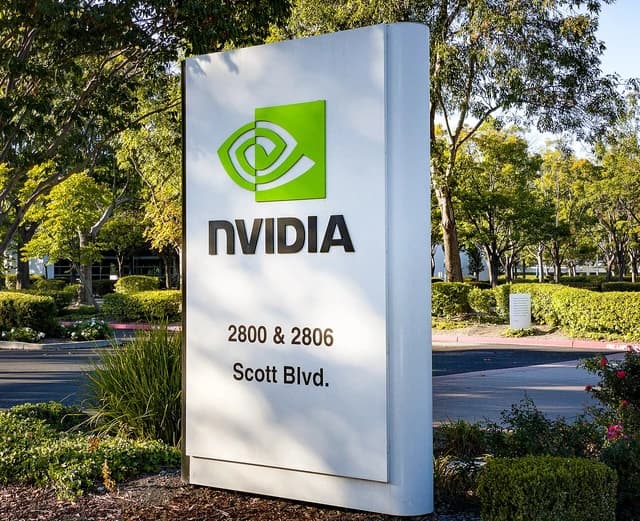
Nvidia remains the market’s reference point. The stock slipped to $214.72 after trading as high as $223.96 earlier this month, even as its 50-day moving average sat at $207.58 and the 200-day at $195.12. Technical momentum is still positive, but the recent cooling is enough to pressure the broader semiconductor complex, especially in Asia where suppliers and foundry-linked names tend to amplify every move in the U.S. chip leader.
Samsung’s move should be watched through that lens. The Korean stock had rallied sharply into August, then gave back ground as traders reassessed whether the next phase of AI spending will translate cleanly into margins for component makers. That is exactly the kind of second-order risk the market tends to miss in the early stages of a secular boom: the first winners are the chip designers, but the next leg belongs to the memory suppliers, packaging specialists, power, cooling and data-center infrastructure providers — and not all of them will benefit equally.

Alibaba’s selloff tells a different but related story. The stock dropped to $119.34 from $130.53 a day earlier, a reminder that China tech remains hostage to domestic growth skepticism and the persistent policy discount. Even when AI enthusiasm lifts parts of the Chinese internet complex, investors are still demanding proof that earnings can outrun macro weakness, regulatory overhang and uneven consumer demand.
The macro backdrop is not helping. The U.S. 10-year Treasury yield has been hovering around 4.67%, while crude oil around $86.74 a barrel keeps pressure on inflation expectations and real rates. That combination is toxic for long-duration assets: it leaves growth stocks vulnerable even when company fundamentals remain intact. In Adalytica’s trade-signal framework, U.S. dollar sentiment is flashing extreme fear, while broader market sentiment has deteriorated sharply, reinforcing the message that liquidity conditions are becoming less forgiving.
For investors, the key takeaway is not to abandon the AI trade — it is to own the infrastructure, not just the headline names. Nvidia can still power the theme, but the more asymmetric opportunity may lie in the second- and third-order beneficiaries: advanced packaging, memory, power semis, cooling, datacenter buildout and selective Asia suppliers with real pricing power. Samsung, TSMC-adjacent plays and other hardware-linked names can outperform over time, but only if they are tied to actual capex rather than pure momentum.
The market is telling you the easy money phase of AI is ending. What comes next is a stock-picker’s market, where earnings quality, balance-sheet strength and exposure to real infrastructure spending matter far more than narrative alone. I believe this is the moment to rotate from crowded U.S. megacap winners into the picks-and-shovels names that will still be standing when the next wave of AI investment turns from enthusiasm into deployment.
| Entity | Gains | Losses |
|---|---|---|
| Nvidia | ▲Remains AI benchmark | ▼Faces valuation pressure |
| Samsung Electronics | ▲Potential AI hardware demand | ▼Hit by tech selloff |
| Alibaba | ▲Any China stimulus hopes | ▼Growth discount persists |
| AI infrastructure suppliers | ▲Capex tailwind | ▼Momentum-only traders |