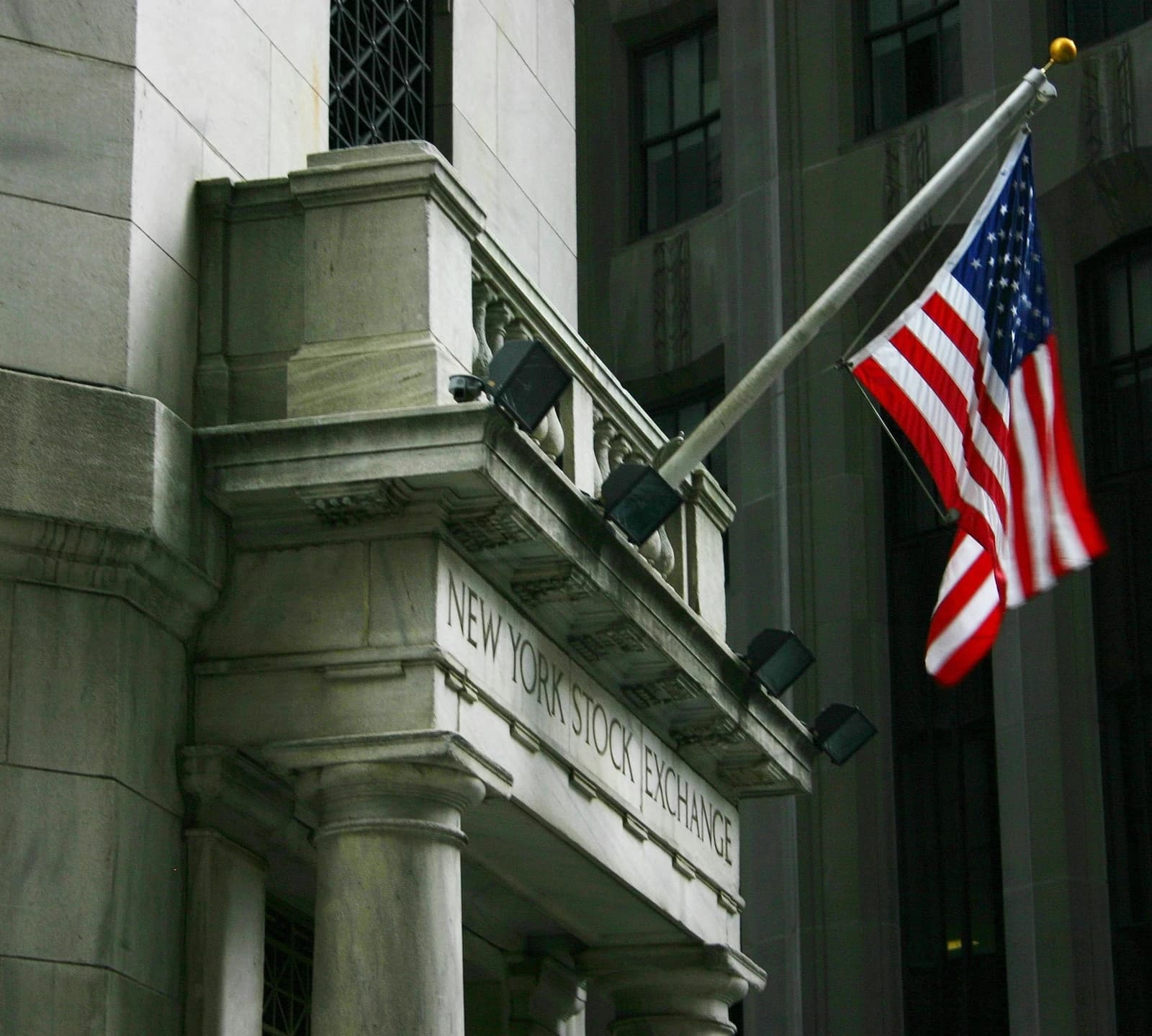
Wall Street’s biggest Friday calls centered on whether the market’s highest-profile growth names can keep justifying their valuations as earnings season approaches, with analysts leaning constructive on Nvidia and SpaceX while turning more measured on Apple and Tesla.
Nvidia, Tesla, Apple Calls Shape Growth Stock Outlook
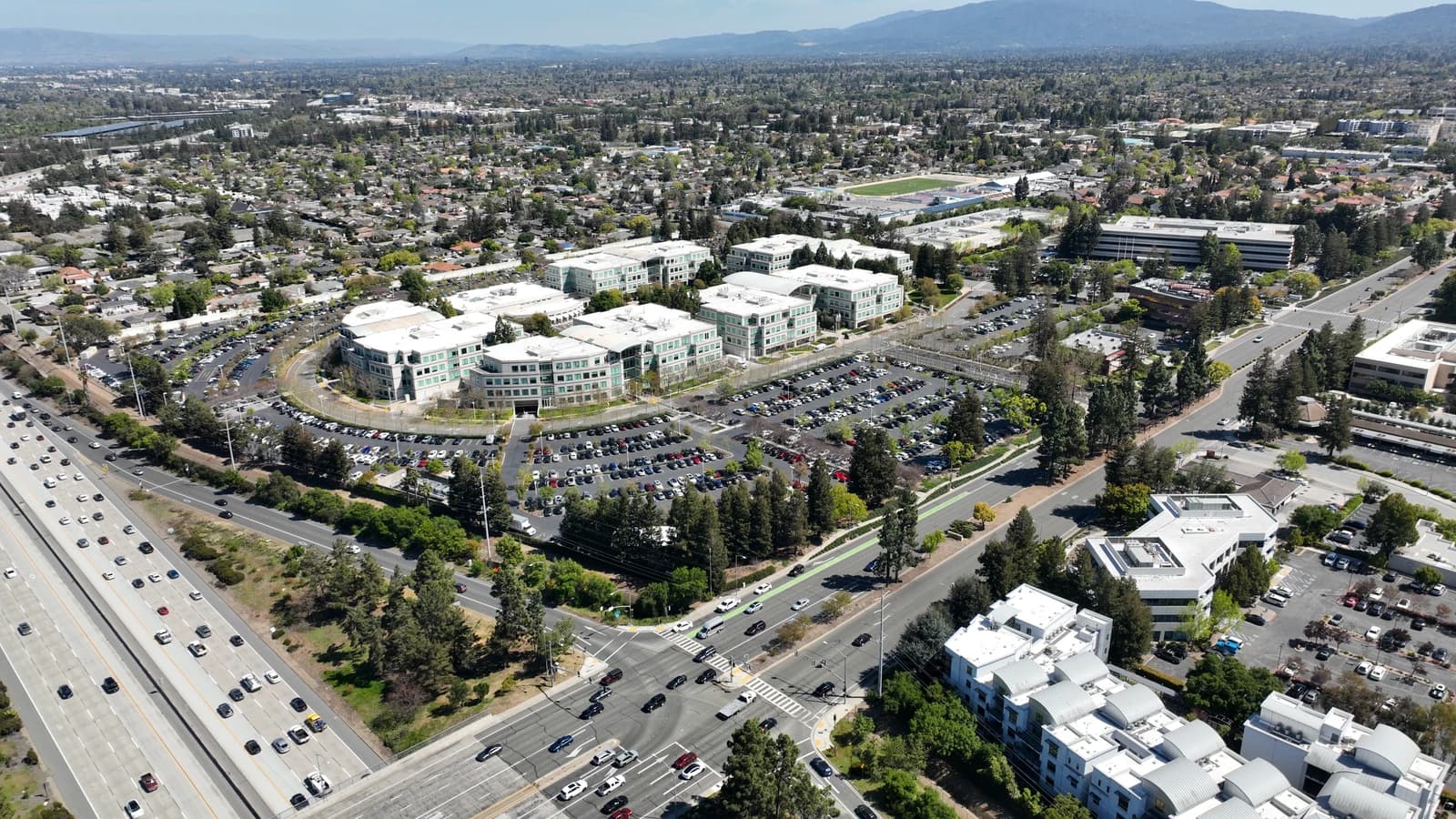
That matters because the large-cap growth trade has been doing much of the heavy lifting for the broader market, and the next leg for the rally will hinge on whether these companies can keep beating expectations on revenue, margins and capital intensity. For investors, the calls are a reminder that the market is no longer rewarding exposure to artificial intelligence, autonomous driving or premium consumer hardware indiscriminately; it is starting to discriminate between companies with visible earnings power and those facing slower demand or heavier spending.
Sentiment IndicatorsⓘProprietary · adalytica.com · October 19, 2026
This is a snapshot — live sentiment, awareness and momentum for 130+ markets update continuously in the dashboard.Open AlphaPulse
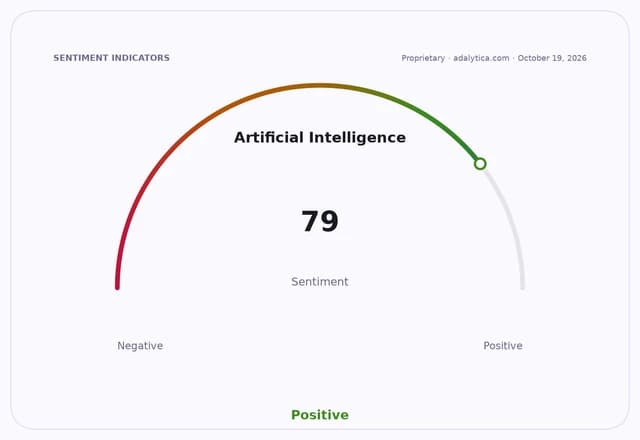
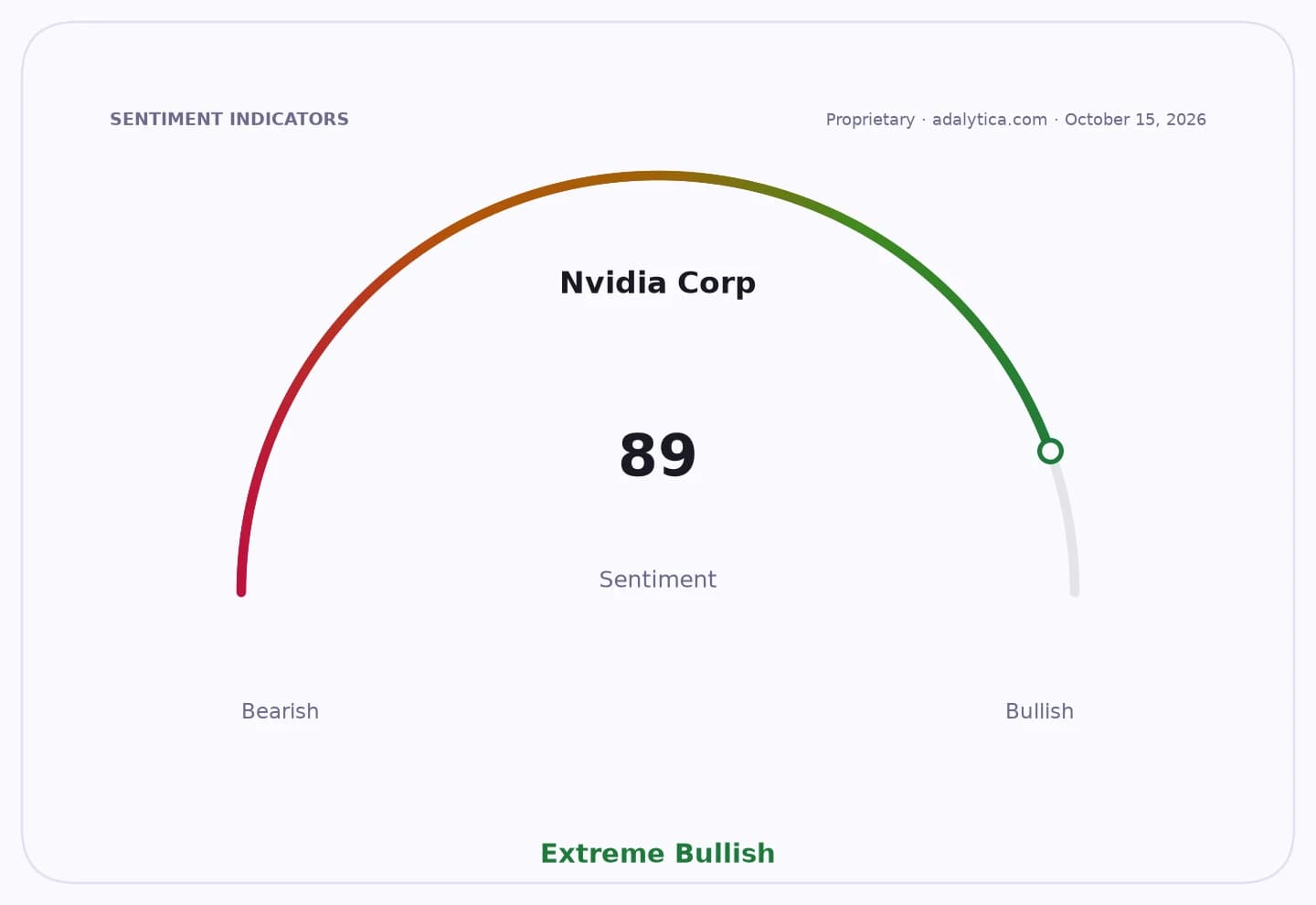
Evercore ISI reiterated Nvidia as a buy, saying it remains a buyer of the stock despite recent underperformance versus the S&P 500. The firm pushed back on concerns that DeepSeek could lower AI demand, shift compute cycles away from Nvidia or delay Blackwell shipments, arguing its channel checks do not support those fears. That view aligns with Nvidia’s latest financial profile: the company’s Blackwell architecture is already the vast majority of revenue, gross margin improved on mix, and the stock has remained technically supported even after a pullback, with the 50-day moving average still above the 200-day average. Adalytica’s AI sentiment snapshot also shows elevated greed around the theme even as broader market risk appetite has faded.
The Nvidia call matters beyond one stock because it speaks to whether the AI spending cycle is still in an expansion phase or beginning to normalize. If demand remains broad and Blackwell supply ramps cleanly, Nvidia can continue to translate data-center capex into earnings growth. If the bear case is right and customers pause or diversify away from Nvidia, the multiple risk is significant because the stock remains one of the market’s primary AI bellwethers.
Nvidia Corp — 30-day sentimentadalytica.com
Explore this data interactively — full history, time series and cross-market comparisons.Open AlphaPulse
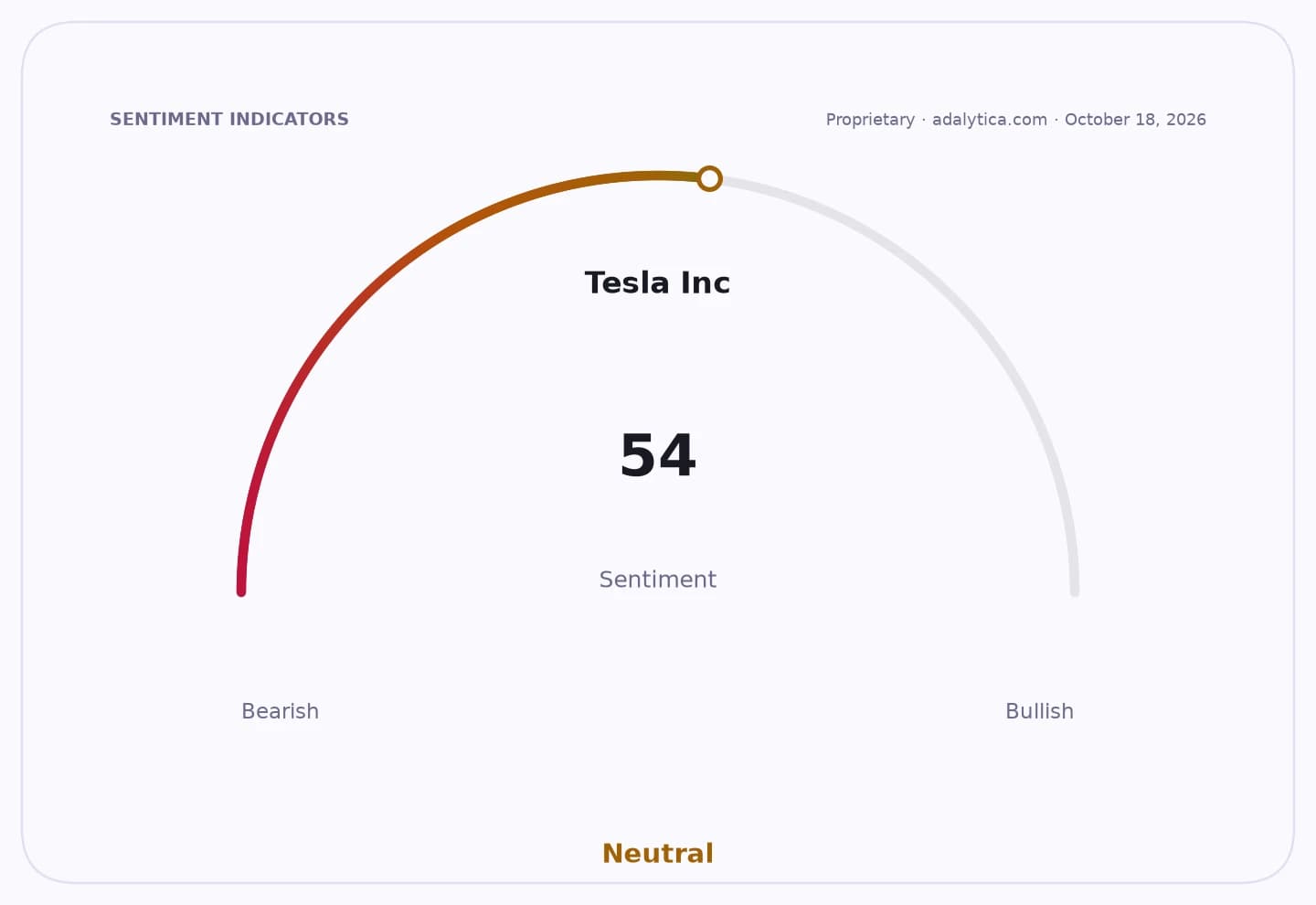
Tesla drew a more cautious but still constructive note from Morgan Stanley, which reiterated equal weight and said it is becoming more constructive ahead of earnings. The bank argued that Tesla’s energy business is still underappreciated, citing storage, solar and compute as part of a broader distributed power and compute platform. That framing is important because Tesla’s investment case has been shifting away from a pure auto story toward a more diversified platform narrative, especially as EV competition and pricing pressure have weighed on automotive margins. The stock has already gone through a sharp reset from its December highs, and recent technical readings show momentum has cooled, even if the long-term bull case still depends on software, energy and autonomy optionality.
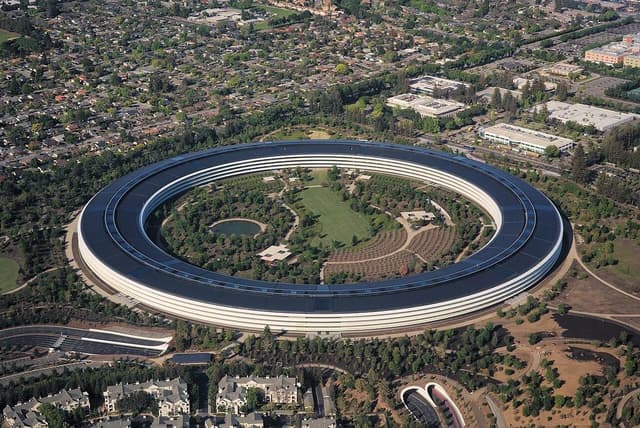
Apple was the most restrained of the big-name calls. UBS reiterated the stock at neutral, saying its channel checks show iPhone wait times are flat, with Pro wait times shorter by about four days year over year and Pro Max availability relatively unchanged. That suggests demand is stable rather than accelerating, which is a problem for a stock that increasingly depends on services and buybacks for earnings support while hardware growth remains uneven. Apple’s shares have held up better than many peers, but the call implies that near-term unit momentum is not strong enough to warrant a more bullish stance.
Citi’s initiation on Mobileye at buy rounds out the growth-tech picture by showing where analysts still see a cleaner setup. Citi said autonomous driving begins with vision and called Mobileye the global leader in vehicle-vision systems, giving it a $11 target. The stock remains deeply depressed versus prior levels, and the call reflects a view that the market may be underpricing Mobileye’s role in assisted and autonomous driving as the industry moves toward higher software content per vehicle.
SpaceX, meanwhile, remained a favored private-market name. Evercore ISI reiterated outperform and lifted its target to $275 from $230, saying the market will focus less on the upcoming quarterly print and more on five medium-term debates that will shape estimates through year-end and into 2027. That suggests investors are now treating SpaceX less as a launch story and more as a broader infrastructure asset tied to satellites, connectivity and recurring space services.
The thread connecting the calls is a market that still wants growth, but only on terms that look defensible in a higher-bar environment. Nvidia and SpaceX remain the clearest beneficiaries of that preference. Apple and Tesla still command scale and brand power, but analysts are signaling that the next catalyst must come from actual demand improvement, not just sentiment. For investors, the key watchpoints are Nvidia’s Blackwell execution, Tesla’s earnings read-through on energy and autonomy, Apple’s iPhone replacement cycle and Mobileye’s ability to convert strategic relevance into sustained growth.
| Entity | Gains | Losses |
|---|---|---|
| Nvidia bulls | ▲AI demand confirmation | ▼DeepSeek-delay fears |
| Tesla bulls | ▲Energy-platform thesis | ▼Auto-margin skeptics |
| Apple shareholders | ▲Stability and buybacks | ▼Faster iPhone growth hopes |
| Mobileye investors | ▲Autonomous-driving optionality | ▼Near-term valuation discount |