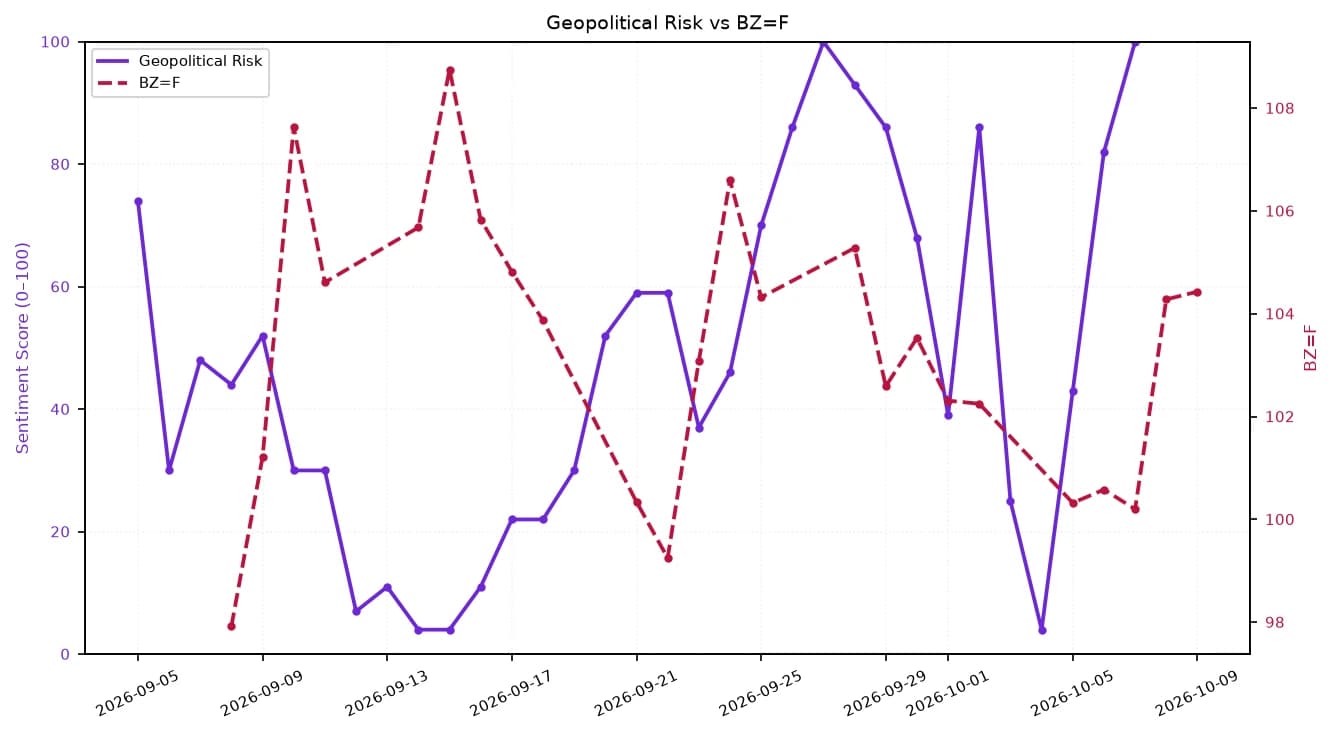
Oil prices climbed about 2% to their highest in weeks, with Brent crude touching $102.28 a barrel, as traders priced in tighter supply and renewed inflation pressure.
Oil Prices Rise as Brent Hits 102.28
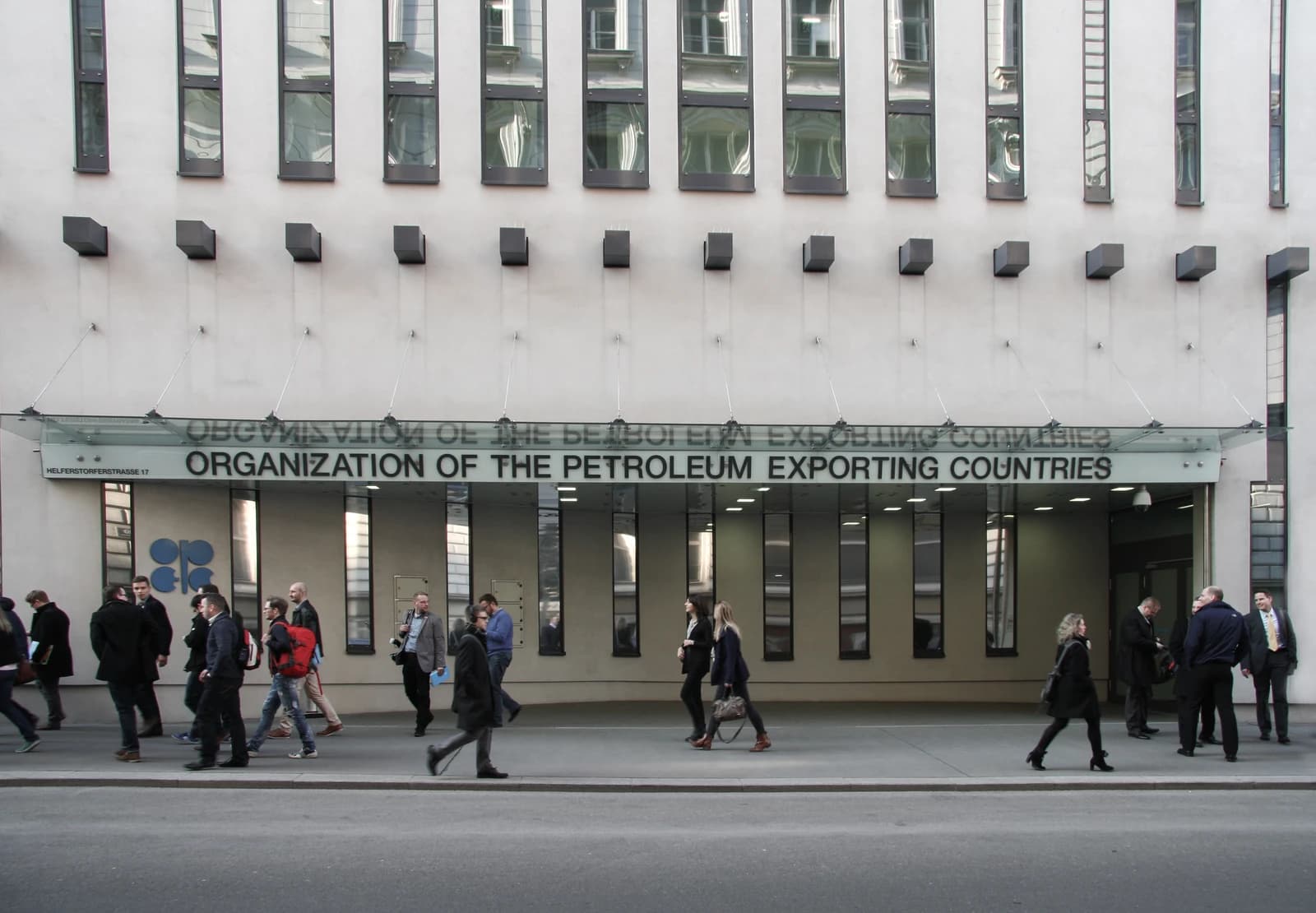
The move matters because crude still feeds directly into transport, manufacturing and power costs, keeping pressure on global inflation just as central banks are trying to slow price growth. A sustained rebound in oil can lift headline CPI, squeeze corporate margins and complicate the outlook for rates.
Sentiment IndicatorsⓘProprietary · adalytica.com · October 9, 2026
This is a snapshot — live sentiment, awareness and momentum for 130+ markets update continuously in the dashboard.Open AlphaPulse
U.S. crude futures also firmed, while energy-linked assets outperformed broader markets. The Energy Select Sector SPDR ETF rose to 65.32, above both its 50-day moving average of 62.42 and its 200-day average of 56.41, a sign that investors continue to favor producers and refiners when oil turns higher.
The jump in oil contrasts with a more mixed backdrop for other risk assets. The S&P 500 remains in a high-greed zone on Adalytica’s trade signals, but the U.S. dollar snapshot shows neutral sentiment, suggesting traders are still balancing inflation risk against expectations for slower growth.

For investors, the immediate implication is a better backdrop for integrated oil majors, shale producers and energy ETFs, while airlines, chemicals and other fuel-sensitive sectors face higher input costs. If crude holds near this level, attention will shift to inventory data, OPEC+ supply policy and any sign that higher energy prices are feeding back into bond yields and inflation expectations.
| Entity | Gains | Losses |
|---|---|---|
| Energy producers | ▲Higher revenue per barrel | ▼- |
| Energy ETF holders | ▲Stronger sector performance | ▼- |
| Consumers | ▲- | ▼Higher fuel costs |
| Fuel-heavy industries | ▲- | ▼Margin pressure |