Egypt is set to avoid a ratings downgrade and Oman is close to moving into FTSE Russell’s secondary emerging markets basket, a reclassification review that could redirect global index money across the region and reshape how investors price Middle East and North Africa assets.
Oman FTSE Review and Egypt Downgrade Risk
The biggest market consequence is not the label itself but the forced flow of passive capital that often follows an index move. Countries upgraded into an emerging-market benchmark typically gain visibility, liquidity and a lower cost of capital, while those left behind can face outflows, thinner trading and a higher risk premium.
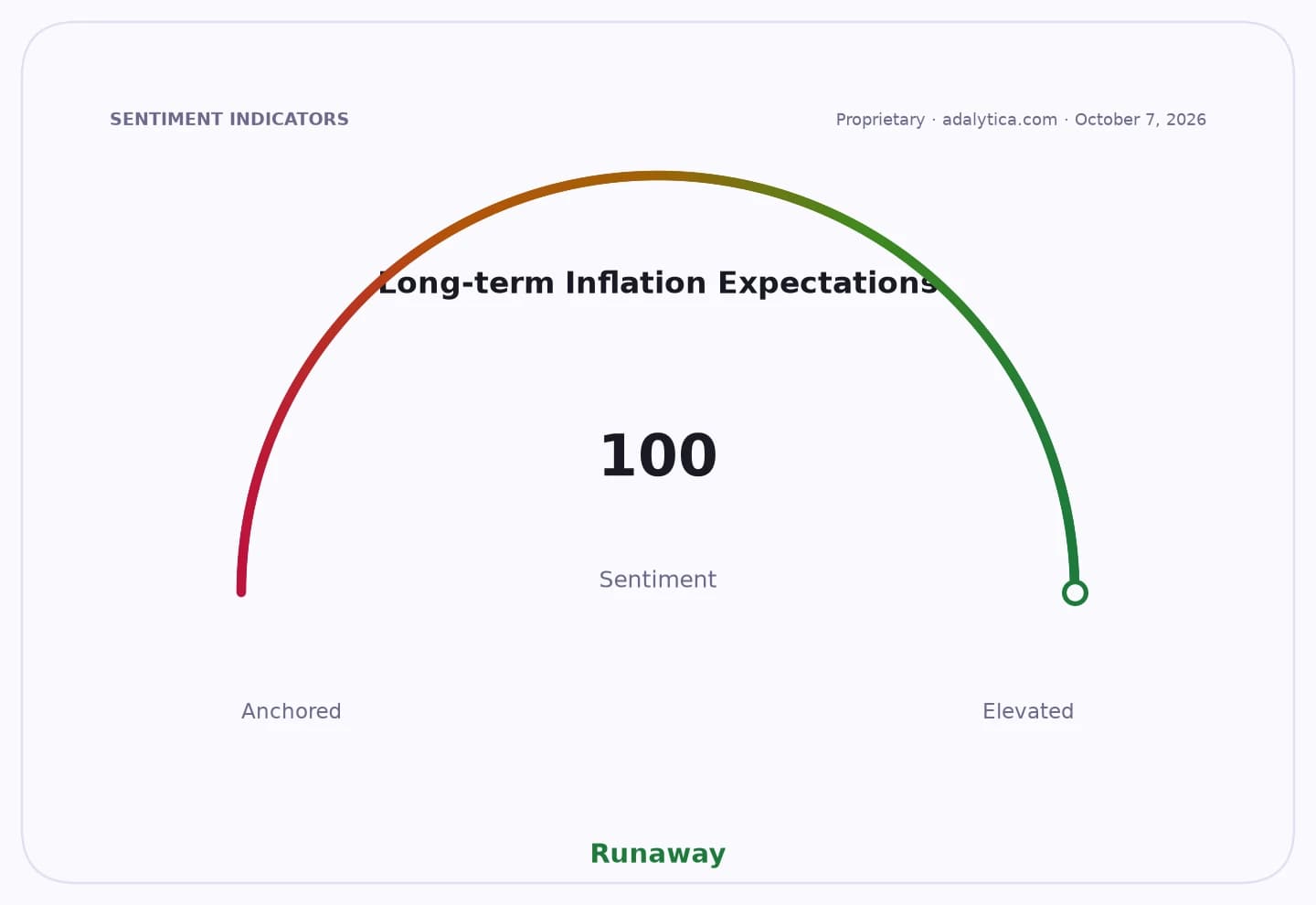
Sentiment IndicatorsⓘProprietary · adalytica.com · October 9, 2026
This is a snapshot — live sentiment, awareness and momentum for 130+ markets update continuously in the dashboard.Open AlphaPulse
For Oman, an upgrade would open the door to a broader investor base and could support government and corporate borrowing conditions as the market becomes easier for global funds to own. Egypt avoiding a downgrade matters just as much: staying in the index universe helps preserve access to benchmarked capital at a time when the country is still managing external financing pressure and a fragile currency backdrop.
Broader market signals point to investors already leaning toward a stronger appetite for risk in emerging assets. The S&P 500 trade signal snapshot shows extreme greed, while the Chinese yuan trade signal sits in extreme fear, underscoring a diverging environment in which country selection and index membership can matter as much as macro direction. U.S. Treasury yields around 5.3% and high-yield spreads near 3.0 percentage points also suggest global investors are still being paid to discriminate carefully across fixed-income and frontier-market risk.
The MSCI Emerging Markets ETF, often used as a proxy for investor appetite for developing markets, was trading at $66.10 on Oct. 8, below its 50-day moving average of $66.81 but above its 200-day average of $63.10, a sign the asset class remains in a constructive but still selective phase. Any FTSE reshuffle affecting Egypt, Oman or other Gulf and North African markets would likely feed directly into portfolio rebalancing, especially for passive funds and benchmark-aware active managers.
The next catalyst is the formal index announcement and implementation timetable, which will determine the size and pace of the flows. Investors will be watching not only for Oman’s upgrade path but also for whether Egypt’s status remains intact and whether other regional markets are pulled into the new map.
| Entity | Gains | Losses |
|---|---|---|
| Oman | ▲Index inflows, higher visibility | ▼Legacy frontier discount |
| Egypt | ▲Avoids forced selling | ▼Downgrade fears fade, but no re-rating |
| Passive EM funds | ▲Clearer benchmark exposure | ▼Rebalancing costs |
| Frontier-market peers | ▲Spillover attention | ▼Relative underweighting if left out |