Oman overtook the United States to become India’s biggest liquefied natural gas supplier in September, a shift that underscores how geopolitical disruption and cargo rerouting are redrawing one of Asia’s key energy trade flows.
Oman Becomes India’s Top LNG Supplier in September
India imported 585,000 tons of LNG from Oman in the month, up 11.6% from August, according to Kepler data cited in the report. That made Oman the No. 1 supplier even as India’s total LNG imports fell 14% month on month to just over 2 million tons from 2.5 million tons in August, showing how sourcing patterns changed faster than demand.
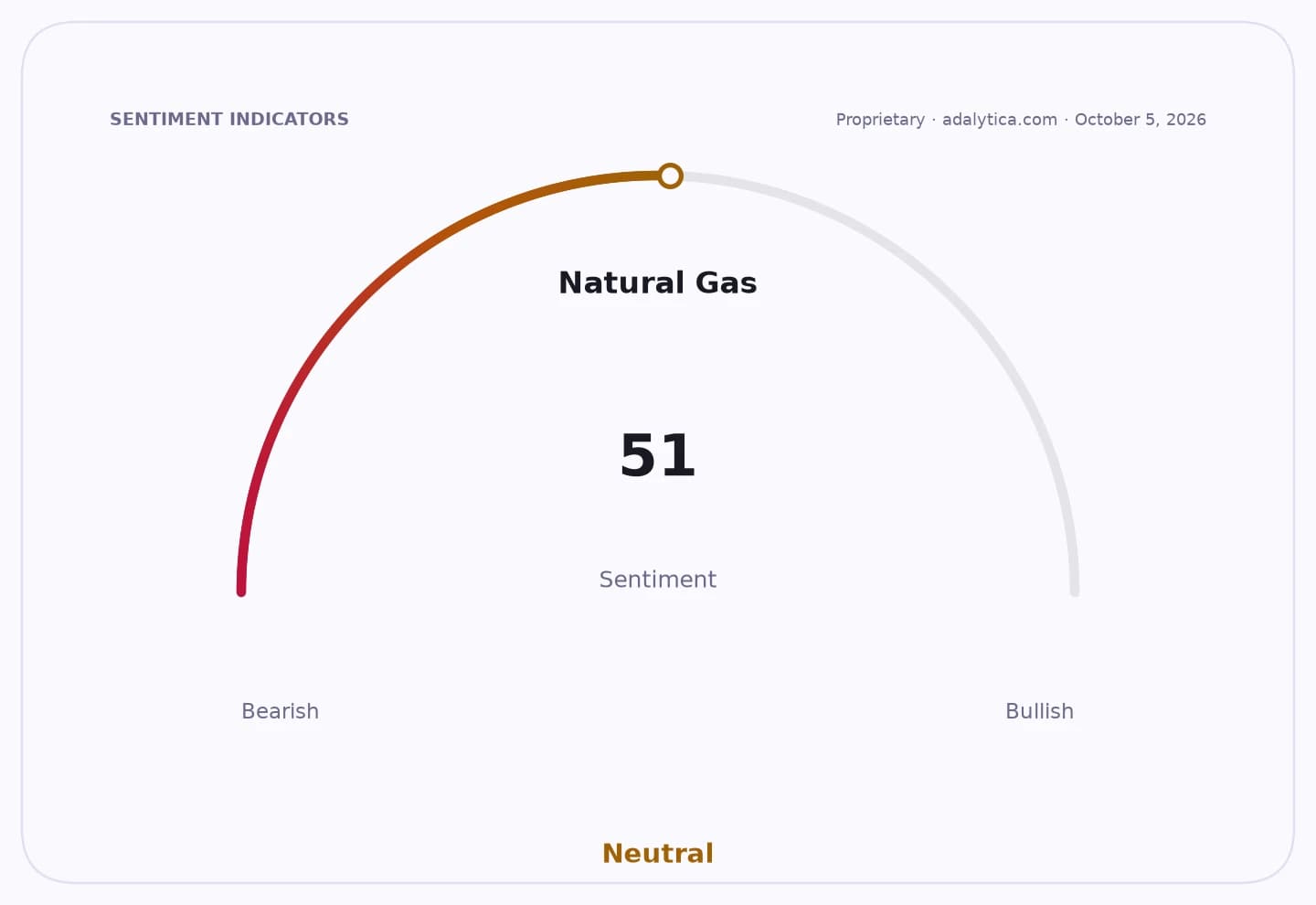
Sentiment IndicatorsⓘProprietary · adalytica.com · October 6, 2026
This is a snapshot — live sentiment, awareness and momentum for 130+ markets update continuously in the dashboard.Open AlphaPulse
The bigger economic point is that India is leaning more heavily on Gulf producers just as it works to diversify supply away from any single source. The Gulf region accounted for 27% of India’s LNG imports in September, while Qatar — once India’s dominant supplier with around 45% market share — shipped only 94,000 tons and fell to sixth place. The United States, which had been the top supplier in August with 848,000 tons, slid to third after its shipments to India dropped 59% month on month.
For India, the change matters because LNG feeds power generation, fertilizer production and urban transport, and the country still imports about half of its gas needs. More reliance on Oman and other Middle Eastern exporters can help stabilize supply in the near term, but it also ties India’s energy security more closely to the security of Gulf shipping lanes and regional politics. The report said India has raised crude oil and LNG imports from multiple countries since the West Asia crisis began.
For exporters and investors, the message is that trade flows remain highly sensitive to disruption and price incentives. Qatar’s reduced share follows earlier damage to supply after an Iranian strike on the Ras Laffan industrial city, a major LNG hub, while broader tensions in the Middle East have made flexible suppliers and shorter-haul routes more valuable. That benefits producers with spare cargoes and access to Indian demand, and it can support tanker utilization and midstream trading margins.
The market backdrop is also constructive for gas-linked assets. Adalytica’s natural gas trade signals show sentiment at neutral, but the bigger trend remains a tight supply environment, with global LNG flows vulnerable to shipping and transit disruptions in the Middle East. If those constraints persist, India’s diversification push could keep reshaping supplier rankings and reinforce the premium on reliable, non-concentrated LNG supply.
| Entity | Gains | Losses |
|---|---|---|
| Oman | ▲Higher sales to India | ▼— |
| United States | ▲— | ▼Lost top-supplier slot |
| Qatar | ▲— | ▼Sharp drop in market share |
| India | ▲More diversified supply | ▼Greater Gulf exposure |