On-chain foreign exchange may not need Wall Street or big banks to arrive first if stablecoin users keep creating real demand for currency swaps, according to a new argument from Curve Finance founder Michael Egorov.
On-chain FX demand grows with stablecoin swaps
That matters because the economics of FX are changing at the edges. Instead of waiting for institutions to tokenize every major currency and build deep pools of liquidity, Egorov argues the market can form “bottom up” around everyday payment needs, especially in corridors where stablecoins already bridge local currencies and dollar-linked assets. For investors, the key question is whether that user-led growth can turn blockchain rails into a durable payments and trading layer, not just a crypto novelty.
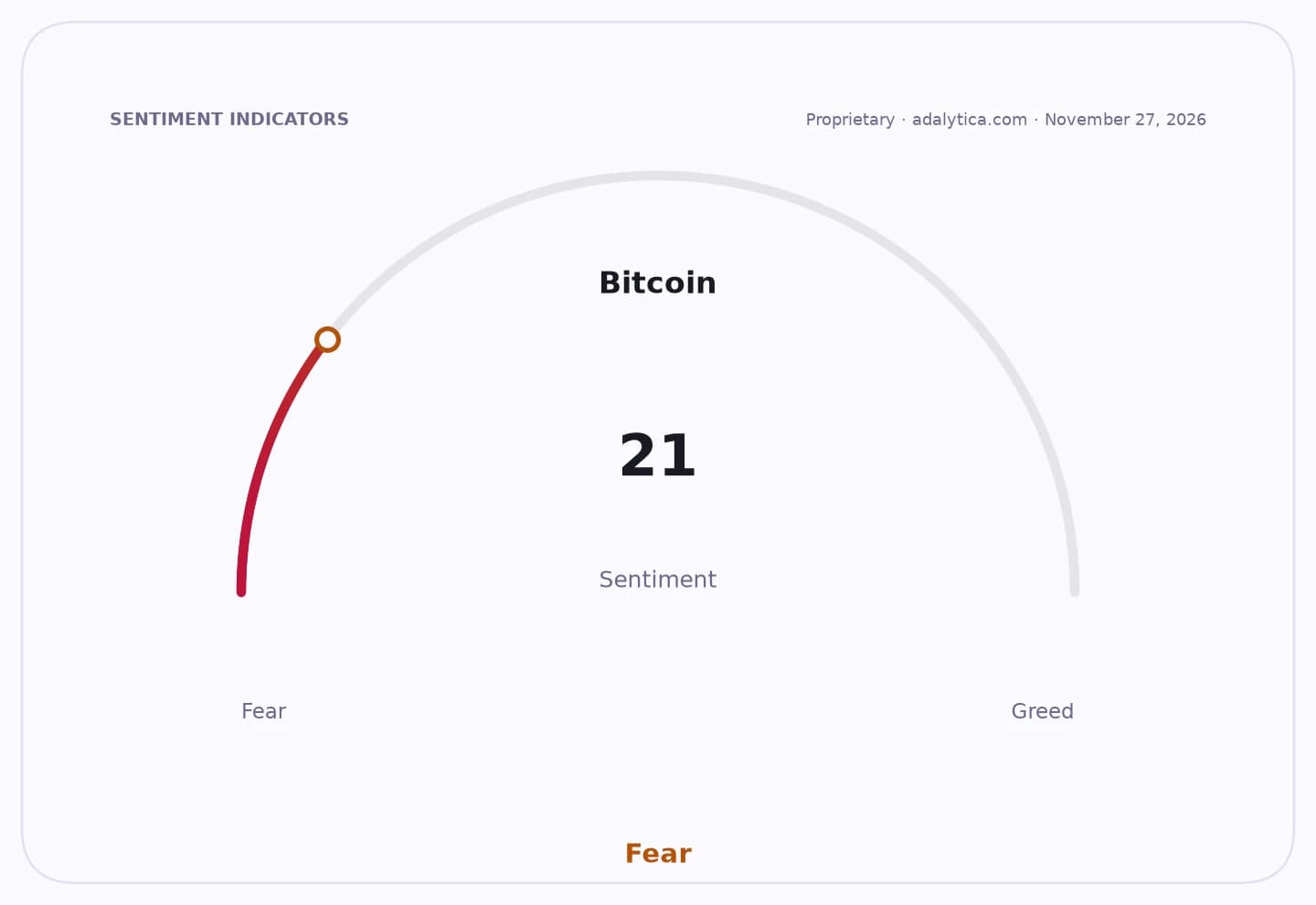
Sentiment Indicators
The thesis is straightforward: if people already hold value on-chain, swapping one currency exposure for another can be faster and cheaper than routing funds through banks, card networks or traditional remittance rails. Egorov points to stablecoins such as Brazil’s BRZ and Monerium’s EURe as examples of digital money that can move between wallets and bank accounts while also feeding decentralized exchange liquidity pools.
That user-first model is beginning to show up in the data. Egorov cites Keyrock figures showing that most on-chain stablecoin trades tied to emerging-market currencies fall in the $1,000 to $10,000 range. Those are not institutional-sized tickets, but they are exactly the kind of recurring transactions that can make a market useful. Cross-border stablecoin activity has also surged to more than $220 billion by mid-2026, up almost 80% in a year, according to Chainalysis data cited in the piece.
For long-term investors, that is an important distinction. The story is not that crypto will replace global FX overnight. It is that a new layer of financial infrastructure can start where the pain is most obvious: moving money across currencies when the money is already digital. Banks still matter at the entry and exit points, but once funds are on-chain, the “in-between” steps can be compressed.
That has implications for crypto exchanges, fintechs and payment providers. If the product is simply to move users from one stablecoin to another, firms do not need to recreate the entire traditional FX stack to earn a role in the flow. Even modest pools can work if demand is steady and fees are enough to compensate liquidity providers. Automated market makers may be especially important here because they can keep quoting prices without requiring a traditional market maker to dedicate capital and staff to every small corridor.
The risk, of course, is liquidity. Demand alone does not make a viable market unless the economics of providing capital also work. Egorov’s broader point is that this is where blockchain design may matter more than scale: if the market can sustain smaller but persistent pools, then adoption can compound gradually rather than waiting for a giant institutional rollout.
For investors, the takeaway is that on-chain FX looks more like a long runway than a quick trade. The winners are likely to be the networks and platforms that solve real payment friction first, then expand as usage deepens. That is a bullish setup for patient capital, but only if the infrastructure proves it can support repeat demand corridor by corridor. Worth watching, and worth adding to the long-term watchlist.
| Entity | Gains | Losses |
|---|---|---|
| Stablecoin users | ▲Faster, cheaper currency swaps | ▼Bank-heavy transfer delays |
| DeFi liquidity providers | ▲Fee income from recurring trades | ▼Idle capital in thin pools |
| Banks | ▲Fiat on/off-ramp role | ▼Some middle-step transfer revenue |
| Crypto payment platforms | ▲New use case and transaction flow | ▼Firms reliant on legacy FX rails |