Nigerian crypto exchange Quidax has cut 20% of its staff, underscoring how the post-boom crypto downturn is forcing smaller digital asset firms to hunker down for a longer, harder fight.
Quidax cuts 20% of staff amid crypto downturn
Bitcoin
For investors, the move is a reminder that the industry’s shakeout is still not over. When volumes fall, risk appetite fades and funding gets tighter, exchanges and trading platforms lose the fee growth that once powered expansion. That leaves headcount, marketing and product spending as the easiest levers to pull — especially for younger companies still trying to prove they can survive without a bull market at their backs.
Sentiment Indicators
Quidax said it is trimming 20 of its just over 100 employees, a significant reduction for a startup of that size. The decision fits a wider pattern across crypto, where the collapse of easy liquidity, the damage left by FTX’s bankruptcy and a more cautious investor base have pushed firms to preserve cash rather than chase growth. In practical terms, that means less hiring, fewer aggressive bets on expansion and a sharper focus on profitability.
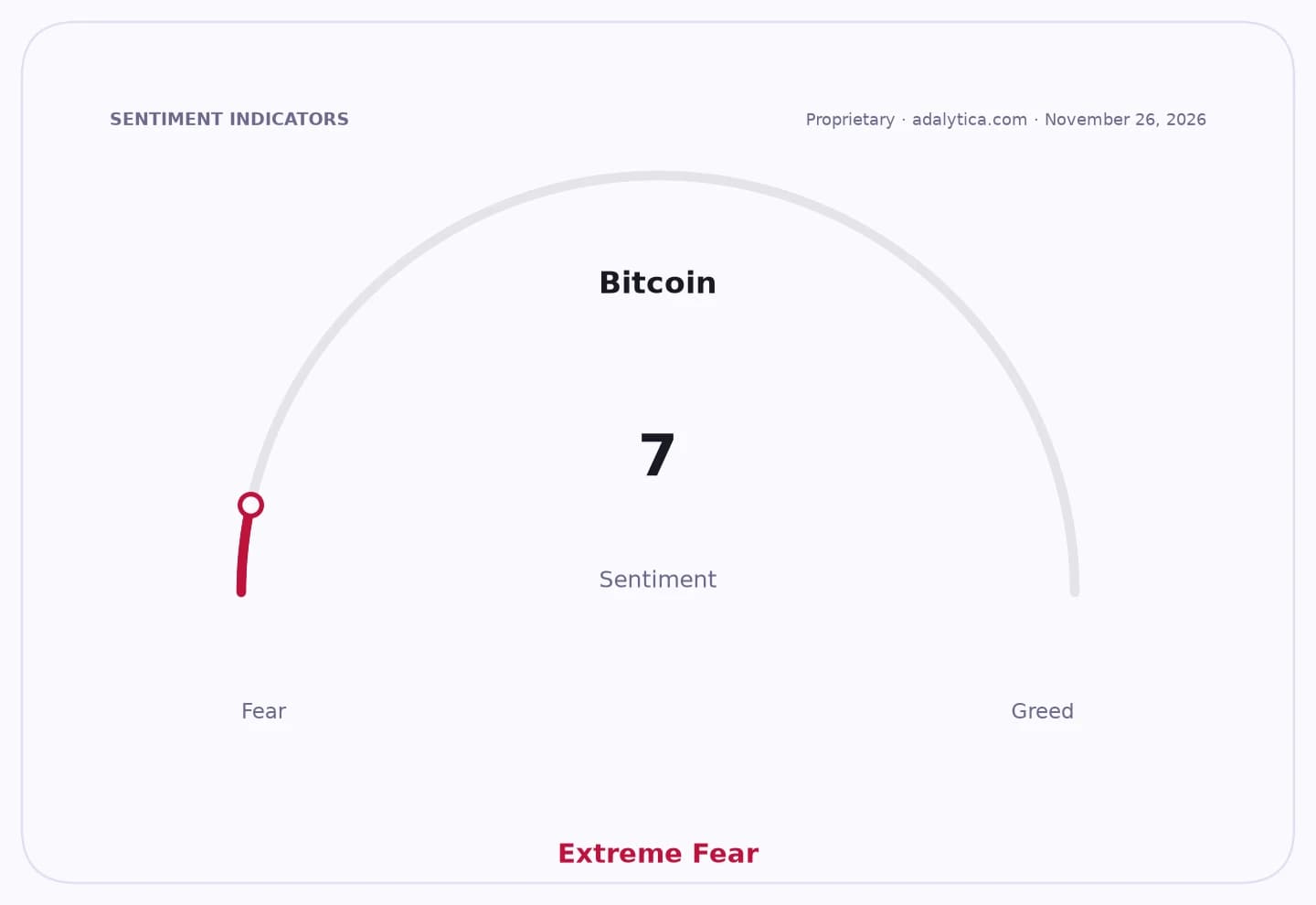
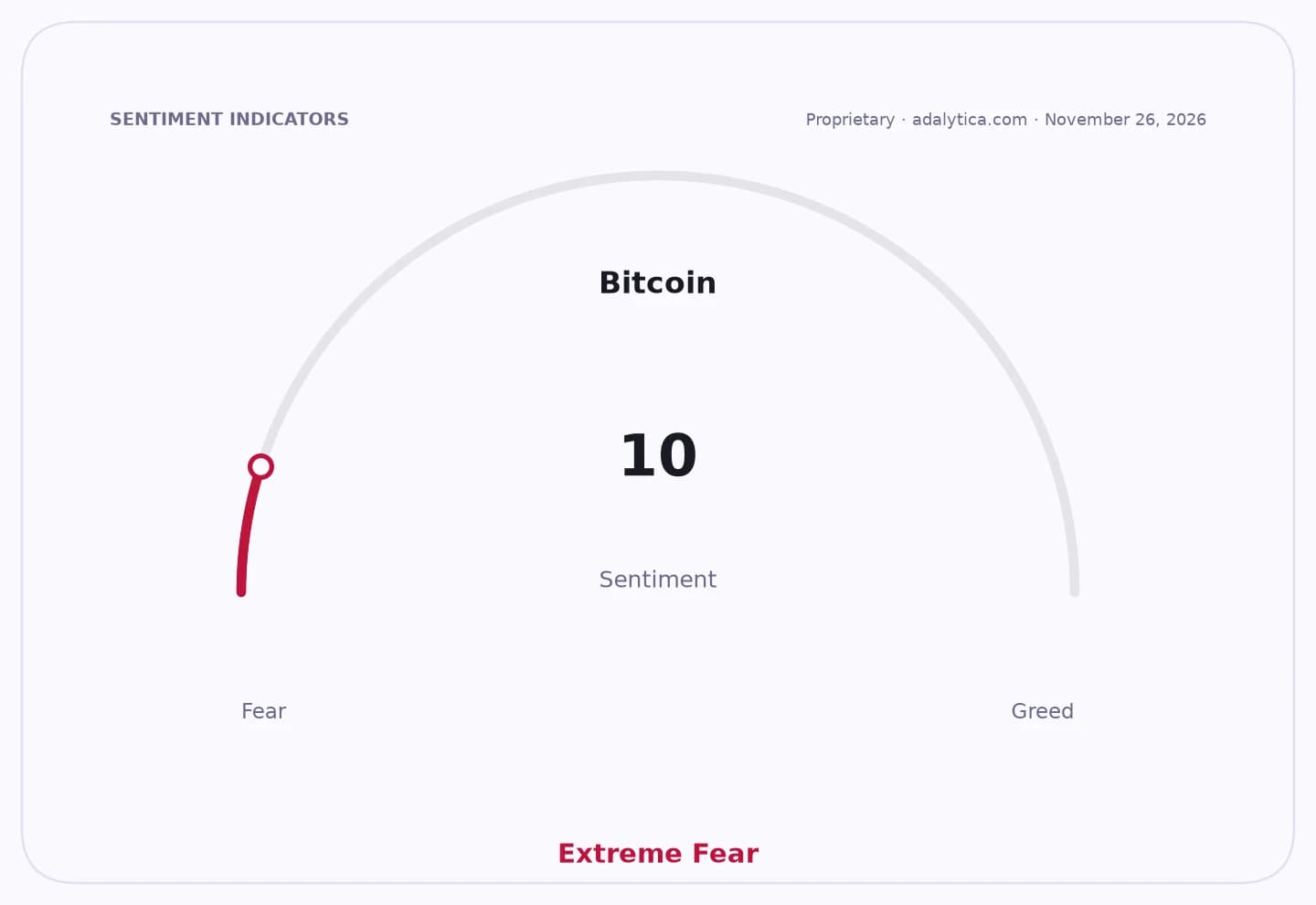
The backdrop matters beyond one company. Crypto has gone from a market that rewarded scale and speed to one that increasingly rewards discipline and balance-sheet strength. Bitcoin itself has been battered by volatility, with Adalytica’s Bitcoin Fear & Greed Index sitting in “fear” territory, while the token’s price has slid far below its 50-day moving average. That kind of environment tends to punish thinner operators first, because trading activity and customer enthusiasm can dry up fast.
Public market peers have not been immune. Coinbase and bitcoin-linked names such as MicroStrategy have also seen sharp swings in sentiment and share prices as the market digests higher rates, tighter liquidity and repeated questions about the durability of crypto demand. For long-term investors, that is the core lesson: the sector can still produce winners, but only companies with real operating leverage, strong compliance and enough cash to endure cycles will be able to compound through the next recovery.
Quidax’s layoffs do not tell you crypto is disappearing. They tell you the business model is maturing under pressure. The startups that survive this phase are likely to be the ones that stop behaving like growth stocks and start acting like durable financial infrastructure. That makes this a watchlist story, not a quick-take trade.
| Entity | Gains | Losses |
|---|---|---|
| Quidax management | ▲Lower cash burn | ▼Slower expansion |
| Remaining staff | ▲Better survival odds | ▼Heavier workload |
| Crypto competitors | ▲Industry consolidation | ▼More scrutiny of weak players |
| Long-term investors | ▲Clearer winner selection | ▼Fewer near-term growth stories |