Bitcoin’s sharp retreat to near $59,000 is putting a fresh spotlight on banks and brokers that are moving deeper into crypto at exactly the wrong-looking time — when volatility is punishing traders and regulators are still circling the industry.
Bitcoin Near $59K as Banks Expand Crypto Offerings

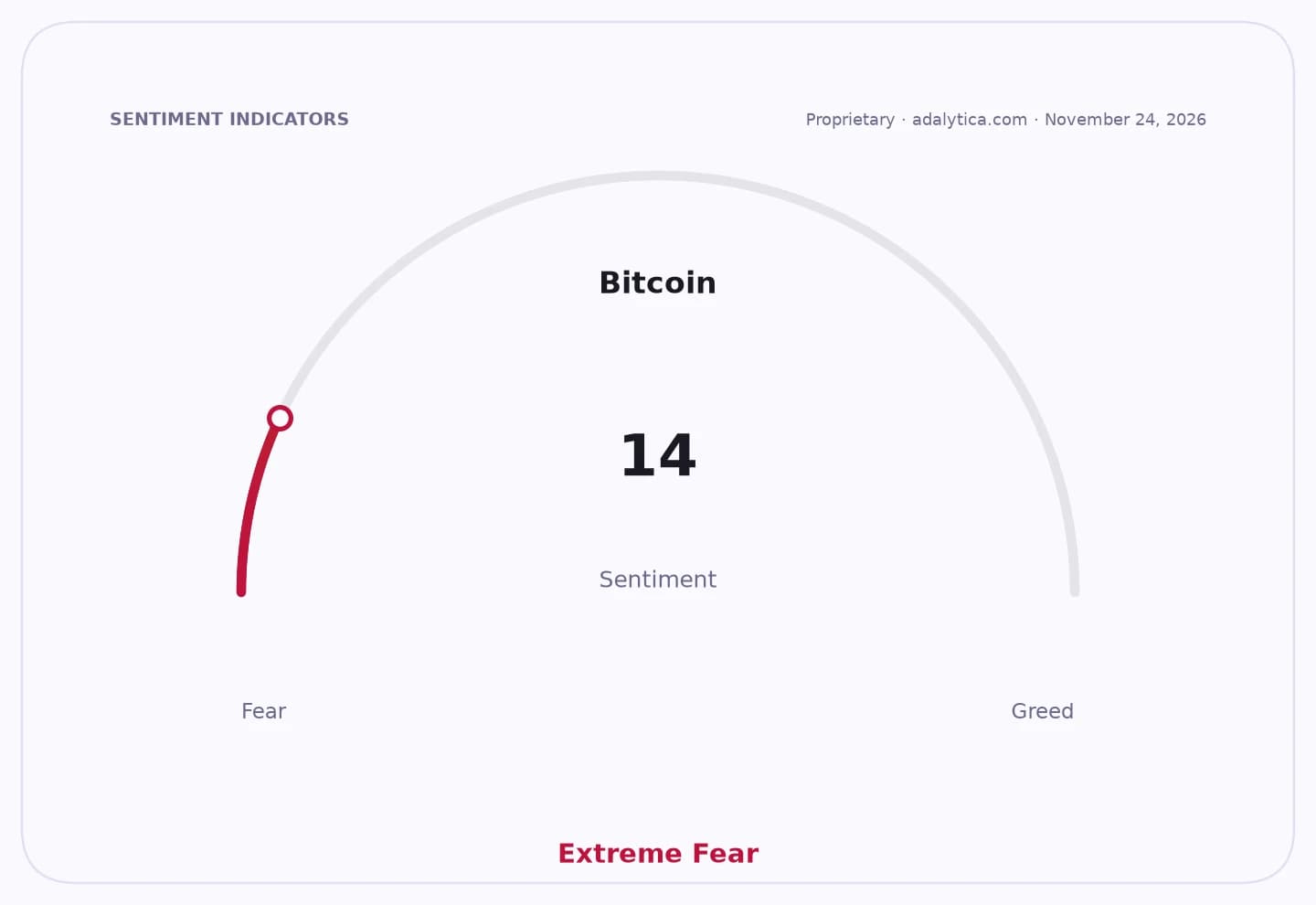
That matters because banks are not just chasing a fad anymore; they are deciding whether crypto becomes a durable fee business or another source of reputational and compliance risk. With Bitcoin down more than 25% from its September peak and the Adalytica Bitcoin Fear & Greed Index pinned at 6, in “Extreme Fear,” the near-term backdrop is hostile. But for banks, the bigger question is not this week’s price action. It is whether offering crypto coins can generate recurring trading, custody and balance-sheet-adjacent revenue in a market that still attracts huge customer interest.
Sentiment Indicators
The timing is awkward. Bitcoin has broken below both its 50-day and 200-day moving averages, while the broader stock market is flashing caution rather than euphoria. At the same time, the U.S. policy backdrop is not especially supportive: the fed funds rate remains around 3.9%, the 10-year Treasury yield is near 4.86%, and that combination keeps risk assets from getting the easy liquidity tailwind they enjoyed in earlier cycles. For crypto businesses, higher rates still matter because they keep capital costly, squeeze speculation and make investors less forgiving of drawdowns.
That is why the move by banks into crypto offerings is such a gamble. They are stepping into a market where the revenue opportunity is obvious, but so are the hazards. The sector is still dealing with hacks, fraud cases, and regulatory scrutiny, and banks know that one bad customer experience or compliance lapse can outweigh months of fee income. Coin support and crypto trading can also be operationally messy, requiring banking partners, liquidity providers and tighter controls than many legacy institutions are used to.
The bigger narrative, though, is that mainstream finance keeps inching toward crypto even as the asset class remains under pressure. That tension is exactly what investors should watch. If banks can offer coins safely and profitably through a full cycle, they may help normalize crypto in the same way online brokerages once normalized stock trading. If they cannot, the business may stay small, cyclical and highly exposed to every downturn in Bitcoin.
For long-term investors, the takeaway is simple: the opportunity is real, but so is the risk. Banks that can earn fees without taking on outsized balance-sheet exposure could benefit over years, not months. The firms that overreach may learn that crypto is still a very tough business to tame. Worth watching, and worth treating with patience.
| Entity | Gains | Losses |
|---|---|---|
| Banks offering crypto coins | ▲New fee revenue | ▼Reputation and compliance risk |
| Crypto exchanges like Coinbase and Robinhood | ▲More mainstream distribution | ▼Pressure from weaker trading volumes |
| Bitcoin holders | ▲Potential long-term adoption | ▼Near-term volatility and fear |
| Regulators and cautious banks | ▲Stronger controls and oversight | ▼Faster crypto growth |